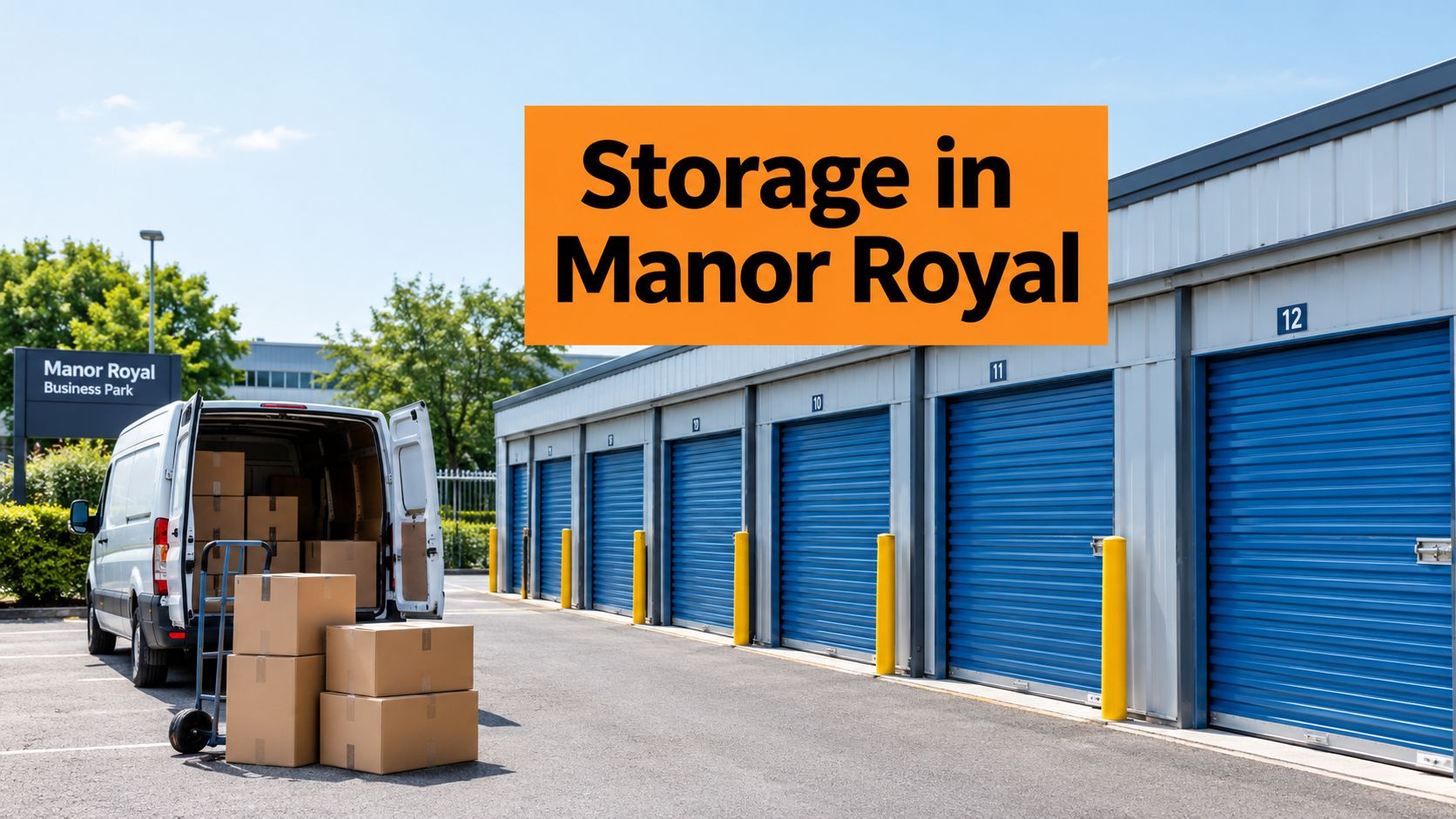

End of term in Croydon usually looks the same. The exams are finished, the tenancy clock is ticking, and a small student room suddenly feels packed with more stuff than it should be able to hold. Boxes of notes, bedding, kitchen bits, a bike, a lamp, a monitor, a suitcase that somehow never went back under the bed.
Most students don't have a storage problem all year. They have a storage problem all at once.
That's why student storage between terms in Croydon works best when you treat it like a short decision process, not a last-minute panic purchase. The right unit saves you a second trip home, stops you paying to store fresh air, and makes move-out day much easier. If you've been rearranging your room all year, using a simple student dorm room design planner can also help you see what you have before you start boxing it up.
The End-of-Term Scramble
A typical move-out problem starts with one wrong assumption. You think you only need to store “a few things”, then you begin packing and realise “a few things” includes textbooks, pans, winter clothes, bedding, chargers, sports kit, and the cheap desk chair you don't want to buy again in September.
Students usually hit the same three pressures at once. They need to leave quickly, they don't want to drag everything home, and they don't want to overspend just because time is short. In Croydon, that often means finding somewhere local enough to reach without turning the day into a full travel mission.
Leave yourself one clear category when packing: what goes home, what goes straight into storage, and what you still need for the next week.
The easiest storage plans aren't the fanciest ones. They're the ones that match how students move. If you're staying local, changing halls, heading home for summer, or between rentals, a nearby storage unit gives you breathing room. You move once, lock up, and deal with the next term when you're not under pressure.
That's a major appeal. You're not just renting space. You're buying back time, reducing transport hassle, and avoiding the cost of replacing things you could have stored properly.
Finding the Right Storage Space in Croydon
A bad size choice costs money twice. First in rent, then again in stress on move day if the unit is too tight for awkward items.
For most students in Croydon, the right unit is decided less by how big the room looked and more by what has to leave with you. Bedding and clothes compress. Chairs, bikes, monitors, mini fridges, and kitchen crates do not. That is why a small locker works for some term-break storage plans, while others need more space than they expected.
Industry size guides such as Safestore's storage size estimator are useful here because they give a practical reference point. A 25 sq.ft. unit is often the point where a student can store a typical mix of boxes, suitcases, and a few bulky items without having to stack everything too tightly.

Start with what you're actually storing
Count items, not rooms.
A student room in Croydon halls can look compact and still fill more storage than expected once you separate out the bulky pieces. I usually tell students to make four groups on the floor or on a notes app: boxes, soft bags, electronics, and awkward items. The last group decides the unit size fastest.
A simple example helps. If you have clothes, books, bedding, and a couple of suitcases, start by pricing the smallest units. If you also have a bike, desk chair, drying rack, or full kitchen setup, check the next size up before you book. That extra space often saves more time and hassle than the price difference costs.
Croydon Student Storage Size Guide
| Unit Size | What It Typically Holds |
|---|---|
| 10 sq.ft. | A few boxes, suitcases, and small essentials for a short break |
| 25 sq.ft. | A typical term-break mix of boxes, luggage, and a few bulky items such as a bike or small furniture |
| Larger units | Useful when you're storing bulkier room contents, shared flat items, or more than one student's belongings |
In Croydon, local logistics matter as much as size. A cheaper unit further out can stop being cheap once you add train fares, taxi costs, or van time. Students moving out around East Croydon, South Croydon, or near campus routes usually save more by choosing a facility that is easy to reach in one trip than by chasing the lowest headline rate.
Practical rule: Book for the awkward items first, then fit the boxes around them.
What works and what doesn't
What works:
- Choosing a unit from an inventory list instead of guessing from memory
- Checking the route to the facility before booking, especially if you do not have a car
- Paying for a little breathing room if you may need to access anything during the break
What doesn't:
- Booking the absolute smallest option just because the weekly price looks better
- Assuming soft bags will stack neatly around fragile electronics
- Sharing space with a flatmate without agreeing access, payment, and collection dates first
If you want a second check before you commit, this guide on tips for choosing a self-storage facility helps you compare access, layout, and practical fit, not just the advertised price.
Booking Your Unit and Planning Your Move In
Once you know the rough size, the next job is timing. Don't leave booking until the day before checkout if you can avoid it. Students do that when exams finish, and rushed booking usually leads to poor choices on access, transport, or terms.
Modern providers have made this much easier. In practice, the smoothest bookings now happen online. You check the size, reserve the unit, confirm the move-in date, and sort the paperwork without needing to spend half a day visiting sites first.

Pick your transport method before you pack
Students usually choose between two move-in routes.
One is doing it yourself. That can make sense if you only have a few boxes, a friend with a car, and a nearby facility. The other is using a collection-and-return service. That's often the easier choice when you're leaving halls, your family isn't local, or you don't want to organise van hire and parking.
According to Snappy Self Storage's student storage breakdown, collection-and-return services have an 85% adoption rate among UK students during summer breaks, and 72% of students need access outside standard hours, which is why flexible or 24/7 access matters when you choose a facility.
The move-in plan that saves the most hassle
A good move-in day is boring. That's the aim. No surprises, no repacking at the gate, no argument over whose box is whose.
Use this order:
Book the unit first
Confirm the size, access rules, and start date before you buy packing materials.Choose transport second
If you need collection, arrange that early. If you're doing it yourself, check whether you need help lifting or parking nearby.Pack by loading order
Heavy sealed boxes first, fragile items last, and anything you may need again near the front.Keep your essentials separate
Don't store the bag with your charger, medication, passport, and tenancy documents.
If your move-out window is tight, collection can be cheaper in effort even when it isn't the cheapest line on paper.
The best booking decisions usually come down to one question. Are you trying to save the lowest possible amount today, or are you trying to avoid the full cost of stress, extra travel, and replacing damaged items later? For most students between terms, convenience is part of the value.
Packing Smartly to Protect Your Belongings
You only notice bad packing at the worst time. Usually that is when you open the unit in September and find your notes curled, your plates cracked, and your duvet smelling stale.

In Croydon, students often pack under time pressure because checkout slots, lift access, and station runs all land on the same day. The best packing plan saves two things. Space in the unit, and money you would otherwise spend replacing damaged items.
Pack for retrieval, not just for storage
A unit should still make sense six or ten weeks later. If every box says “misc” or “bedroom,” you create your own delay when you come back.
Label boxes by likely use, not just by room. “Kitchen, pans and cutlery” is better than “Kitchen.” “First week back,” “course files,” and “winter clothes” are better again if you may need to collect one box quickly.
A practical setup looks like this:
- Use small, strong boxes for books and notes so they do not split when lifted.
- Wrap plates, mugs, and glass separately using bubble wrap, towels, or clothing.
- Bag cables and label them by device so you are not sorting chargers one by one later.
- Store documents in sealed plastic wallets or lidded boxes if they relate to enrolment, finance, or housing.
- Use dust covers or old sheets for furniture rather than airtight plastic that can hold in moisture.
If you need a quick refresher before move-out day, these super easy packing tips are a solid checklist.
Protect the items that usually get damaged
Books, paperwork, laptops, and monitors need more care than bedding or pans. They should go into clean, dry boxes and stay off the floor where possible. I usually advise students to use pallets, shelving boards, or at least a flat layer of sealed boxes underneath anything that can warp or absorb damp.
If you are storing course folders, paperwork, instruments, or electronics through warmer months, indoor units with stable conditions are worth asking about. The Self Storage Association UK explains that temperature and humidity swings can affect items such as paper, fabrics, wood, and electronics in storage, which is why some facilities offer more controlled indoor environments for sensitive belongings (Self Storage Association UK storage advice).
One box should be marked open first. Put chargers, basic tools, tenancy papers, and anything you might need in your first few days back into that box and keep it near the front.
Stack the unit so it stays usable
Poor stacking wastes space and creates breakages. Heavy boxes go at the bottom in even rows. Light boxes, bedding, and soft bags go higher up. Fragile items should sit flat, never balanced on top of uneven loads.
Leave a narrow path if there is any chance you will return before term starts. That matters in real life. A lot of students in Croydon come back early for housing checks, resits, or part-time work, and digging through a fully blocked unit turns a 10-minute stop into a full unload.
If you are travelling back to collect your things, even the journey cost can shape the plan. Students trying to keep the return trip cheap often compare affordable train tickets before choosing a collection day, so it makes sense to pack the unit for a fast pickup rather than a long sort-out on site.
A simple checklist before you lock up
- Photograph valuables and electronics so you have a record of condition.
- Empty and clean appliances before they go into storage.
- Avoid overfilling boxes because split lids and crushed corners cause damage in transit.
- Seal every box properly and write the label on at least two sides.
- Keep soft bags to a minimum because they slump and make safe stacking harder.
Good packing cuts hassle on both ends. You move in faster, your belongings come out in better condition, and you are less likely to waste half a day in Croydon hunting for one missing cable or one folder you packed in the wrong box.
Decoding Costs Security and Flexibility
The price you first see is rarely the whole decision. For students, the key question isn't just “what's the weekly rate?” It's “what will this cost me, how safe is it, and can I leave when my plans change?”
In Croydon, student storage can start from £2.49 per week for a 10 sq.ft. space, and the student market typically leans toward flexible terms without long notice periods, with 24/7 CCTV regarded as an essential security feature, according to Safestore's Croydon storage information.

What the real cost looks like
The cheapest advertised rate can still become the wrong option if extra charges aren't clear. Students should always check the all-in cost. That usually means the storage rent, any lock fee, and mandatory contents cover if it applies.
Many rushed bookings lead to issues when someone compares one headline number to another and misses the rest of the quote. If you're travelling in and out of Croydon to sort your move, even saving money on the journey matters, so planning your rail travel with tools for affordable train tickets can help keep the wider move cost under control.
Security features that actually matter
Security language can sound impressive, but students should look for the basics first. A secure site should make casual unauthorised access difficult and visible.
The practical checks are simple:
- CCTV coverage so movement around the site is monitored.
- Controlled entry so not everyone can walk in freely.
- Indoor or protected environments if you're storing course materials, electronics, or items you don't want exposed during loading.
- Clear access procedures so you know when and how you can get in.
For students comparing options locally, this overview of affordable and secure self storage in Croydon is useful because it frames storage as a balance of price and protection, not just one or the other.
The safest unit isn't just the one with the biggest security list. It's the one where the access process is clear, the site is well-managed, and your contract doesn't hide awkward surprises.
Why flexibility matters more than students think
Student timelines change quickly. Tenancy dates move. Travel plans shift. A placement appears. A landlord delays check-in. You don't want a storage contract that assumes your life is fixed months in advance.
Flexible terms are often the deciding factor between a useful storage service and a frustrating one. If you can end the rental when you no longer need it, you avoid paying for dead time. That's especially important between terms, when the whole point of storage is to bridge an uncertain gap without locking yourself into a rigid commitment.
Frequently Asked Questions About Student Storage
Can I share a unit with a friend
Yes, but only if you organise it properly. Shared storage works when both people agree on costs, access, and collection dates before move-in. It fails when one person treats the unit like a dumping ground and the other needs quick access later.
What if I need something back unexpectedly
That's why access rules matter. Before you book, check how and when you can get into the facility. Pack the unit so any likely-needed items sit near the front, not buried under bedding and kitchen boxes.
Do I need to buy a specific lock
Some facilities require or sell a suitable lock, while others include part of the setup in different ways. Ask before move-in day so you're not stuck at the entrance with a full car and the wrong gear.
What shouldn't I put into storage
Every provider has its own prohibited items list, but the important point is to ask directly and read the agreement. Don't assume. If an item could be hazardous, perishable, or restricted, check it first.
Is a small unit enough for one student
Sometimes yes, sometimes no. It depends less on whether you're one person and more on whether you're storing only boxes and suitcases or bulkier items like a chair, bike, or extra furniture.
How do I avoid paying for more space than I need
Make an inventory before booking. Group items into boxes, soft goods, and awkward large pieces. If you're unsure, ask the facility team to size the unit from your list rather than from a rough guess.
If you need a straightforward option for storing belongings between terms, Standby Self Storage is built around the things students usually care about most: easy online booking, flexible terms, secure facilities, and practical support when you're trying to get moved without wasting time.