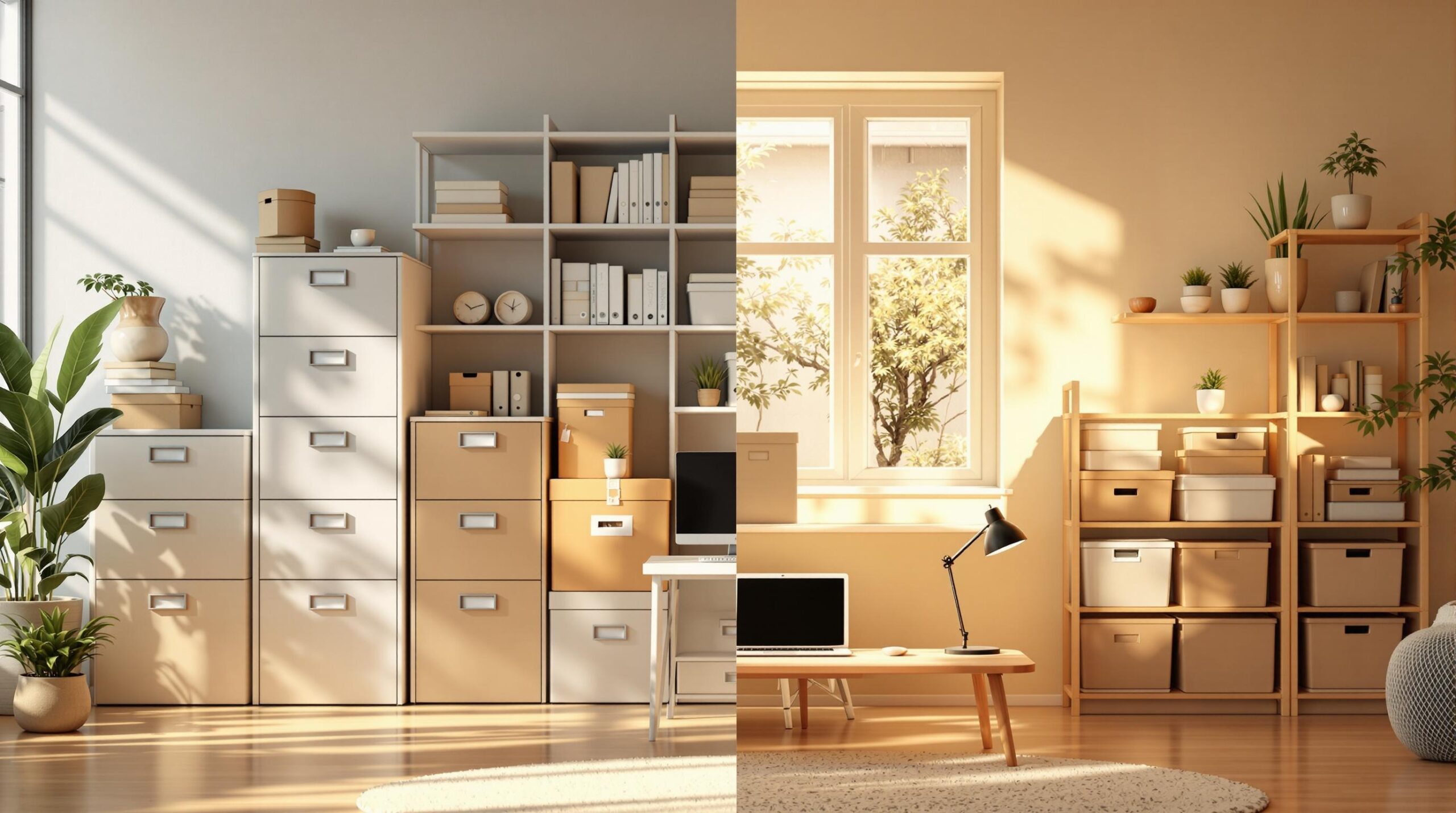
Need extra space but unsure whether business or personal storage is right for you? Here’s a quick breakdown to help you decide:
- Business Storage: Ideal for companies needing large, secure spaces with advanced features like 24/7 access, climate control, and digital tools. Costs range depending on size and features.
- Personal Storage: Best for individuals storing household items, seasonal goods, or personal belongings. Affordable options start at $45 per month for smaller units, with basic security and standard access hours.
Quick Tip: Businesses often outgrow personal storage within six months, while individuals may overpay for business-grade features they don’t need. Evaluate your needs carefully to avoid unnecessary costs.
Read on to learn how to choose the right storage type, key features to look for, and cost-saving strategies.
Related video from YouTube
Main Differences: Business vs Personal Storage
Storage Needs Comparison
When comparing business and personal storage, some clear differences stand out, especially in terms of space, access, and technology:
| Aspect | Business Storage | Personal Storage |
|---|---|---|
| Space Requirements | 100-500+ sq ft | 5×5 ft to 10×20 ft |
| Access Frequency | Daily/weekly (68% require 24/7 access) | 2-4 visits per month |
| Digital Integration | Advanced cloud storage with scalability | Basic cloud storage (2-5TB) |
| Compliance | Standard security measures | Standard security measures |
Common Storage Scenarios
Business Storage Applications
Businesses often need tailored storage solutions to handle complex operations. For example, healthcare providers may rely on both physical and digital storage for medical equipment and patient records. Similarly, manufacturers use temporary storage during relocations while keeping digital backups of inventory.
Personal Storage Solutions
Personal storage, on the other hand, caters to simpler, individual needs. It’s typically used for storing seasonal items, personal documents, or household goods.
Specialised Features
Business storage often comes with additional services that personal storage doesn’t provide:
- Logistics Support: Features like barcode tracking systems and dedicated account managers.
- Digital Options: Business solutions often include offsite digital backups with version control.
For growing businesses, these features are crucial. Imagine a startup expanding its inventory from 500 to 5,000 SKUs. They’ll need both extra warehouse space and scalable cloud storage to handle the growth. Flexible contracts become essential for managing these transitions smoothly.
Security Considerations
When it comes to security, business storage takes it a step further. Business cloud storage often includes ransomware protection, which personal plans lack. Additionally, physical business storage facilities usually have stricter security measures, while personal storage focuses on basic protections.
sbb-itb-c296695
How to Pick Your Storage Type
Steps to Assess Your Needs
Choosing the right storage type depends on understanding your space needs and how often you’ll need access. Businesses, for instance, tend to access their storage three times more frequently than personal users. To estimate the space you’ll need, use this formula: (item count × 1.5 cubic feet) + a 25% buffer. For example, storing 100 product boxes would require about 187 cubic feet of space.
For personal storage, standard weekday access is enough for 92% of users. To pinpoint the best storage option for you, consider these key factors:
- Storage Duration: Businesses often commit to contracts of six months or more for lower rates, while personal storage usually offers month-to-month flexibility.
- Security Needs: Business storage spaces typically demand higher security measures.
- Budget: Businesses should allocate 2–5% of their operating costs for storage, whereas personal users usually spend 1–2% of household income.
Once you’ve nailed down these details, match them with the cost and features you’ve already reviewed.
Mixed Storage Options
Not everyone fits neatly into the "business" or "personal" storage category. In fact, 23% of users find value in combining both solutions. If neither option fully meets your needs, hybrid storage might be the answer. Here’s how professionals use mixed storage effectively:
| Professional Type | Business Storage Use | Personal Storage Use |
|---|---|---|
| Photographer | Climate-controlled unit for professional equipment | Basic unit for props |
| Home Baker | Cold storage for ingredients | Standard unit for equipment |
| Consultant | Secure unit for client files | Basic unit for furniture |
"The hybrid approach works best for professionals storing both work equipment and personal assets, achieving better organisation than mixed storage", according to industry research.
What to Look for in Storage Facilities
Must-Have Facility Features
Once you know the type of storage you need, it’s time to evaluate the facilities. Start by focusing on security. Look for features like 24/7 surveillance and access controls. Many modern facilities now include controlled access systems with onsite staff monitoring.
If you’re storing sensitive materials, precise climate control is crucial. This means maintaining tight temperature and humidity levels (±5°F/5% RH). For personal storage, basic temperature regulation is usually enough.
Here’s a quick breakdown of key features based on user type:
| Feature Type | Business Requirements | Personal Storage Standards |
|---|---|---|
| Access Hours | 24/7 with loading docks, freight elevators | 6 AM–10 PM, drive-up access |
| Climate Control | Precise temp/humidity regulation | Basic temperature control |
How to Choose a Storage Provider
If you need frequent access, choose a facility close by. Urban locations may cost 15-20% more, but they often save time and reduce transportation expenses.
Here are two practical factors to consider when picking a provider:
- Insurance Coverage: Check if the standard coverage matches your needs. Businesses often require 3-5× more coverage than personal users.
- Contract Flexibility: For businesses, look for providers that allow space adjustments with short notice (e.g., 48 hours). Personal users may prefer month-to-month contracts for added convenience.
If you have specialised business needs, look for extra services like package acceptance or inventory management system integration. These can improve efficiency and may justify higher costs.
Choosing the right facility ensures your storage solution meets both your business and personal needs effectively.
Conclusion
Key Takeaways
Choosing between business and personal storage depends on factors like space needs, security, and costs. While business storage often comes at a higher price, it includes features like 24/7 monitoring, digital inventory tools, and precise temperature control. On the other hand, personal storage offers more affordable options, with basic security measures and standard access hours.
For personal users, convenience is key. In fact, 34% of users prioritise access hours when selecting a facility.
| Storage Aspect | Business Features | Personal Features |
|---|---|---|
| Security Level | 24/7 monitoring, digital backups | Basic surveillance |
| Access Hours | Full 24/7 availability | Limited (e.g., 6 AM–10 PM) |
| Space Flexibility | Expandable with integrated systems | Fixed unit sizes |
Next Steps
Evaluate your specific needs based on the earlier sections, and track how much space you actually use to avoid overpaying or running out of room. For businesses, look for facilities with inventory management systems and specialised equipment for loading. If you’re a personal storage user, focus on options like drive-up access and flexible payment plans.
"The most common mistake is underestimating growth needs", according to the Self Storage Association. "Nearly 8 in 10 business clients require additional space within 12 months of their first rental."
If your requirements span both personal and business needs, hybrid solutions might be worth exploring. Also, double-check insurance policies and facility certifications to ensure you’re covered.