
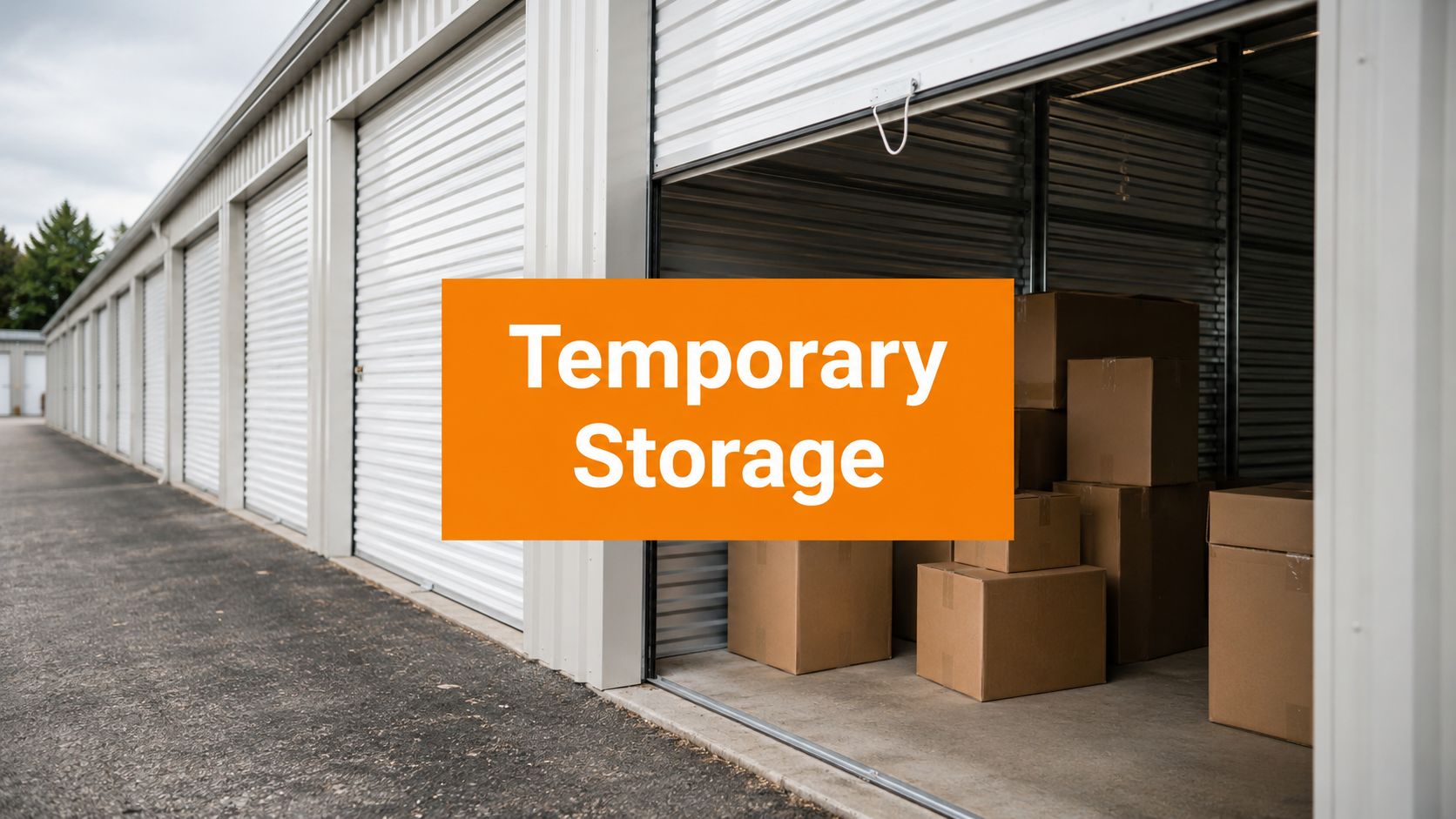
If you're in the middle of a house move in Reading, you're probably dealing with one awkward truth already. The dates don't line up as neatly as everyone hopes they will.
You may need to leave a rental before the new place is ready. Your buyer may be pushing for one date while your onward purchase drifts. Or you've got the keys, but the new home still needs painting, flooring, or a kitchen fit before you want a vanload of furniture dumped into every room. That's where temporary storage stops being an “extra” and starts doing a proper job.
Used well, storage gives you breathing space. It lets you split one stressful move into manageable stages, protect the things you don't need immediately, and keep moving day from turning into a frantic game of furniture Tetris.
Why Temporary Storage Is Your Secret Weapon for a Smooth Reading Move
A lot of people still think storage is only for major downsizers or people with too much stuff. In practice, temporary storage during a house move in Reading is usually about timing, not clutter.
Moves in Reading often involve exactly the sort of gaps that create pressure. Rental end dates don't always match start dates. Chains wobble. Renovation work slips. Even when everything looks straightforward on paper, one delayed handover can leave you with a full van and nowhere sensible to put it.
Storage solves a timing problem
The biggest advantage of temporary storage is simple. It gives you control when the property timeline doesn't.
Instead of forcing everything into one day, you create a buffer. Furniture can go into storage while decorators finish. Boxes can leave early so your current property is easier to clean, photograph, or hand over. If you're moving into a smaller place first and making decisions later, you can keep the non-essentials out of the way until you know what's staying.
That matters because moving stress usually comes from compressed decisions. Which room gets what. What has to travel today. What can wait. Storage removes some of that pressure.
Practical rule: If your move depends on perfect timing from more than one party, build in a storage backup before you need it.
It's common for a reason
This isn't a niche problem. In England, 16.7% of households lived in the private rented sector in 2023 to 2024, while 64.9% were owner-occupiers and 16.8% were in social rent, according to the ONS housing tenure figures referenced here. Those housing patterns create plenty of situations where people need a bridge between one property stage and the next.
For Reading, that's especially relevant because the town sits in a mobile South East market where people often move for work, tenancy changes, family needs, or commuter convenience. Storage becomes part of the moving workflow, not a sign that anything has gone wrong.
When it works best
Temporary storage tends to work well in a few very specific scenarios:
- Rental overlap problems where you must vacate before the next tenancy begins
- Completion delays that leave belongings packed but not yet deliverable
- Refurbishment moves when you want clear rooms for trades
- Decluttering before sale so your home is easier to present
- Staggered unpacking when you want to settle in room by room
What doesn't work is treating storage like a last-minute dumping ground. If boxes are unlabelled, furniture is badly protected, and nobody knows what's meant for the unit versus the new house, the stress just follows you into another building.
Used properly, storage doesn't add chaos. It contains it.
Choosing the Right Storage Unit in Reading
The right unit isn't just about square footage. It's about access, layout, booking speed, and whether the space matches the job you need it to do for the next few weeks or months.
Start with the move itself. Are you storing the whole house, just overflow, or only the items you won't want immediately after move-in? That answer usually narrows the choice faster than guessing based on floor area alone.

Match the unit to the job
Use size examples as planning tools, not exact promises. Packing style, furniture shape, and whether items are disassembled all make a difference.
| Unit size | Good fit for |
|---|---|
| 25 sq ft | Boxes, suitcases, seasonal items, small household overflow |
| 50 sq ft | Studio flat contents, smaller furniture, lots of packed boxes |
| 100 sq ft | One-bedroom flat furnishings, major appliances, larger furniture |
| 150 sq ft | Two-bedroom home contents, dining set, lounge furniture, appliances |
| 200 sq ft | Three-bedroom house furnishings, bulky equipment, garage-style loads |
If you're not sure, estimate based on what's going into storage, not what's in the property overall. A lot of people only need a “transition unit” for spare room furniture, boxed kitchenware, and delayed-delivery items.
Location and access matter more than people think
A cheap unit loses its value if getting to it is awkward on moving week. During a house move, you want a facility that's easy to reach from your route, practical for a van, and straightforward when you need to grab something quickly.
Check these points before you book:
- Driving access so the removals van or your own vehicle can unload without a long carry
- Entry arrangements that are clear before move day
- Security measures such as perimeter protection, CCTV, and controlled access
- Booking process that doesn't require endless calls while you're also chasing solicitors and utility providers
If you want to compare local options and current availability, it helps to look at a dedicated page for storage units in Reading rather than relying on broad directory listings.
For anyone comparing options beyond the local area, especially if a wider relocation is involved, this guide to affordable London storage facilities can also help you sense-check access and facility features.
A storage unit you can reach easily beats a slightly cheaper one that turns every visit into a half-day job.
Don't overbuy space
Too much space sounds harmless, but it often leads to poor stacking and higher cost. Too little space causes rushed loading and damaged items.
The sensible approach is to ask yourself three questions:
- Will I need regular access? If yes, leave room for an aisle.
- Are large items being dismantled? If yes, you may need less space than expected.
- Am I storing for transition or for sorting later? Transition storage is usually tighter and more organised.
One practical option in Reading is to use an online booking portal that lets you check pricing, choose a unit, and arrange move-in without adding another admin task to a busy week.
How to Pack and Label for Storage Success
Packing for storage isn't the same as packing for a straight move from one doorstep to another. A box that survives one van trip may still be a poor storage box if it's flimsy, damp-prone, or impossible to identify later.
The people who have the easiest move-out from storage usually do one thing well. They pack so they can find, protect, and move items again without reopening every box they own.

Pack for stability, not speed
Use sturdy boxes in consistent sizes where you can. Uniform boxes stack better, waste less space, and are easier to move safely. Odd supermarket boxes are fine for a few lightweight items, but they're rarely ideal for a proper storage run.
A few habits make a big difference:
- Keep heavy items in smaller boxes so they don't split or become impossible to lift
- Use wrapping that protects without trapping moisture and avoid packing damp items at all
- Disassemble large furniture such as bed frames and tables where practical
- Bag up fittings and screws and tape or tie them to the item they belong to
- Cover soft furnishings and mattresses properly so they stay clean during transit and storage
If you're trying to estimate what packing materials you'll need before buying supplies, Emmanuel Transport's packing estimator is a useful planning tool.
Label for destination, not just contents
This is the step people skip, then regret on moving day.
Don't label a box only with what's inside. Label it with where it's meant to go next. In a split move, that's far more useful.
A practical label system looks like this:
- Kitchen, New Home
- Books, Storage
- Main Bedroom, New Home
- Spare Bedding, Storage
- Open First, New Home
That one extra word prevents the classic mistake of sending everyday essentials into storage and storing the wrong half of the house.
For a more detailed method on stacking and organising once things are packed, this guide on how to pack your storage unit step by step is worth keeping open while you prepare.
Label boxes on more than one side. If the only label faces the wall, it's no use to anyone.
Keep a simple inventory
Your inventory doesn't need to be fancy. A notes app, spreadsheet, or paper list works fine. The point is to know what's in the unit without breaking the seal on every box.
Try this format:
| Box number | Brief contents | Destination |
|---|---|---|
| B1 | Mugs, kettle, tea towels | New Home |
| B2 | Winter clothes | Storage |
| B3 | TV cables, router, chargers | Open First |
If you've ever had to find one document wallet, one lamp shade, or one child's school bag from a full unit, you'll know why this matters.
What doesn't work is writing “misc” on fifteen boxes and hoping future-you will be calmer than present-you. They won't be.
Your Smooth Move-In Day at the Storage Facility
Move-in day goes well when the decisions were made earlier. By the time the van is loaded, you should already know what's going to storage, what's going straight to the house, and who is doing the lifting.
For Reading moves, the cleanest method is an integrated one. UK removals guidance recommends a single removals-and-storage workflow that includes a pre-move inventory, decluttering before storage, a survey-based quote, and advance confirmation of access terms, because it reduces duplicate labour and helps stop items for the new home being sent into storage by mistake, as explained in this temporary storage guidance from Bournes.

What the day should look like
A well-run storage move has a steady rhythm to it. Not rushed, not improvised.
Confirm the booking early in the day
Make sure the unit number, access method, and arrival details are in your phone and shared with anyone helping.Load the van in reverse order of use
The items going deepest into the unit should be loaded first. The things you may need sooner should be loaded last.Check the unit before unloading
Open up, have a quick look round, and make sure you've got the lock and any basic moving kit to hand.Place the biggest items first
Sofas, wardrobes, white goods, and dismantled bed parts usually define the shape of the space.
How to load without creating a future headache
Storage works best when the unit is treated like a planned room, not a skip.
Use this approach:
- Back wall first for bulky, heavy, less-needed items
- Stable base layer with strong boxes and flat furniture sections
- Fragile items higher up and away from crush points
- Frequently needed boxes near the front
- A narrow access path if you think you'll return before move-out
A surprising number of problems come from one bad habit. People fill the door area first because it's easy, then realise they've blocked access to everything they may need next week.
Leave yourself an aisle if there's even a small chance you'll come back for documents, kitchen boxes, tools, or children's essentials.
DIY move or removals team
Both can work. The better option depends on the complexity of the day.
A DIY move suits smaller loads, flexible schedules, and households that have packed properly in advance. A removals team earns its keep when the move involves heavy furniture, tight timing, multiple stops, or a split delivery between storage and the new home.
If you're using movers, hand them a printed or shared list that clearly separates:
- Direct to new home
- Into storage
- Do not stack
- Open first
That's where good preparation pays off. Once the unit is loaded well and locked, you've turned a chaotic move into a staged, manageable one.
Understanding Costs, Insurance, and Flexible Contracts
The price of storage matters, but the cheapest quote doesn't always produce the easiest move. What you're really paying for is useful space, practical access, and a contract that doesn't punish you when a property date changes.
That last point holds more weight than generally assumed. House moves shift. Tenancy dates move. Builders overrun. If your storage agreement is rigid, it can create another problem instead of solving one.
What you're actually paying for
Storage pricing usually reflects a combination of factors rather than one simple rate. In practice, the main drivers are:
- Unit size
- How long you keep it
- Location and ease of access
- Any required cover or insurance arrangements
- Whether you need extras such as locks or packaging
The useful question isn't “what's the lowest monthly figure?” It's “does this option fit the move I'm having?”
A very cheap unit outside your route can add fuel, time, and hassle. A contract with awkward notice rules can leave you paying after you've finished with the space. During a house move, flexibility has real value.
Why insurance isn't optional
Even when people are careful packers, stored items still need proper cover. Check your home insurance first and see whether possessions remain covered while in storage. Some policies have limits or conditions, and some don't cover storage at all.
If separate cover is needed, sort that before move-in day, not after the unit is filled. Keep your inventory and photos of valuable items with your paperwork, because that makes life far easier if you ever need to prove what was stored and in what condition.
Flexible terms make moving easier
The strongest storage arrangements for movers tend to be the ones that let you extend or end use without a long, awkward exit process. That's particularly useful if your timeline changes more than once, which happens often.
One reason this service has become such a normal part of moving is the scale of the sector itself. The Self Storage Association UK reported over 2,000 facilities nationwide and roughly 55 million square feet of lettable space, with occupancy at about 83%, as summarised in this UK moving-with-storage overview. That tells you storage is now established infrastructure for short-term transition needs, not an unusual workaround.
For local movers, that translates into one practical takeaway. Book with terms you understand fully. Ask how cancellations work, when charges stop, and what access arrangements apply during your rental.
A straightforward option for Reading movers is Standby Self Storage, which offers online booking, controlled access, CCTV-monitored sites, and flexible terms without a notice period requirement. That suits moves where the end date isn't fully settled yet.
The Ultimate Reading House Move Storage Checklist
A good checklist stops the move from living entirely in your head. Keep it short, keep it visible, and tick things off in date order.

Before packing starts
- Confirm your moving gap and decide exactly why you need storage
- Research local facilities based on route, access, security, and contract flexibility
- Choose the unit size based on the items going into storage
- Order supplies early so you're not scrambling for tape and box covers the night before
- If you want a ready-made starting point, these moving and storage kits can help you gather the basics in one go
During the packing phase
- Create a simple inventory with box numbers and brief contents
- Label by destination using “New Home” or “Storage”
- Disassemble large furniture and keep fittings attached or bagged
- Protect fragile items properly and don't pack anything damp
- Set aside an essentials group so it never ends up in the unit by mistake
The easiest storage move is the one where you can answer “where is it?” without opening a single box.
On move-in day and after
- Check access details before leaving home
- Inspect the unit quickly before unloading
- Load heavy and bulky items first, then stack lighter boxes safely
- Leave a walkway if you expect to come back before the final delivery
- Lock the unit securely and keep the key or code somewhere obvious
- Review your contract and cover documents once everything's in place
If you want a broader planning sheet to pair with your storage plan, this moving home checklist is a useful companion.
If your move in Reading needs a practical buffer between properties, renovations, or delayed dates, Standby Self Storage gives you a straightforward way to book space, move in quickly, and keep the process manageable while the rest of the chain catches up.