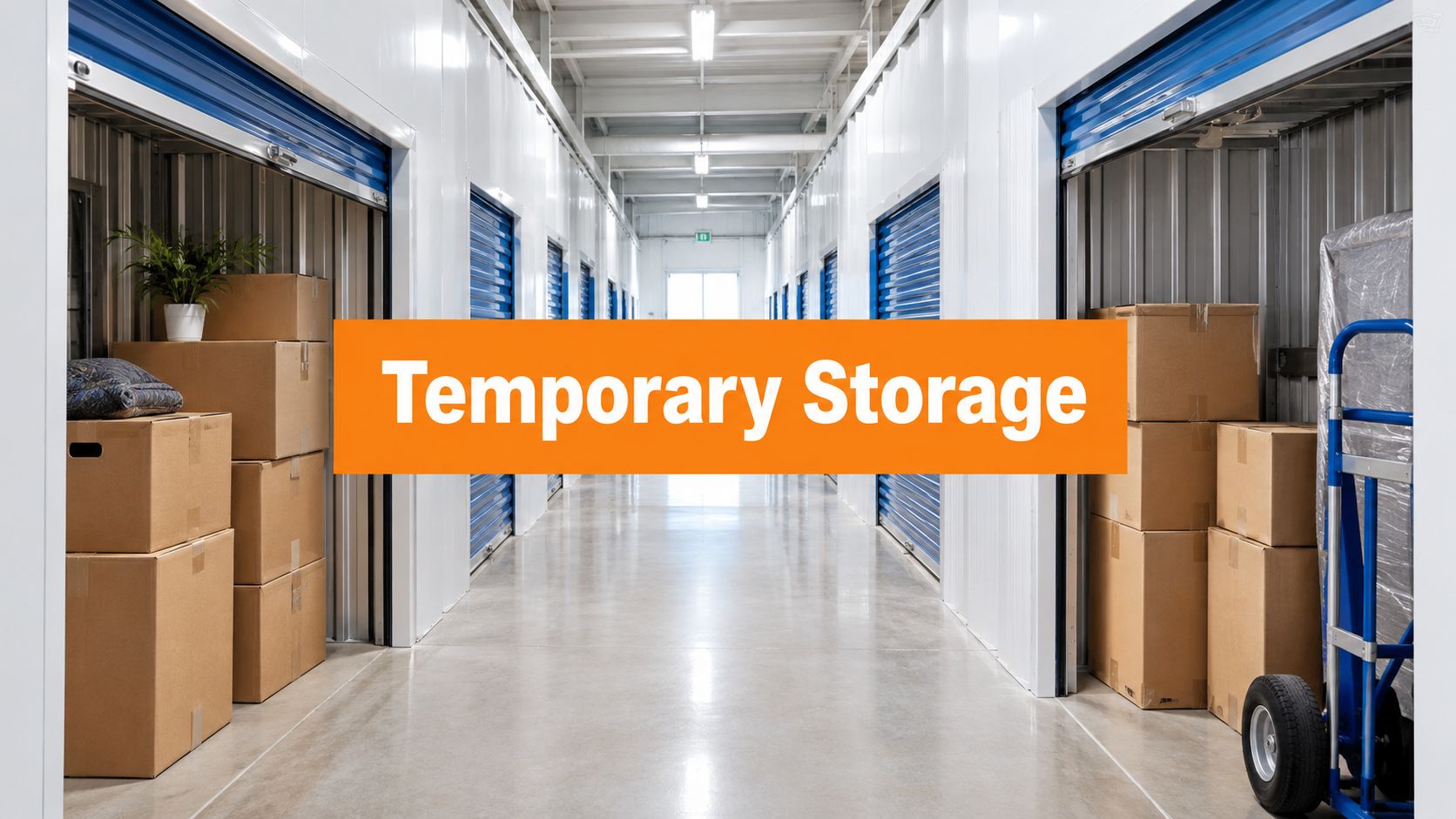
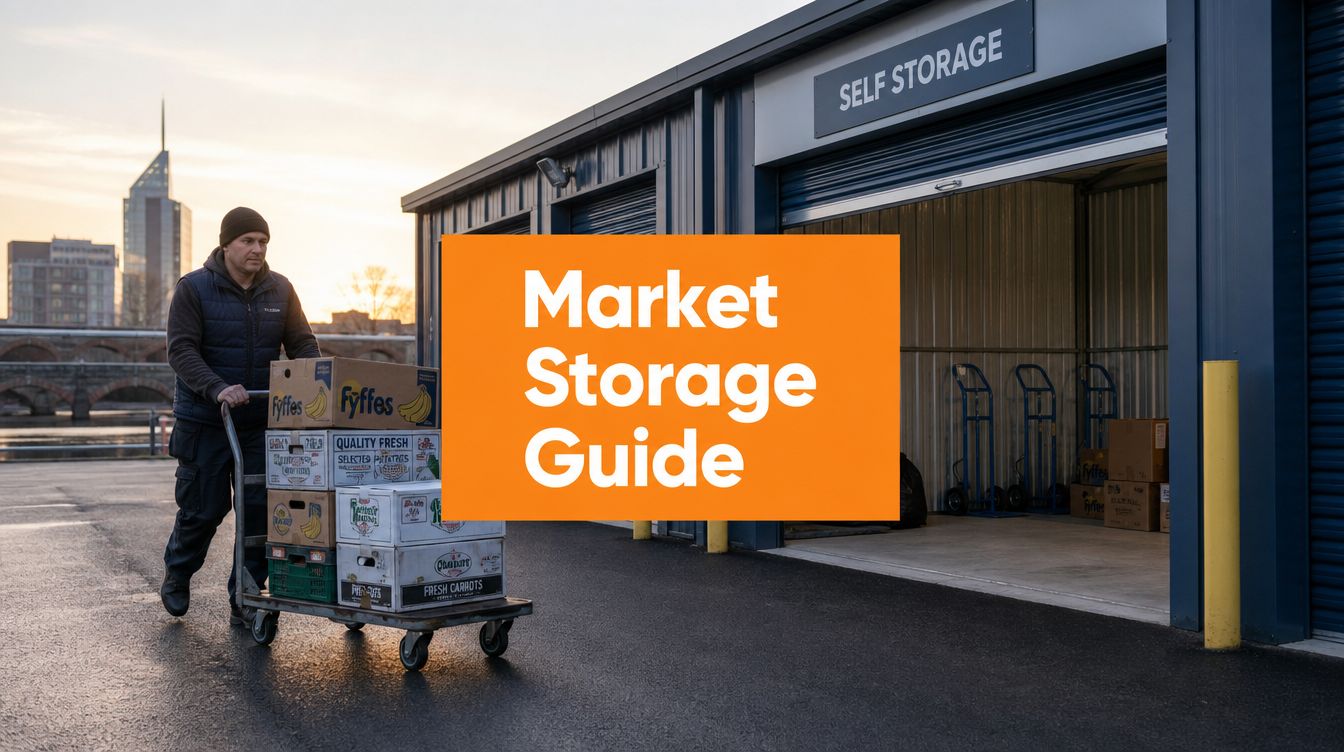
You've just finished a busy market morning in Reading. The van's packed tighter than you meant it to be, a few boxes are still under the tablecloths, and the stock you need for next week is sitting somewhere between the stall, the home office, and a spare corner you're hoping no one else claims. That's the point where storage for market traders in Reading stops being a convenience and starts becoming part of how the business runs.
Reading has always rewarded people who move goods well. It was already a settled place in the Domesday Book of 1086, and by the time the Corn Exchange opened in 1855, the town had developed the kind of commercial rhythm that keeps traders, merchants, and stock handlers busy history of Reading's Corn Exchange and market economy. That older trading culture still matters, because the same problem keeps showing up in a new form. Traders need a base that keeps stock safe, easy to reach, and ready to move fast.
How Smart Storage Improves a Trader's Workflow
The rough mornings usually begin the night before. Boxes get stacked in the wrong order, a banner ends up under heavier stock, and the van has to be repacked at 5 a.m. because the items needed first are buried at the back. A well-run storage unit changes that routine from guesswork into a system that supports the stall instead of slowing it down.
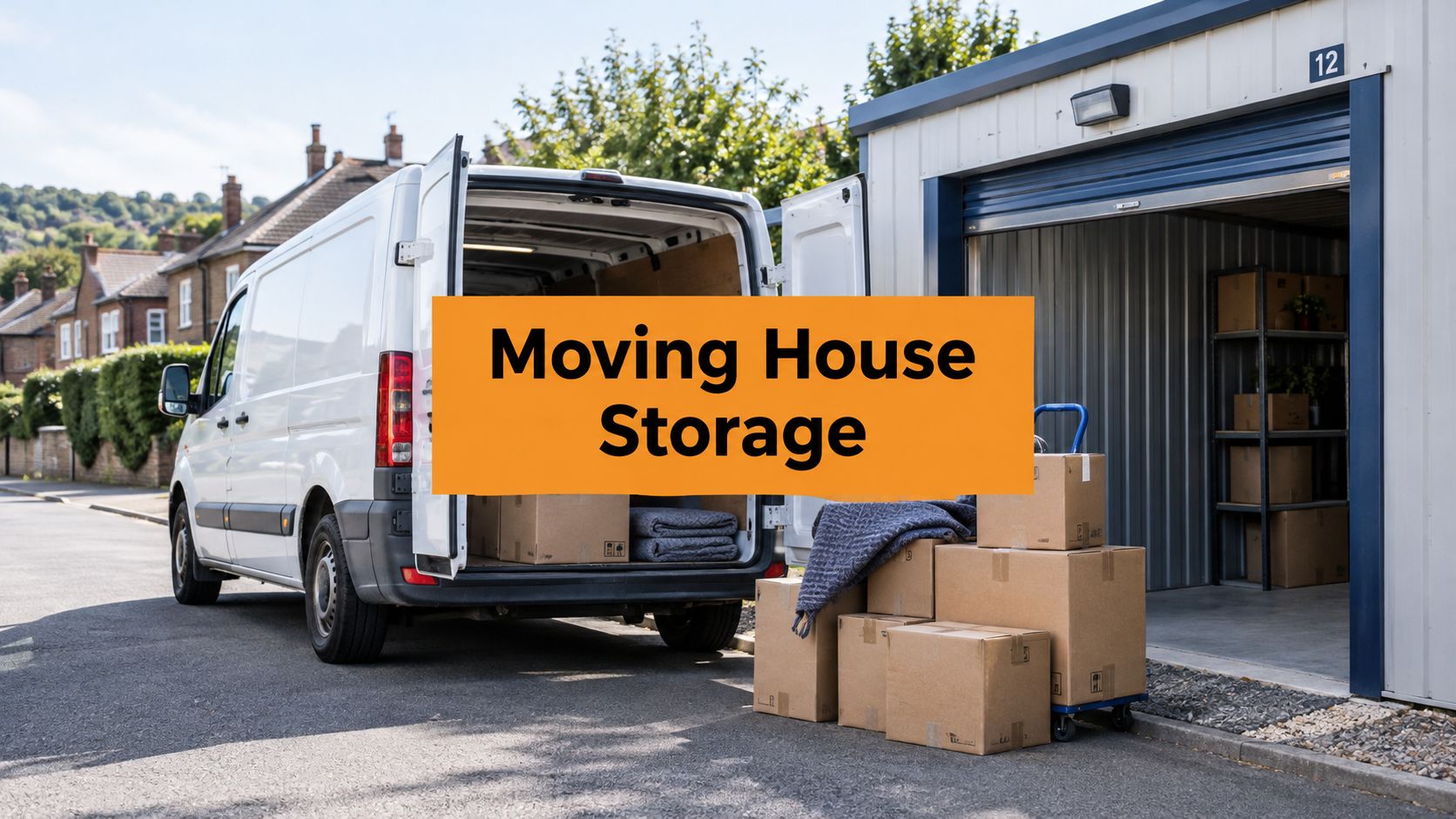
For Reading traders, value sits in the handoff between unit, van, and market pitch. Stock that is packed by stall order, kept in clear zones, and loaded with the morning route in mind is much easier to move through the town centre. A small unit near the right access point can save time on loading, reduce handling damage, and keep the stock you need for a busy trading day within reach.
Storage is part of the trading workflow
For many traders, storage is not just a backup space, it is part of the working day. A dry unit lets you pre-pack display stock, keep reserve lines separate, and store the items that become awkward if they are left loose in a van overnight. It also gives you a place to separate fragile stock from heavier cases, hold seasonal lines until they are needed, and keep packing materials where they can be grabbed quickly before an early start.
Practical rule: if you touch the same box more than once before it reaches the stall, the layout is working against you.
That is why storage matters more than renting extra square footage. A trader who keeps the flow tidy spends less time hunting for stock and more time serving customers. The same discipline helps with smaller, high-value items too. Careful sorting beats rough stacking every time, and the logic behind decluttering jewelry strategies applies well to market stock that needs to stay organised, protected, and easy to count at a glance.
Calculating Your True Storage Needs Beyond Square Feet
The mistake most traders make is starting with a unit size instead of a stock audit. That usually leads to paying for dead space, or worse, taking a unit that looks fine on paper but fails at the loading stage. The better approach is to count what you move, how often you need it, and what must stay separate.
Start with three piles. First, stock that turns quickly and needs frequent access. Second, bulky equipment like tables, rails, signage, gazebos, or boxes of packaging. Third, the stock that only comes out during seasonal peaks and sits for weeks or months at a time. If one category is taking over your van, it will probably take over your storage unit too.
Reading is a good example of why this needs to be flexible. The town's history of rapid change, from becoming a major railway hub in 1840 to accommodating 25,000 evacuees by 1941, shows how quickly space can tighten when conditions shift Reading's transport and disruption history. Traders face a smaller version of that same problem every year when stock levels rise and fall with trading cycles, weather, and event demand.
A simple self-audit that works
Use these questions before you book anything:
- What must stay accessible weekly? Put those items nearest the door or in the most reachable part of the unit.
- What can sit untouched for months? Those items can go deeper into the space.
- What is fragile or awkwardly shaped? Keep it padded, boxed, and isolated from heavy loads.
- What do you always forget to bring? Group those tools and spares together so they're easy to grab.
A solid inventory routine also stops you from renting space you don't need. If you want a practical structure for that process, the guide on best practices for inventory management is worth using alongside your own stock list.
Selecting the Right Unit Size and Access Type
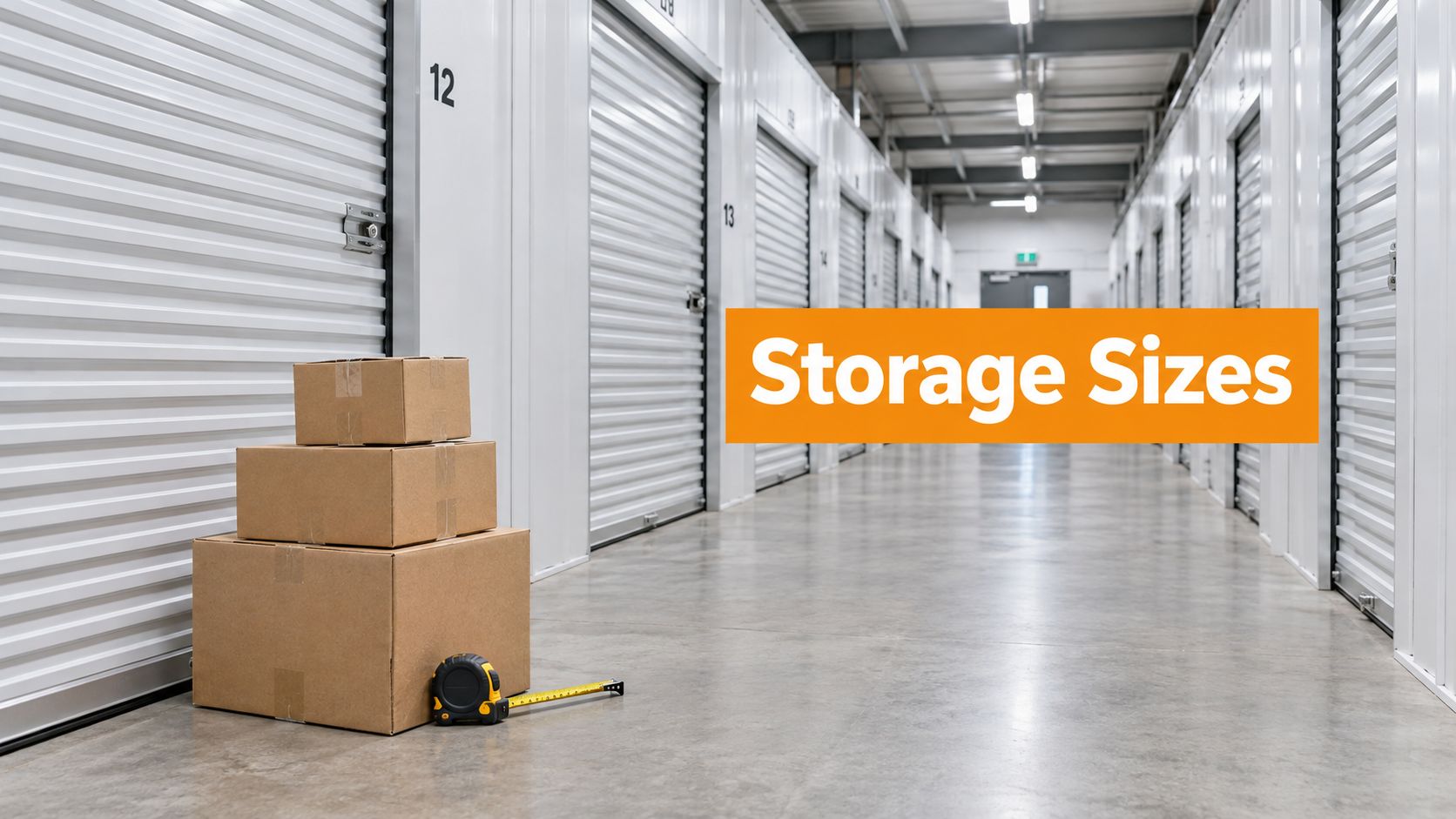
A storage unit only works for a trader if it fits the way stock moves. A small, tidy unit can be more useful than a bigger one with awkward access, especially when you're loading before dawn and don't want to drag heavy kit through corridors or upstairs doors. Think in terms of setup, not just capacity.
| Market Trader Storage Unit Size Guide | Approximate Capacity for a Trader | Best For |
|---|---|---|
| Small unit | Sample stock, boxed accessories, compact display items | Jewellery, small crafts, seasonal overflow |
| Medium unit | Mixed stock, folded displays, and repeat-use equipment | Clothing traders, gift sellers, general market stock |
| Larger unit | Bulky stall kit, tables, rails, gazebos, and reserve inventory | Food stalls, traders with full set-up equipment |
Match access to the way you trade
Ground-floor or drive-up access suits heavy or frequent loads. If you're shifting tables, crates, coolers, or boxed stock every few days, walking through a long internal route gets old quickly. An upper-level indoor unit can still work well for lighter boxes, archive stock, or slower-moving inventory, especially if your loading pattern is infrequent.
The key question isn't “How much fits?”. It's “How much do I need to move, and how often?”. A jewellery maker may only need a compact unit with careful shelving, while a trader with full stall equipment may need a larger footprint and easier vehicle access. If you're comparing options, it helps to see how a storage unit for market traders in Reading is laid out in practice, not just how it's marketed.
Strategic Location and Loading Logistics for Reading Markets
The best unit on paper can still be the wrong choice if the route to the stall is clumsy. For market traders, the last mile is the part that matters most, because a smooth handoff from unit to van to town-centre loading point saves time, energy, and stress on trading days. That's why location should be judged by route efficiency as much as by postcode.

Reading traders often benefit from thinking in terms of a local catchment area, not the whole town. Industry guidance suggests suburban self-storage trade areas are often about 3 miles, while dense urban areas can be tighter self-storage market research guidance. For traders, that's useful because the storage point needs to support quick movement into the market, especially when your stock is coming from industrial sites rather than sitting beside the stall.
Route design matters more than raw distance
A facility near the A33 or the Relief Road can be more useful than a seemingly closer spot that traps you in town-centre traffic. That's especially true if you're doing early-morning loading, when a short delay can throw off the entire setup. In Reading, that route logic is central to the practical question of whether storage makes your market day easier.
Useful check: if your van has to make awkward turns, wait for narrow gates, or back into a cramped bay, the unit is costing you time every single week.
When you compare facilities, ask how the loading bay works, whether vans can turn comfortably, and how access hours line up with your earliest setup. For traders who want a reading-specific overview, the local storage units in Reading page is a practical starting point. If your stock needs to move on wheels between a unit and a stall, choosing the perfect market cart becomes part of the storage decision too, because awkward handling equipment turns every trip into lost time.
Essential Security and Insurance for Your Market Stock
A trader's stock is part of the day's income, so off-site storage has to do more than keep boxes under cover. If you are holding goods that are easy to carry, easy to resell, and expensive to replace, a unit that feels casual or poorly managed is not worth the risk. In practice, that means looking for a facility that treats market stock with the same care you would expect from your own back room.
A serious site should have perimeter fencing, controlled access, and 24/7 CCTV monitoring. Those measures do not remove every risk, but they make unauthorised access harder and give you a stronger base for regular stock holding. For traders in Reading, the point is straightforward. If the stock matters enough to store, the site should show clear signs that it is being watched, controlled, and maintained properly.

Insurance should sit alongside security, not replace it
Good security lowers the chance of a problem. Insurance deals with the loss if something still happens. Market traders should check that business goods are covered for theft, damage, and the practical risks that come with keeping inventory away from the stall. If you rely on the building alone, you leave a gap that only becomes obvious after a loss.
Insurance also works better when your records are in order. Photos, stock lists, and clear box labels make it easier to show what you had and what is missing if a claim ever needs to be made. If you want one option that combines storage with cover, Standby Self Storage also offers storage unit contents insurance, which can sit alongside your own business arrangements when you're protecting market stock.
A trader who can name what is in each box is in a much stronger position than one who has to guess after something goes missing.
Smart Cost Management and Packing for Market Efficiency
The cheapest unit isn't always the cheapest choice. If you're paying for extra space you don't use, or driving back and forth because the layout makes retrieval slow, the hidden cost climbs fast. That's why flexible terms matter so much for traders whose stock rises and falls through the year.
Competitor-facing guidance in this space rightly stresses transparent pricing and flexible terms for seasonal swings market trader storage guidance. That fits Reading well, because traders here often need to scale space up or down without getting trapped in a setup that only works during one part of the year. Standby Self Storage's no notice periods or long-term commitments are one example of the kind of arrangement that suits that pattern.
Pack for retrieval, not just for storage
Good packing saves money because it saves time. Use clear, labelled boxes, keep a narrow aisle down the middle if the unit allows it, and group stall components in the order you set up. Tables, rails, canopy parts, signage, and electrical kit should never be scattered across the unit if you want an efficient loading routine.
For bulky containers, the article on best plastic storage boxes is a useful reference, because stackable boxes make better use of vertical space and reduce crush risk. A trader who keeps a clean packing pattern can usually find what they need faster, which means fewer wasted journeys and less chance of forgetting a critical item on market day.

Standby Self Storage gives Reading traders secure, flexible units that fit realities of stock movement, access, and seasonal change. If you need a storage base that helps you load faster, protect inventory, and stay organised through busy trading weeks, visit Standby Self Storage and compare the Reading options for your stall setup.