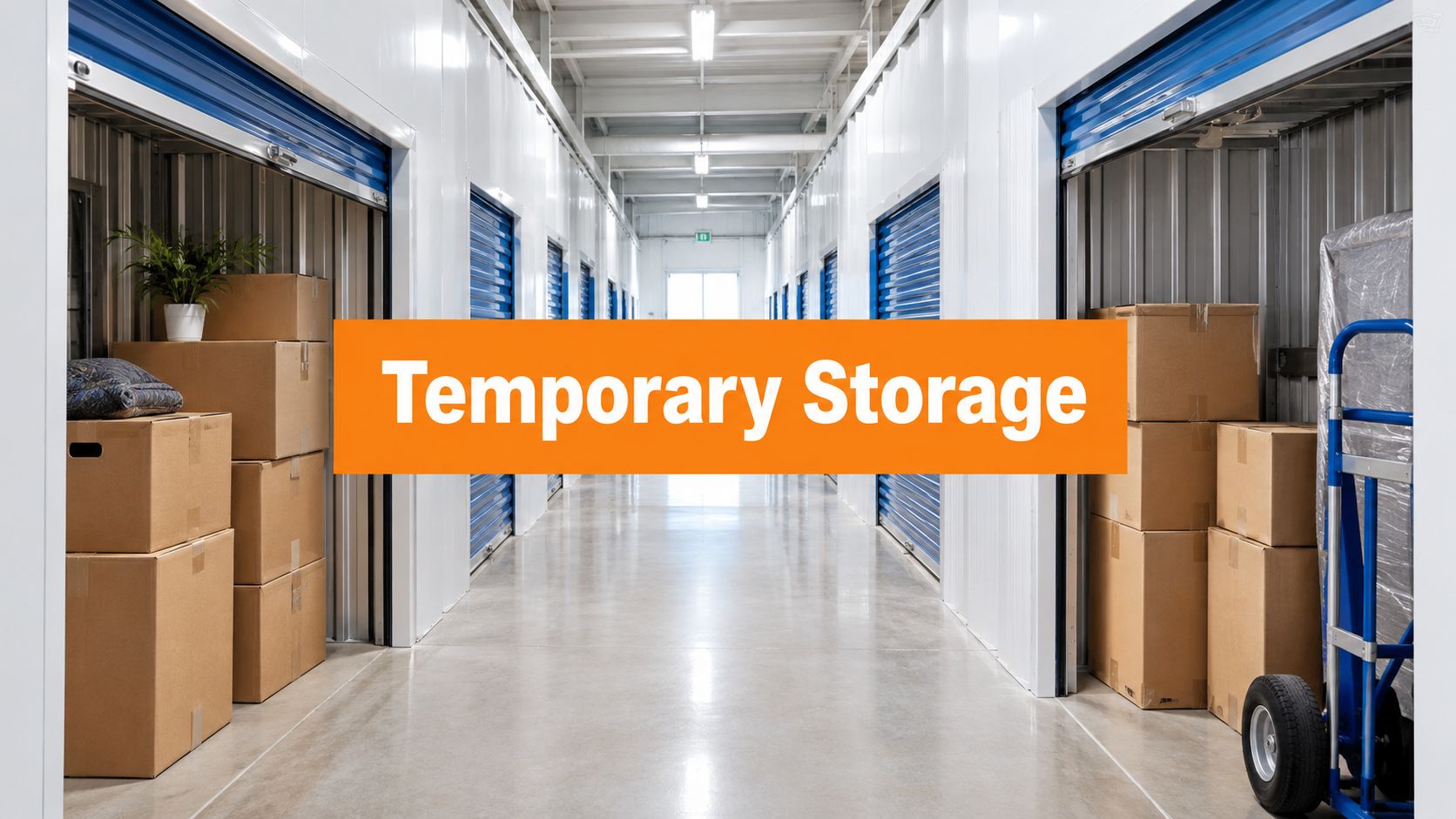
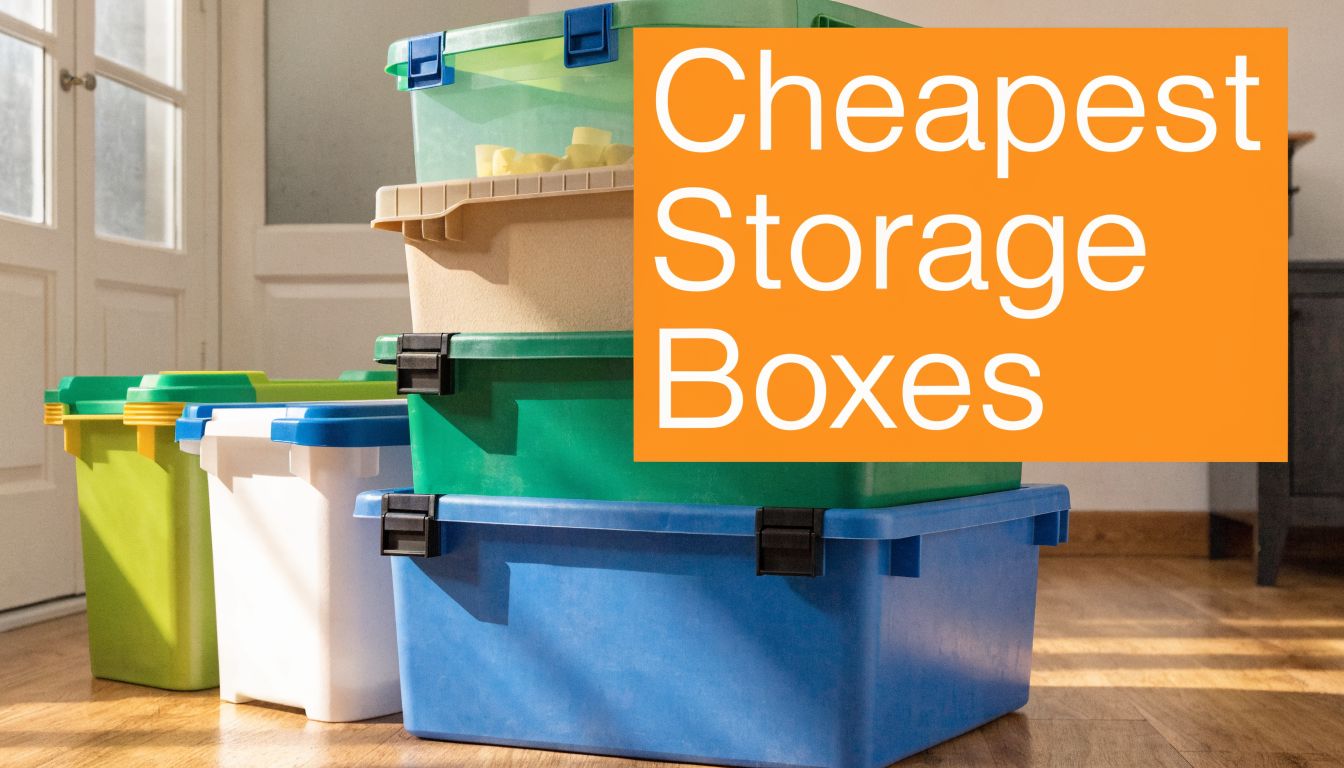
The box problem usually appears late.
You've sorted the furniture, booked the van, cleared a cupboard, or decided the spare room can't keep acting as a dumping ground. Then you start pricing up containers and realise the small stuff adds up fast. A handful of plastic boxes feels cheap. Thirty of them can become an annoying line item.
That's why people keep searching for plastic storage boxes cheapest instead of just “storage boxes”. They don't want designer organisation. They want something that works, stacks, survives a move, and doesn't waste money.
Don't Get Boxed In By High Prices
The demand is real. In the UK, the self-storage sector reached 1,200 facilities by 2023, and a Statista survey indicated that 28% of UK households purchased plastic storage boxes annually, with 62% prioritising units under £5 according to UK storage and household purchasing data.
That tells you two things. First, lots of people are trying to solve the same problem. Second, most buyers aren't looking for premium tubs. They're trying to stay under control on cost.
The mistake is treating “cheap” as a single question. It isn't. The actual calculation has three parts:
- Purchase cost. What you pay at the till.
- Replacement cost. What you pay again when a brittle box cracks or a lid warps.
- Storage cost. What poor box choices do to the amount of space you need.
A box that's cheap but awkward to stack can make you pay more elsewhere. That matters if you're also budgeting for storage space. If you need a clear view of the wider cost side, self storage pricing in the UK is worth checking before you buy a single container.
Cheap isn't just about shelf price
The best low-cost setup usually looks boring. Clear or lightly tinted boxes. Similar footprint. Lids that sit flat. No novelty shapes. No soft-sided substitutes for heavy contents.
Practical rule: Buy for the end use, not the shop display.
If you're packing winter clothes for a few months, the cheapest workable option may be fine. If you're storing tools, stock, paperwork, or kitchen gear, the wrong bargain gets expensive quickly.
A good buying plan starts before you compare shops. It starts with measuring what you need the boxes to do.
First Measure Your Needs Not Just Your Stuff
Counting items is useful, but it's not enough. You also need to judge weight, stackability, storage duration, and access frequency. Those four points tell you whether the cheapest box is a saving.

Professional storage facilities recommend polypropylene stackable boxes because they offer a 40-60% compression density advantage compared to loose item storage, are moisture-resistant, and typically withstand 15-25kg stacking loads without deformation, according to polypropylene storage box guidance.
That matters more than most buyers realise. In practice, a cheap box only works if it still works when it's full, stacked, and moved twice.
Use a quick four-part box test
Run through this before you buy:
What's going inside
Books, tools, paperwork, cables, and kitchen kit need stronger walls and better lids. Bedding, coats, and soft toys are far more forgiving.How long will it stay packed
Short-term moves allow more compromise. Long-term storage needs tougher materials and more consistent sizes.Will you stack high
If the answer is yes, flimsy tubs stop being cheap. They bow in the middle, lids flex, and stacks lean.Will you need regular access
If you're opening boxes often, clear sides and standard sizes save time.
Match the box to the job
There's no prize for buying the absolute lowest-priced tub if it only suits one category of item. A better approach is to split your load:
- Use budget boxes for soft goods like duvets, spare linens, and out-of-season clothing.
- Use sturdier polypropylene boxes for anything dense or breakable.
- Reserve a few larger containers for awkward items, but don't build your whole system around oversized tubs.
If you're reducing household volume before a move, this guide on intentional living through downsizing and decluttering is useful because it helps cut the number of boxes you need in the first place. That's always cheaper than finding a slightly better deal on too many containers.
A badly chosen box doesn't fail in the shop. It fails when you lift it, stack it, or try to find one thing at the back.
Measure space before you chase bargains
Work out the footprint you're packing for, not just the contents. Count likely stacks, aisle space, and whether you need shoulder-height access or full-height stacking. If you're unsure, a storage space calculator and unit guide helps you estimate how many boxes your setup can reasonably hold.
The cheapest buying decision is often the one that keeps your box sizes consistent enough to use the full height of your space.
Where to Hunt for the Cheapest Plastic Storage Boxes in the UK
Many guides on plastic storage boxes cheapest point you towards US retailers, which isn't much help in the UK. Regional variation matters here. UK-based research shows prices can differ by 15-25% across regions, including places such as Croydon and Aylesbury, according to UK retailer and regional pricing context.

That means the “best shop” isn't always one shop. It depends on how fast you need the boxes, how many you need, and whether transport wipes out the saving.
Discount chains
B&M, Home Bargains, Poundstretcher, and similar stores are usually the first places to check for basic plastic tubs.
What works well
- Low entry prices on everyday sizes.
- Good for quick top-ups when you suddenly need five more boxes.
- Useful for plain clear bins without paying for premium branding.
What doesn't
- Stock changes constantly. You may find a great box one week and none the next.
- Sizes can be inconsistent across different branches.
- Lids may be sold separately or fit loosely on cheaper lines.
The trade-off is simple. Discount chains are strong on price, weak on consistency.
Supermarkets and seasonal aisles
Tesco, Asda, Sainsbury's, and larger supermarkets can surprise you, especially around back-to-school periods and general home organisation promotions.
They're rarely the very cheapest option for a full-unit packing job, but they're convenient if you want to inspect the plastic before buying. That's helpful because some low-cost boxes feel acceptable empty and flimsy when you press the base corners.
If you can twist the empty box too easily in the aisle, don't trust it with dense contents.
Online marketplaces
Amazon and eBay make comparison easy. They're useful when you need a specific depth, latch style, or multipack that local shops don't carry.
The catch is simple. Always calculate the true per-box price after delivery. Cheap-looking listings often stop being bargains once carriage is included, especially for single units or oversized tubs.
Check these points before ordering:
- Box dimensions. External size can look generous while internal usable depth is disappointing.
- Lid arrangement. Some listings show a lid in the image but price the base alone.
- Pack uniformity. Mixed bundles don't stack as neatly as they appear online.
Second-hand sources
Facebook Marketplace, Gumtree, local selling groups, and Freecycle can beat every retailer on price. Sometimes they win by a lot. They're best for bulk clear-outs, house moves, and temporary storage projects.
Second-hand only works if you inspect properly. Look for:
- Cracks at handle points
- Warped lids
- Strong smells from previous use
- Sun brittleness, especially in boxes kept in sheds or conservatories
A used high-quality box is often a better buy than a brand-new flimsy one. The downside is time. You'll spend more effort collecting, cleaning, and sorting.
Smart Strategies to Slash Your Costs Further
The shop matters. Timing matters just as much.
In the UK, seasonal promotions on storage products can range from 15-35%, and bulk buying during those windows can reduce per-unit cost to £1.50-4 per box, compared with standard pricing of £3-8, according to seasonal storage box pricing guidance.

That's the difference between buying reactively and buying with a plan.
Buy in waves, not in panic
Most overspending happens when people buy boxes in a rush and keep topping up in random ones and twos. That creates three problems. You pay more per unit, you end up with mixed sizes, and you often buy too many of the wrong kind.
A better method is to split your purchase:
- First wave for the core load. These should be your main stacking boxes.
- Second wave only after one trial pack, when you know whether you need more shallow, deep, or specialist tubs.
Use plain negotiation when buying second-hand
You don't need elaborate haggling. Short, practical messages work best.
Try:
- “I can collect today if you're happy to take one price for the lot.”
- “Would you consider a lower price if I take every box and lid together?”
- “Are any cracked or missing lids before I travel?”
That last question saves wasted journeys.
Watch the expensive details
Cheap boxes become average-priced quickly when small extras pile on. Watch for:
- Separate lids
- Collection fuel or parking
- Delivery charges
- Buying oversized boxes you can't stack properly
- Impulse purchase of organisers you don't need
Buying rule: If an accessory doesn't protect the contents or improve stacking, leave it.
Bulk deals can be excellent, but only if the box itself is right for the job. Ten unusable tubs are still wasted money. The best savings come from combining a sale price with a sensible box size and a realistic quantity.
Packing for a Purpose to Maximise Your Investment
Buying cheaply is only half the job. Packing well is what turns those boxes into actual value.
A British Standards Institution test found that 88% of budget plastic bins can withstand 50 stack cycles at 15kg loads, according to BSI durability guidance for plastic bins. That's encouraging, but durability depends heavily on how you load them. Overfill the corners, put dense items in oversized boxes, or build uneven stacks, and even decent budget tubs become a liability.
Build stable stacks from the start
Uniformity beats improvisation. If most of your boxes share the same footprint, you can stack higher with less movement and less dead space.
Use these rules:
- Keep heavy items low. Books, tools, files, and canned stock belong in the bottom layer.
- Fill voids. Half-empty boxes collapse more easily when another box sits on top.
- Don't mix random footprints in one column. A narrow box on a wide lid is asking for trouble.
- Label two sides and the lid. Front-only labels disappear once boxes are stacked.
A simple labelling system works best. Category, room or use, then priority. For example: “Kitchen. Dry goods. Open first” or “Records. 2023 invoices. Archive”.
Leave yourself retrieval space
People often pack a unit like a game of Tetris and regret it later. If you expect to retrieve items during the storage period, leave a narrow access lane and keep frequent-use boxes near the front.
That's the same logic people use when buying train tickets on a budget. The lowest headline price isn't always the best overall outcome if it creates hassle later. Storage works the same way. A slightly less dense pack can save repeated lifting and re-stacking.
Use proper packing materials where they count
Cheap plastic boxes still need sensible internal protection. Wrap fragile contents, cushion gaps, and avoid loose sharp edges pressing into the sides. If you're storing breakables, glassware, electronics, or paperwork, packing materials for storage can make the difference between a bargain setup and damaged contents.
Estimated Box Capacity for Standby Self Storage Units
The exact number depends on box dimensions and whether you leave an access aisle, but this guide helps with planning.
| Unit Size (sq ft) | Estimated Box Capacity | Ideal For |
|---|---|---|
| 10 sq ft | 8 to 12 boxes | A few archive boxes, student essentials, seasonal items |
| 15 sq ft | 12 to 18 boxes | Small flat overflow, tools, spare household goods |
| 25 sq ft | 20 to 35 boxes | Studio flat contents, business stock, renovation storage |
| 35 sq ft | 30 to 50 boxes | One-bedroom home overflow, mixed furniture and boxes |
| 50 sq ft | 45 to 70 boxes | Larger household loads, regular business access |
| 75 sq ft | 70 to 100 boxes | Dense archive storage, ecommerce inventory, full room contents |
These are estimates, not guarantees. Box shape, stacking confidence, and access needs change the total. Still, they're useful because they force you to think in terms of system, not just boxes as individual purchases.
Good packing makes cheap boxes look smarter than they are. Bad packing can make strong boxes fail early.
Your Smart Storage Journey Starts Now
The cheapest route isn't grabbing the lowest sticker price and hoping for the best.
It's choosing boxes by use, buying from the right places, waiting for good windows when you can, and packing in a way that saves space instead of wasting it. That's what turns a budget purchase into a proper storage system.
If you remember one thing, make it this. The cheapest plastic storage box is the one that fits the job, survives the move, and helps you use your space properly.
That's good for students between terms, households clearing rooms during renovations, tradespeople storing kit, and small businesses trying to keep stock organised without overspending.
Spend less on the wrong boxes and you usually pay more later. Spend carefully on the right ones and the whole project gets easier.
Frequently Asked Questions About Cheap Storage Boxes
Are the absolute cheapest boxes under £2 ever worth it
Yes, for light and low-risk contents. They're fine for clothing, bedding, soft toys, or other items that won't stress the base or sides. They're a poor choice for books, crockery, tools, or anything heavy enough to test the handles and lid rim.
Is it better to buy all boxes in the same size
Usually, yes. Matching sizes stack better, waste less headroom, and make labelling simpler. It's still sensible to keep a few larger or differently shaped boxes for appliances, lamps, or awkward household items.
What's the main advantage of plastic over free cardboard boxes
Plastic boxes hold their shape better, cope better with damp conditions, and can be reused many times. Cardboard can still be useful for short-term moves, but plastic is the stronger option when you want durability, stacking stability, and better long-term organisation.
If you need flexible storage to go with a smarter packing setup, Standby Self Storage offers secure self storage across multiple UK locations, with online booking, straightforward sizing help, and flexible terms that make it easier to store exactly what you need without overcommitting.