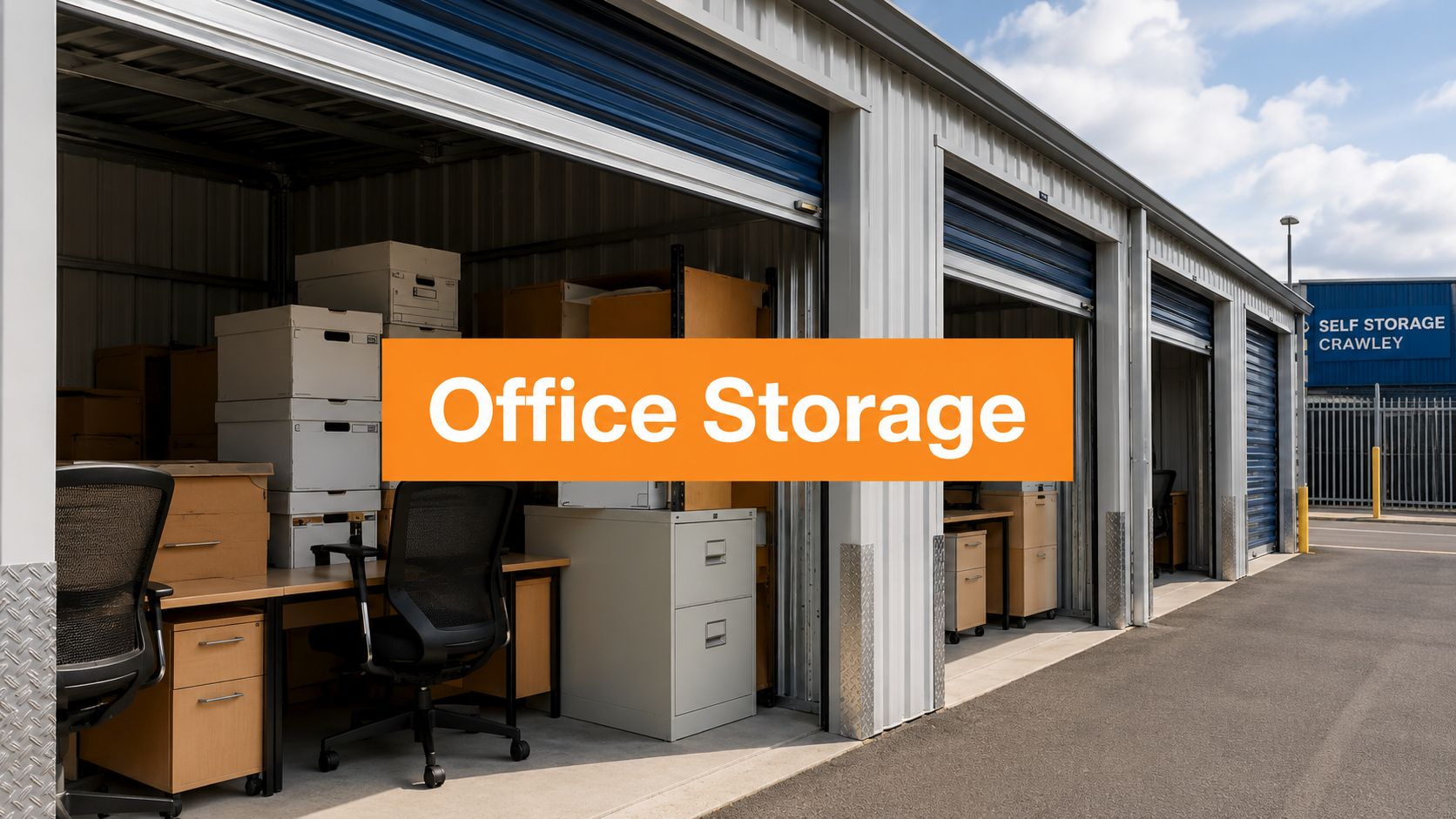
You've cleared a floor, packed up a refit, or inherited a row of desks nobody wants to throw away yet. The office still needs to reopen, but the furniture has to go somewhere in the meantime, and that's where storage for excess office furniture in Crawley becomes a practical decision rather than a nice-to-have. The question isn't “should we get storage?”, it's whether the surplus is worth storing, disposing of, or reusing.
When Crawley Businesses End Up With Surplus Office Furniture
A Crawley business usually doesn't end up with spare desks and chairs by accident. It happens when a lease changes, a team moves off-site, a fit-out runs ahead of the move, or the office no longer needs the same footprint. On Manor Royal, that can mean a full loading bay full of desks, screens, filing cabinets, and boxed supplies that were perfectly useful last week and are suddenly in the way.
The first mistake is treating every extra item the same. A conference table with a future home inside the business is not the same as a tired swivel chair with a cracked base. One belongs in a storage plan. The other may belong in disposal, donation, or resale.
The decision usually starts with timing
If the furniture might be needed again after the move, storage buys you time. If the item is still presentable and there's a clear reuse route, moving it into a unit can be cheaper than rushing a poor disposal decision. If it's end of life and the office needs the floor cleared immediately, the right answer is often removal.
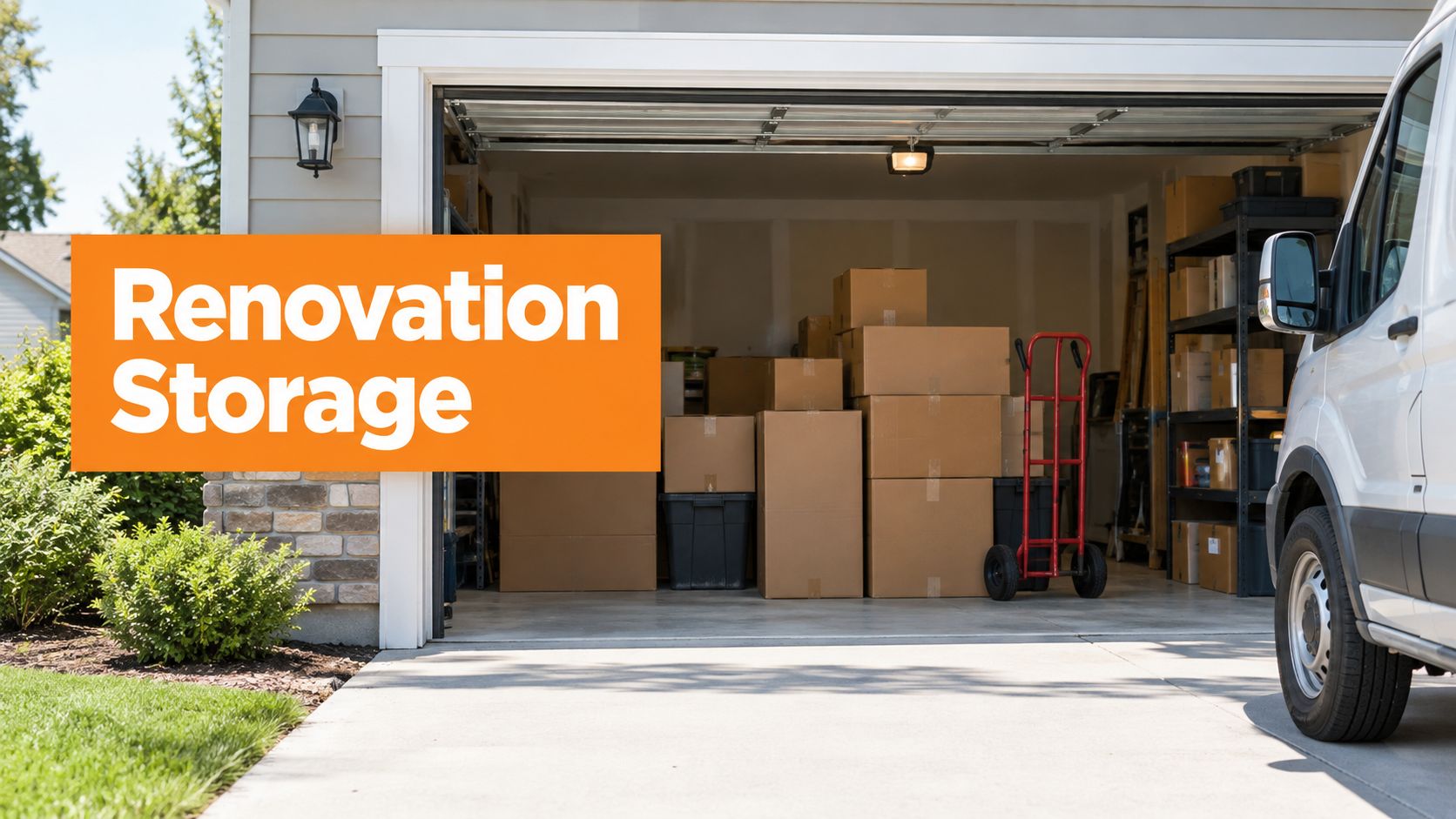
The same pattern shows up during refits, downsizing, and archive consolidation. I've seen teams in Crawley store furniture for a few weeks while final desk layouts settle, then pull only what they need back out once the space plan is confirmed. That's a very different use case from a full clear-out where nothing is coming back.
Practical rule: if the item might still earn its keep, don't force a same-day disposal decision while the move is still live.
That's why storage for excess office furniture in Crawley is usually a bridge, not an end state. It gives the business room to decide properly, instead of making a rushed call when the loading bay is already full.
Sizing Your Crawley Unit by What You Actually Need to Store
The right unit size comes from volume, not guesswork. Crawley operators commonly position 35 sq ft units as suitable for bulky items such as tables, chairs, a double bed, and office gear, while larger facilities in the area advertise 15 sq ft to 200 sq ft options and even up to 320 sq ft Henfield Storage's Crawley size guide. That gives you a useful ladder, from archives to full office clear-outs.
Start with the smallest category that still fits the job
A 15 sq ft unit works for archive boxes, small boxed supplies, or a narrow overfill of paperwork. Once you add furniture, the conversation changes quickly. A 35 sq ft unit is the local benchmark for bulky office items, which is why it keeps coming up in Crawley pricing pages and facility descriptions.
If you're storing desks, chairs, and filing units, don't think in item count. Think in footprint plus handling space. A dismantled desk takes less room than one left intact, but if you can't open a cabinet door or reach the back wall, the unit is too tight even if the furniture technically fits.
Walk the room before you book
Measure the furniture you plan to store, then sketch the floor area it occupies. Add a clearance margin for access, because you'll need to move around items, not just stack them like a crate. That matters even more if the unit will hold mixed items, since one awkward cabinet can block a whole row of chairs.
For office users who want a broader unit overview, this office storage unit guide is a useful reference point when comparing small, medium, and larger business spaces.
Rule of thumb: if you need to leave items in retrieval order, size up before you book. A cramped unit costs less upfront and more in time later.
What Storage Costs in Crawley
A local Crawley price point for a 35 sq ft unit is £12 per week, and one provider says its similar Crawley unit is 27% less than the nearest Storage King option for the same area, with that comparison made in May 2024 Ease the Squeeze Crawley pricing. For an operator, that is the first useful split in the market. A small business-friendly unit in Crawley is not priced like a warehouse bay, and the gap between providers can be wide enough to matter on a refit budget.

Why headline prices differ
The quote changes because a unit is never just floor area. Ground-floor access, security, site layout, and the size of the unit all affect the number you see. The cheapest rates usually sit at the small end of the range, and once you move up to hold desks, chairs, and filing cabinets, the weekly cost climbs with the space.
A useful way to judge value is to compare similar units on similar terms. A Crawley quote for a compact 35 sq ft room tells you little about the cost of a full office clear-out, and a larger unit can look expensive until you weigh it against the space you would otherwise lose in the office. If you want a broader benchmark for how operators present size and cost, this self-storage cost guide is a useful reference point. You can also use compare storage unit prices to check how unit size, access, and price are usually weighed together.
Disposal is not a flat-fee shortcut
Crawley Council's bulky-waste service prices each item individually and requires a call to 01293 438772 for a quote Crawley Council bulky waste collections. That matters because a couple of spare chairs are one thing, but a run of desks, filing cabinets, and swivel chairs stops being a quick clear-out.
That pushes the decision away from “get rid of it now” and toward a short holding period while the furniture is sorted, reused, or removed in stages. For many office moves, that is the cheaper and cleaner option, especially when the alternative is paying disposal charges before the refit plan is settled.
For businesses comparing storage against disposal, the pricing picture only makes sense when you look at both sides of the equation. Storage is a weekly holding cost, while disposal can be uneven and item-led, so the right answer depends on whether the furniture still has reuse value, whether staff can take any of it, and how quickly the premises need to be cleared.

Security and Insurance Considerations for Business Storage
Local Crawley facilities describe clean, dry, weatherproof, ventilated containers with 24/7 CCTV, fencing, and gated drive-up access, while industry guidance for UK commercial storage emphasises climate-controlled conditions, restricted access, and audit-trail security for higher-value business assets Crawley long-term storage guidance. For office furniture, that combination is more important than many people realise, because the damage risk isn't only theft. It's also moisture, condensation, and long-term wear.
Check the site, not just the quote
A proper walkaround should tell you whether the site has perimeter fencing, controlled gate access, active camera coverage, and units that feel dry rather than merely “indoors”. If the facility stores business assets, ask how access is recorded and who can enter after hours. Those details matter when you're trusting desks, cabinets, and archived materials to a third party.
Insurance is the other half of the risk check. For business contents in storage, you should confirm whether your own policy extends to a self-storage unit or whether the facility offers its own cover. A general policy for the office often doesn't translate neatly to an off-site unit, so the paperwork needs a proper reading, not a quick tick-box.
For a practical insurance checklist, this self-storage insurance guide is a useful place to start before you sign anything.
Stable conditions reduce the risk of swelling, veneer failure, corrosion on fixings, and fabric degradation during longer storage periods.
Why environmental control matters even for furniture
Laminated desks, upholstered chairs, and metal filing cabinets all age badly if the environment swings around too much. The goal isn't luxury, it's consistency. Dry, ventilated storage helps keep the furniture in a condition where it can be reused without a restoration bill later.
If the item is valuable enough to keep, it's worth storing it in a place that treats it like business equipment rather than spare household clutter. For some firms, that means choosing a facility with stronger access control. For others, it means avoiding a damp unit at all costs.
For insurance and facility specifications, Schneider and Associates' self storage facility insurance coverage is a useful reference if you need to understand how business storage risk is usually assessed.
Preparing Office Furniture for Months-Long Storage
The biggest storage mistakes happen before the van even arrives. Dust, food residue, and trapped moisture are the usual reasons furniture comes back looking worse than it went in, and that is avoidable with basic preparation. Clean each item, let it dry fully, and don't store anything that still carries spill marks or damp fabric.

Break the furniture down properly
Desks, modular screens, and tables usually store better when dismantled, because they waste less space and put less stress on fixings. Bag screws, brackets, and Allen keys together, then label the bag with the item name and the room or department it belongs to. That one step saves a lot of time when something needs to come back out quickly.
Upholstered chairs should be wrapped so dust doesn't settle into the fabric, and laminate surfaces need protection from scratches. Cardboard edge protectors, moving blankets, and stretch wrap all have their place if the furniture is going to sit for months rather than days. The point is not to cocoon everything endlessly, it's to stop contact damage during handling and stacking.
If you're also dealing with perimeter or loading-bay security at the office site, a local provider such as CCTV services near Crawley can be relevant for the move-out side of the operation, especially where furniture is staged before collection.
Stack for access, not just density
Heavy items go low. Light items go up. That sounds obvious, but it's where many storage bays go wrong once the team is under time pressure. Don't point-load a chair seat with boxes, don't bury important parts at the back, and leave air gaps so the furniture can breathe.
A neat unit is not just tidier, it's safer. You want to be able to pull out a desk leg, a chair, or a filing cabinet without unloading half the unit first. That is what turns storage into a usable business tool rather than a locked pile of regret.
A scratched tabletop or swollen drawer base can cost more to fix than months of storage. Preparation is part of the storage fee in practical terms, even if it doesn't show up on the invoice.
Transport, Access, and Crawley Logistics
Move-in day usually goes smoothly when the route and access are sorted before the van turns up. Drive-up units are the easiest option for desks, filing cabinets, and chairs because the team can unload straight at ground level. If the facility uses upper floors or internal lifts, you need a better packing plan and more labour on site.
Think about timing as well as distance. Crawley town-centre traffic, office opening hours, and loading restrictions can all slow a move if you leave everything to the last minute. A short route from the office to the unit is useful, but only if the site lets you get in, park, and unload without a queue.
What to confirm before the van leaves
Ask whether the site needs a booking slot for larger vehicles, whether access is available outside office hours, and whether your driver can pull right up to the unit door. Those three details decide how long the move takes. They also decide whether you need one van trip or several.
Crawley Council's bulky-waste process is a good reminder that large-item logistics in the town are treated as scheduled work, not casual kerbside clutter. The same logic applies to moving office furniture into storage, especially when the items are awkward, heavy, or being handled in a tight loading bay.
- Check the vehicle size: A small van may work for boxed supplies, but desks and cabinets usually need more space and better tie-downs.
- Confirm site access: Make sure the site can handle your arrival time, especially if your office is near busier roads or shared commercial yards.
- Protect the route: Use blankets, straps, and corner protection so the furniture doesn't get damaged between the office and the unit.
A calm move beats a fast one that damages a desk on the pavement. The aim is to get the furniture off-site once, then leave it there in a condition you can reuse.
Store, Dispose, or Reuse the Surplus Furniture
The right call usually depends on each item, not the office as a whole. One chair may be worth holding in storage for the next department shuffle, one cabinet may be suitable for a charity or another team, and one tired desk may be cheaper to clear out. In Crawley, bulky-item disposal is handled as a quoted service, so the cost depends on what is being taken away and how much there is, which makes the choice between storage, disposal, and reuse a practical one rather than a one-size-fits-all answer.

A simple comparison that holds up in practice
| Option | Typical Cost | Speed | Best For |
|---|---|---|---|
| Store | Ongoing weekly fee, such as £12 per week for a 35 sq ft Crawley unit | Fast to arrange once the unit is booked | Furniture with a realistic chance of reuse |
| Dispose | Item-by-item quote based on the load | Good when the item is already unwanted | End-of-life furniture that needs clearing now |
| Reuse | Often the lowest cash cost if a buyer, donor, or internal user already exists | Depends on who takes it | Modern, presentable items with clear demand |
How the decision usually lands
Storage makes sense when the furniture still has value and the business is not ready to commit to a permanent answer. It gives you time to sort the office properly, check what the new layout needs, and avoid scrapping items that could still do a job later. For mixed loads, that breathing room matters.
Disposal makes sense when the item has no realistic future use and the office needs the floor cleared straight away. It is the cleaner route for damaged desks, worn-out seating, and anything that would cost more to keep than to replace. Once an item has reached that point, paying to store it just delays the same decision.
Reuse or resale works best when the furniture is clean, current, and easy to place with someone else. That can mean an internal move to another branch, a donation, or a sale if there is a market for it. The practical trade-off is simple, reuse brings the lowest direct outlay, but only if someone is ready to take the item and it will move quickly enough to suit your timetable.
In Crawley, many businesses hold the surplus in storage first and make the final call after the move settles. That is not hesitation for its own sake, it is a way of avoiding a rushed disposal on items that may still have value. It also keeps the loading bay clear, which helps when the office is already busy with refit work.
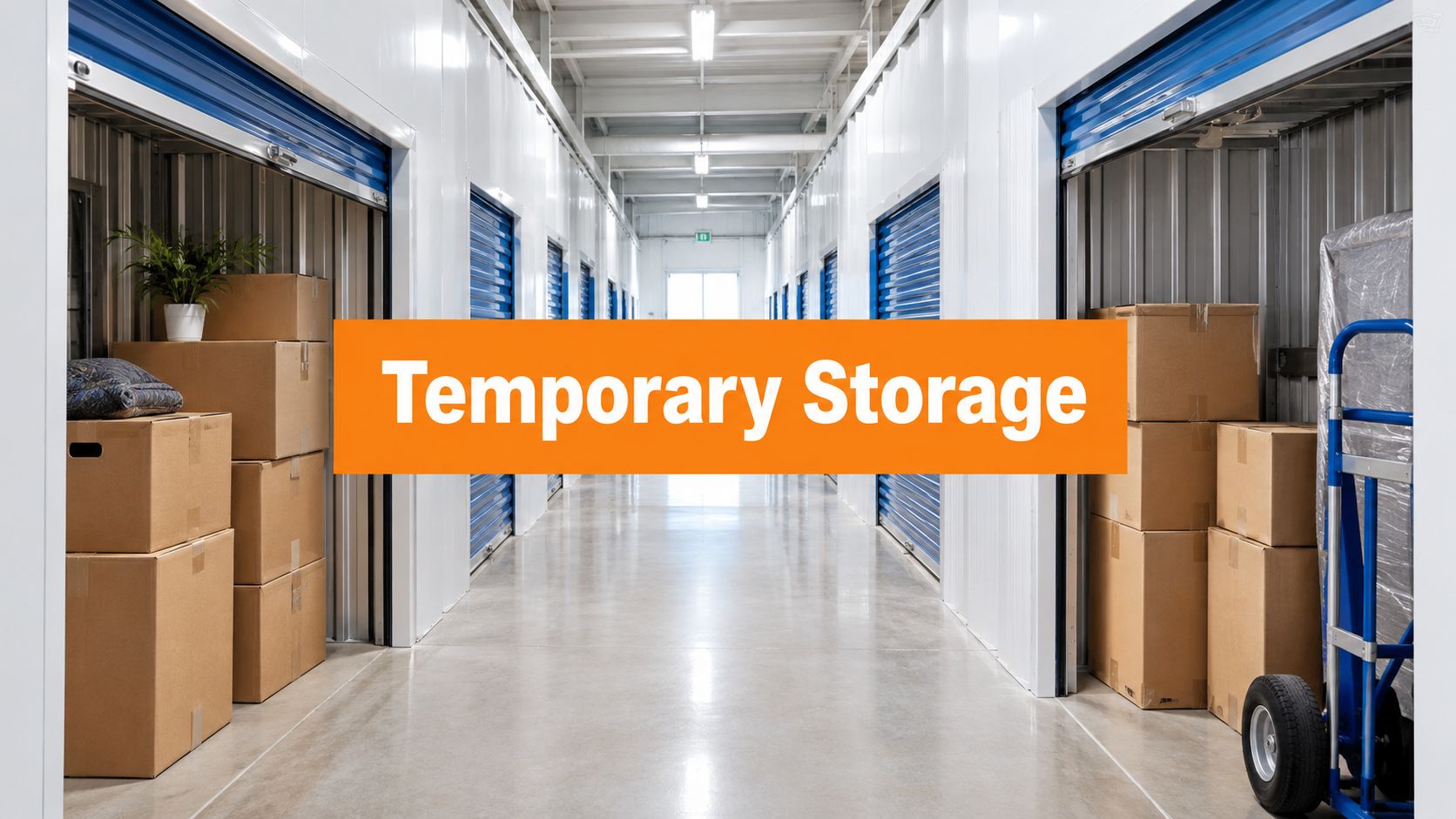
If the choice is unclear, temporary storage gives you room to sort the furniture without forcing a bad decision on deadline day. For surplus office furniture, that is often the neatest way to balance cost, timing, and the chance of reuse.
Booking the Right Unit and Getting Started
Start with a list, not a guess. Measure the furniture, shortlist the likely unit size, and ask for a quote from at least one nearby provider before the refit deadline gets too close. Confirm access hours, insurance expectations, and whether the unit is drive-up or needs extra handling.
Flexible terms matter because office plans slip. Fit-outs run late, people change roles, and storage needs can shrink as quickly as they grow. A unit that can be taken without a long notice period is much easier to live with when the furniture is only there for a transition.
If you're sorting storage for excess office furniture in Crawley, don't wait until the office is full of boxes and the van is booked. Book the space while you still have room to measure properly, and use the move as the moment to decide what stays, what goes, and what comes back into service.
Standby Self Storage offers flexible business storage with secure, accessible units that suit office furniture during refits, relocations, and temporary oversupply. If you're planning a Crawley move and need a straightforward way to keep desks, chairs, and cabinets safe while you decide what happens next, visit Standby Self Storage and book the unit size that fits your load.