Warehouse self storage is a bit of a game-changer. It’s a hybrid solution, blending the sheer scale of a commercial warehouse with the flexibility and easy access you get from a personal self storage unit.
It’s built for businesses and individuals who find themselves in a common predicament: they need more space than a standard unit offers, but they’re not ready for the complexity and long-term commitment of a full commercial lease. Think of it as your own scalable, on-demand stockroom.
Understanding the Warehouse Storage Model
Imagine your business is taking off. The spare room at home is overflowing with inventory, the garage is packed to the rafters with equipment, and your small storage unit is practically bursting at the seams. You desperately need more space, but leasing a massive commercial warehouse feels like a huge, expensive leap.
This is the exact problem warehouse self storage was designed to solve.
It perfectly occupies that middle ground, offering a practical 'pay-as-you-grow' alternative. Instead of being locked into a rigid, long-term contract for a space you might not even fill, this model gives you the square footage you need on terms that work for you.
The Best of Both Worlds
Warehouse self storage cleverly merges the key benefits from two very different storage types. You get the large, open-plan spaces typical of a warehouse—perfect for palletised goods, bulky machinery, or extensive archives. At the same time, you keep the convenience and control of traditional self storage.
Key features usually include:
- Flexible Contracts: Most facilities operate on a simple monthly or rolling basis. This allows you to scale your space up or down as your needs change.
- Direct Access: Unlike managed warehousing where staff handle your goods, you have direct, personal access to your unit. You can manage your inventory entirely on your own schedule.
- Cost-Effectiveness: You only pay for the space you use, neatly sidestepping the significant overheads that come with commercial leases, like business rates, utility bills, and maintenance fees.
Who Is It For?
This solution is a perfect fit for a whole range of users who have simply outgrown conventional storage. E-commerce sellers managing seasonal stock find it invaluable for handling large shipments. Tradespeople, like electricians or builders, can securely store tools, materials, and equipment without cluttering their homes or vans.
Growing businesses also use these spaces as mini-logistics hubs for distribution or for archiving important documents. If you're looking to get a broader sense of what's available, exploring various local storage solutions can provide a useful comparison.
The core idea is simple: warehouse self storage provides the physical footprint of a large-scale operation without the financial and logistical burdens. It’s about giving you the room to expand efficiently and affordably.
Essentially, it bridges the gap between a 10×20 foot unit and a 10,000 square foot industrial lease. If you want to dive deeper into the basics of how these facilities operate, our guide on what to expect from a self storage facility offers more foundational insights. By understanding this hybrid model, you can make a much more informed decision about whether it’s the right next step for your personal or business storage needs, ensuring you have the space to succeed.
Comparing Your Main Storage Options
Picking the right storage can feel like trying to solve a puzzle, especially when none of the pieces seem to fit your exact needs. To get it right, it helps to understand the three main players: traditional self storage, full-scale commercial warehousing, and the hybrid in the middle, warehouse self storage. Each one is built for a different job, and choosing the right one can make a huge difference to your efficiency and your budget.
Think of it this way: if you’re an e-commerce seller, a traditional self storage unit is like a personal locker. It’s great for holding a small, manageable amount of stock. At the other end of the scale, commercial warehousing is like leasing an entire supermarket aisle—it's massive, but it comes tangled up in complex logistics and long-term commitments. Warehouse self storage sits right in that sweet spot, giving you a spacious, private stockroom without the long lease or operational headaches.
Traditional Self Storage: The Personal Locker
You’re probably already familiar with traditional self storage units. They’re the garage-sized spaces people often turn to during a house move or for stashing belongings that just don’t fit at home anymore. They're perfect for smaller-scale needs.
- Best for: Small business inventory, archived documents, personal household goods, or tools for a sole trader.
- Limitation: They can feel restrictive pretty quickly for a business that needs to handle palletised deliveries or store bulky, oversized equipment.
This corner of the market has absolutely boomed, which tells you just how much people need flexible space. In the UK, the self-storage industry has grown by 7.2% in total floorspace, now topping 64.3 million square feet. This growth has pushed the annual turnover past £1.2 billion, proving just how many individuals and businesses rely on these solutions.
Commercial Warehousing: The Industrial Powerhouse
For large businesses with complex supply chains, commercial warehousing is the default option. These massive facilities offer enormous scale and often come bundled with managed services like inventory tracking, picking, and packing.
But all that power comes at a price. Leases are typically long-term and inflexible, often locking you in for several years. On top of that, you’ll be on the hook for business rates, utilities, and staffing, making it a serious financial and operational commitment. It’s a powerful choice, but it’s best suited for established corporations that can handle the rigidity.
This is where warehouse self storage steps in to bridge the gap.
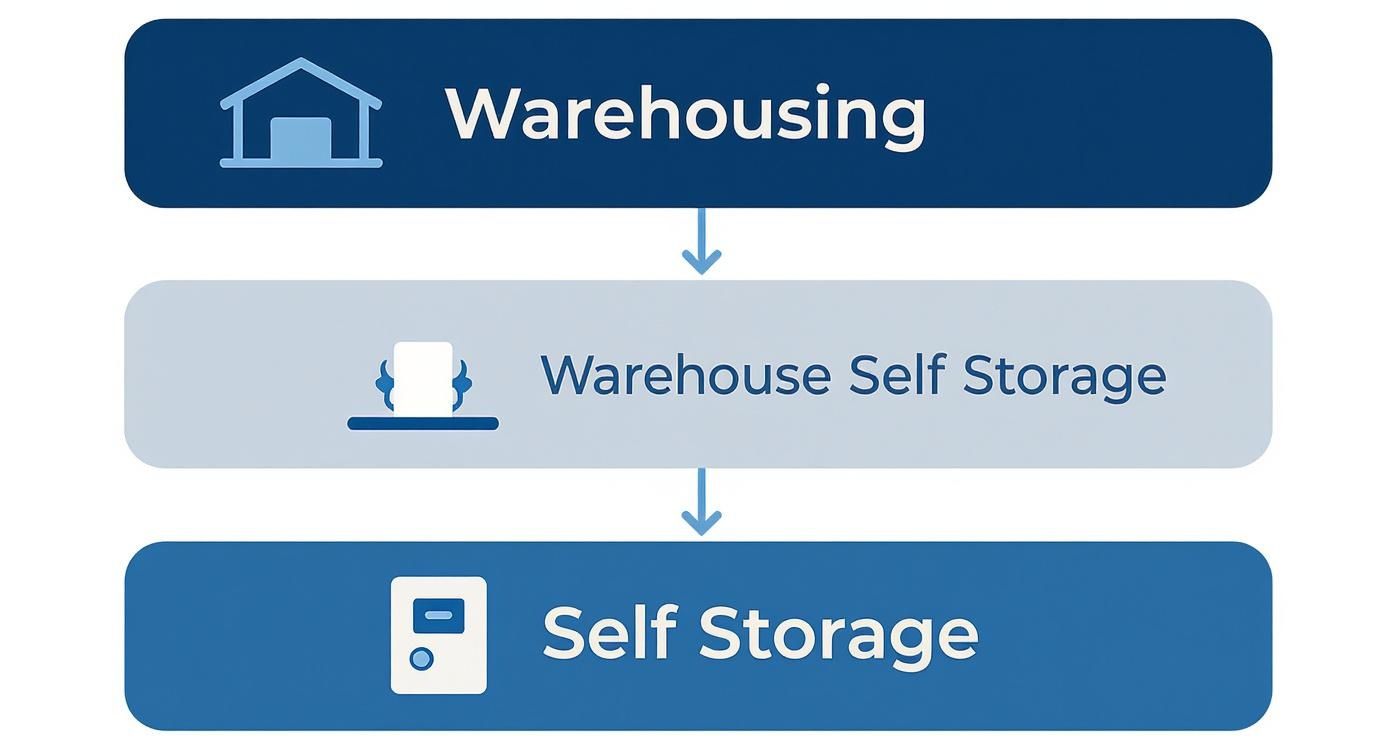
As you can see, it carves out that crucial middle ground, offering more breathing room than a locker without the full-blown commitment of a logistics centre.
Warehouse Self Storage: The Flexible Middle Ground
This is where the hybrid model truly shines, offering a genuinely practical solution for growing businesses. It gives you the generous space needed to accept large deliveries, store pallets, and even set up a small workspace for packing orders. All this, while keeping the simple, flexible terms of a monthly rental agreement.
You get the square footage of a warehouse with the straightforward, accessible terms of self storage. This combination is what empowers small to medium-sized businesses to scale their operations without taking on massive financial risk.
For example, a construction firm can easily store heavy machinery and materials between jobs. An online retailer can manage a surge in stock during peak seasons like Black Friday without breaking a sweat. Beyond these, it's also worth looking into various storage solutions offered by professional movers, which can sometimes include specialised options. Ultimately, the goal is to find that perfect balance of space, cost, and flexibility that lines up with where your business is heading.
To help you see the differences more clearly, let's put these three options side-by-side.
Storage Solutions: A Head-to-Head Comparison
| Feature | Warehouse Self Storage | Traditional Self Storage | Commercial Warehousing |
|---|---|---|---|
| Typical User | Growing SMEs, e-commerce, tradespeople | Individuals, sole traders, small businesses | Large corporations, logistics companies |
| Space & Scale | Medium to large units (200 – 1,000+ sq ft) | Small to medium units (25 – 200 sq ft) | Very large spaces (5,000+ sq ft) |
| Lease Terms | Flexible, monthly contracts | Flexible, monthly contracts | Rigid, long-term leases (3-10+ years) |
| Accessibility | 24/7 access, drive-up options | Typically good, often 24/7 access | Restricted, often managed by 3rd party |
| Costs | All-inclusive monthly fee | All-inclusive monthly fee | Base rent + rates, utilities, staff |
| Operations | Self-managed (DIY) | Self-managed (DIY) | Often includes managed logistics services |
| Best For | Palletised goods, bulky stock, workspace | Boxed inventory, documents, personal items | High-volume distribution, complex supply chains |
Seeing it all laid out like this makes it easier to spot which solution aligns with your needs. If you're outgrowing a traditional unit but aren't ready for a full warehouse, the middle ground is likely your best bet.
What to Look For in a Modern Facility
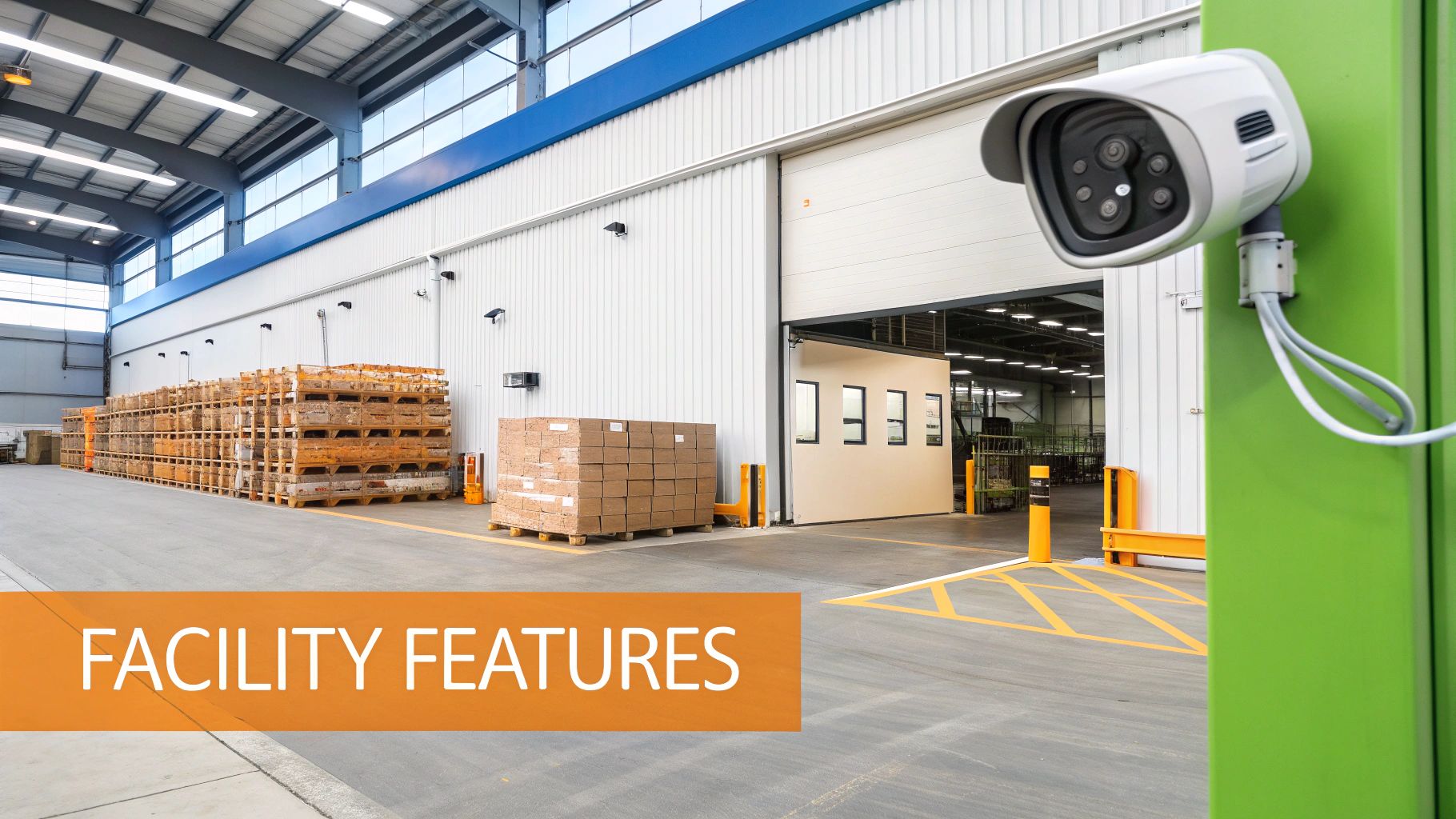
Choosing a warehouse self storage facility isn't just about finding an empty room; it's about finding a partner that actively makes your operations smoother. The right provider gives you more than just square footage—they offer a suite of features built to make your business more efficient, secure, and ready to grow. Knowing what these essentials are is the first step to making a smart choice.
When you start looking, it’s easy to get bogged down in the details. But a top-notch facility will always shine in three key areas: how versatile its units are, how strong its security is, and how flexible its access is. These are the building blocks of a truly reliable storage solution.
Think of it like choosing a van for your business. You wouldn't try to haul heavy equipment in a small car, would you? In the same way, your storage space has to be fit for purpose, kitted out with the right features to handle your specific stock and operational rhythm.
Versatile Unit Sizes and Layouts
The space itself is the most obvious part, but its characteristics are what really count. A modern warehouse self storage facility should have a wide range of unit sizes and layouts to fit different business needs, moving far beyond the old "one size fits all" model.
This variety is what fuels your efficiency. You need a space that not only holds your current stock but can also adapt as your business grows or your inventory changes.
Here are the key unit types to keep an eye out for:
- Large Open-Plan Units: These are perfect for businesses that need total flexibility. They're like a blank canvas, letting you set up your own shelving, create packing stations, or store bulky, odd-shaped items without a fuss.
- Palletised Storage Options: For businesses handling wholesale goods, being able to store pre-loaded pallets is a massive time-saver. These units are designed for easy forklift access, saving you a huge amount of time and effort during loading and unloading.
- Drive-Up Access Units: These offer unbeatable convenience, especially for tradespeople or e-commerce sellers who are constantly moving heavy or awkward items. You can park your van right at the unit door, which seriously cuts down on handling time.
A facility offering these options gets it. They understand that business storage is about workflow, not just warehousing.
Robust Security Protocols
For any business, the stuff you have in storage is a valuable asset, whether it's high-value stock, essential equipment, or important documents. That’s why solid security is non-negotiable. Real peace of mind comes from knowing your property is protected by multiple layers of security, deterring threats and keeping everything safe.
A truly secure facility doesn’t just rely on one thing. It weaves together several advanced systems to create a complete security net that protects your assets around the clock.
This multi-layered approach is the sign of a professional provider. When you're checking out a facility, make sure it has these essential security features:
- 24/7 CCTV Monitoring: High-definition cameras should cover all the important spots, like entrances, exits, corridors, and loading bays. This constant watch acts as both a deterrent and a reliable record.
- Controlled Gate Access: A secure perimeter fence paired with an electronic gate system ensures only authorised people can get onto the site. This is your first and most crucial line of defence.
- Individual Unit Alarms: While not always standard, some premium facilities offer alarms on each unit, giving you that extra layer of protection against anyone trying to get in where they shouldn't.
- Sufficient Lighting: Well-lit corridors and outdoor areas are a simple but incredibly effective security measure. It makes the facility feel safer for late-night access and puts off potential intruders.
Unrestricted Operational Accessibility
Finally, a great warehouse self storage space is only any good if you can get to it when you need to. For a lot of modern businesses, a standard 9-to-5 schedule just doesn't cut it. Online retailers are often packing orders late at night, and tradespeople might need to grab equipment early in the morning before heading to a job.
This is where accessibility becomes a deal-breaker. A facility that offers 24/7 access gives you a massive advantage, letting you run your business on your own schedule, without any constraints. This flexibility means your storage unit can act as a true extension of your business, ready for you whenever you need it. For more pointers on what to look for, our article on 10 tips for choosing a self storage facility is a great place to start. By focusing on these essential features, you can confidently pick a provider that genuinely supports your business goals.
Who Actually Uses Warehouse Storage?
The idea of a massive, flexible storage space is great in theory, but where does it really shine? It’s not just about having extra room; warehouse self storage is a powerful tool for certain businesses and entrepreneurs wrestling with unique challenges around space, stock, and day-to-day operations. Let's look at a few real-world scenarios to see how this hybrid storage model becomes the backbone of their success.
These aren't huge corporations with dedicated logistics teams. They're smart, growing businesses that need a solution that moves as fast as they do.
The E-commerce Seller
Picture Alex, an online retailer whose handmade goods business is exploding. What started on the dining room table has now completely swallowed the spare bedroom and garage. Every new delivery of materials or packaging brings a fresh wave of chaos, making it almost impossible to organise stock, let alone pack orders efficiently. Alex needs a dedicated space but isn't ready for the long-term lease and hefty overheads of a commercial unit.
This is where warehouse self storage slots in perfectly. Alex can rent a large unit and effectively turn it into a mini-logistics hub.
- Inventory Management: With plenty of room, Alex can bring in proper industrial shelving to sort products by SKU. Suddenly, stock-takes and order picking are quick and painless.
- Packing Station: A dedicated corner can be set up with a packing table, label printer, and shipping supplies, creating a streamlined workflow far from the distractions of home.
- Scalability: When a big seasonal rush hits, Alex can temporarily upgrade to a larger unit to handle the extra inventory, then move back down afterwards without being penalised.
For Alex, the unit isn't just storage; it’s a functional workspace that lets the business operate professionally and grow without hitting a ceiling.
The Local Tradesperson
Now, think about Sarah, a self-employed electrician. Her van is in a constant state of clutter with tools, cabling, and fixtures, and her garage at home is overflowing with surplus materials from old jobs. This disorganisation costs her time and money—tools go missing, and she often buys materials she already owns but can’t find. More importantly, leaving thousands of pounds worth of equipment in her van overnight is a constant security worry.
Warehouse self storage offers Sarah both security and organisation. A drive-up unit becomes her secure lock-up and a central base of operations.
The unit becomes more than a place to dump things. It’s a secure, organised depot that makes the entire workday more efficient, from loading up in the morning to dropping off surplus materials in the evening.
At the end of the day, Sarah can lock away her valuable tools and equipment, protected by 24/7 CCTV and controlled gate access. She can organise materials on shelves, knowing exactly what she has in stock before heading to the supplier. This simple change transforms her daily routine, giving her peace of mind and a real boost in productivity. This reflects a wider trend, as around 17% of storage demand now comes from commercial users like tradespeople and online sellers needing this kind of flexibility. You can see more data on why commercial storage use is growing on easyaccessselfstorage.co.uk.
The Growing Business Needing a Flexible Hub
Finally, imagine a small marketing agency that runs events. They have to store bulky display stands, promotional banners, and boxes of merchandise between conferences. Their city-centre office has zero storage, and trying to get large, palletised deliveries of new marketing materials into a traditional self storage unit is a nightmare. They need a flexible solution that can handle both long-term storage and short-term logistical demands.
A warehouse self storage unit is their perfect operational hub. They can easily have large deliveries sent directly to the unit from suppliers, storing everything in one accessible spot. When it's time for an event, the team can prep all their materials in the unit before shipping everything out. This adaptable space gives them the logistical muscle of a much larger company without the cost, empowering them to take on bigger projects with confidence.
Understanding Pricing and Contract Terms
When you're choosing a warehouse self storage solution, getting the finances right is a massive part of the decision. It's not just about the monthly rent; you need to get your head around the entire cost structure and the contract terms before signing anything. This is the best way to budget properly and avoid any nasty surprises down the line.
The great thing about warehouse self storage pricing is that it’s usually much simpler than a commercial lease. You won’t get bogged down with business rates, surprise utility bills, or unexpected maintenance charges. Instead, most facilities, like ours, offer a clear, all-inclusive monthly fee based purely on the size of the unit you need.
Breaking Down the Costs
While the monthly rent is your main outgoing, a few other costs might pop up. Knowing what these are from the start means you can compare different providers fairly and find a deal that’s genuinely transparent.
Here are a few common add-ons to look out for:
- Security Deposit: A one-off, refundable payment that the facility holds just in case there’s any damage to the unit.
- Insurance: Most places will require you to have contents insurance. Some offer their own policies, but you can often bring in a third-party provider if you prefer.
- Admin Fees: A small, one-time fee to cover the paperwork of setting up your account and contract.
- Locks: You’ll almost certainly need to buy a high-quality padlock to secure your unit.
It’s always a good idea to ask for a full breakdown of every single potential charge before you sign. That kind of transparency is the hallmark of a storage partner you can trust.
Reading the Fine Print on Your Agreement
That rental agreement isn’t just a formality—it’s a legal document that protects both you and the storage provider. Taking a few minutes to read it carefully ensures you know exactly what your rights and responsibilities are. A fair, easy-to-understand contract is just as important as a competitive price.
A straightforward rental agreement should offer clarity, not confusion. Look for simple terms that give you flexibility and control over your storage, allowing you to adapt as your business needs change.
When you’re looking over the contract, pay close attention to these key areas:
- Notice Periods: Good providers like Standby Self Storage often have flexible terms with no long notice periods required to move out. For businesses with needs that change month to month, this is a huge advantage.
- Price Adjustments: Check how and when the facility can change your rental rate. The agreement should clearly state how much notice you’ll get before any changes kick in.
- Liability: Understand what the facility is responsible for and what your own insurance needs to cover.
- Access Rules: The contract will lay out the rules for getting to your unit, including opening hours and any site regulations you need to follow.
Getting a handle on these key points will make sure your warehouse storage is both affordable and works for you. In the UK, you can typically expect rental rates for this kind of space to be between £27 and £30 per square foot annually. Of course, prime locations might cost a bit more, but this general pricing stability shows how reliable the sector is. For a deeper dive into market trends, you can discover more insights about the UK self-storage industry on statista.com. By doing your homework on costs and contracts, you can find a space that genuinely helps your business grow without any hidden financial headaches.
How to Organise Your Unit Like a Pro
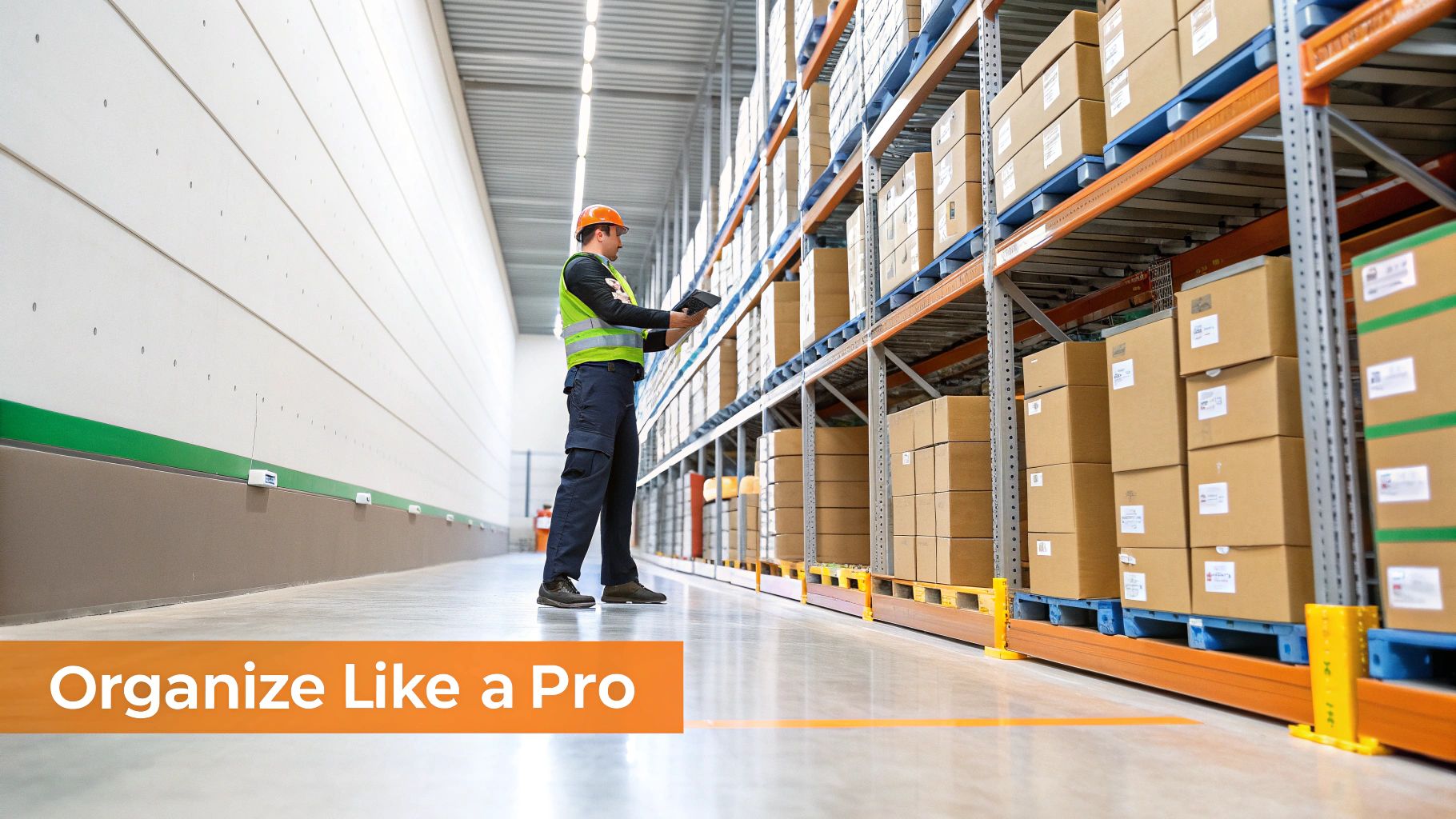
Getting a warehouse self storage unit is the easy part. The real magic happens when you turn that empty space into a hyper-efficient extension of your business or home. A disorganised unit is a recipe for wasted time and damaged stock, but a thoughtfully planned layout can be a serious operational advantage.
Think of your unit less like a simple locker and more like your own private, miniature warehouse floor. A bit of planning before you even think about moving in will pay off massively down the line, transforming a potential headache into a smooth, streamlined process. The end goal? To find exactly what you need, the moment you need it.
Plan Your Layout Before You Pack
Don't wait until move-in day to figure out where things go. Before a single box crosses the threshold, grab a pen and paper and sketch out a basic map of your unit. This simple step helps you place items strategically from the get-go, ensuring the things you need most are always front and centre. It's the best way to avoid the classic mistake of burying critical inventory behind stuff you won't touch for months.
Designate specific zones for different categories—new stock here, packing supplies there, long-term archives in the back. This bit of foresight prevents everything from merging into one giant, unmanageable pile.
Don't forget to map out clear, wide aisles. A central walkway is non-negotiable; it lets you move around freely and grab items without having to play a frustrating game of Tetris with heavy boxes every single time.
With a clear plan in hand, your move-in day will be a breeze. For a deeper dive into getting your space set up, check out our guide on how to effectively organise your self storage container.
Smart Packing and Stacking Strategies
How you pack and stack your belongings is just as important as where you put them. A solid system not only protects your goods but makes finding them again infinitely easier.
- Go Vertical: The secret to getting the most out of a warehouse unit is to use its height. Invest in some sturdy, free-standing industrial shelving to get your items off the floor. It's a much safer and more organised approach than simply stacking boxes on top of one another.
- Label Everything: This one’s a game-changer. Use big, bold labels on all four sides of every box. Make sure you include a quick summary of the contents and, if it’s relevant, an expiry date or product code. This alone will save you countless hours of rummaging.
- Use Clear Bins: For smaller items or stock you access all the time, clear plastic bins are your best friend. You can see what’s inside at a glance, and they offer far better protection from dust and damp than standard cardboard boxes.
Create a Digital Inventory System
For any business juggling stock, a digital inventory isn't just a nice-to-have; it's essential. It doesn't need to be some complex, expensive software, either. A simple spreadsheet or a dedicated inventory app can work wonders.
Here’s how it works: assign a unique number or code to each box or shelf location in your unit. When you log an item, just note its description and its location code in your digital system.
You’ve just created a fully searchable database of your entire unit. Now, instead of guessing, you can instantly pinpoint exactly where something is, saving you valuable time and eliminating the frustration of a manual search.
A Few Final Questions About Warehouse Storage
As you get closer to choosing the right warehouse self storage solution, a few final questions usually pop up. Getting straight answers to these common queries can give you that last bit of confidence you need to make the right call. Let's tackle the most frequent concerns businesses and individuals have before signing on the dotted line.
Think of this as your final checklist to make sure there are no surprises waiting for you down the road, from protecting your assets with the right insurance to knowing the rules of operating from your unit.
What Kind of Insurance Do I Need?
Protecting the value of your stored goods is a must, and nearly every facility will require you to have some form of insurance. While the facility’s own insurance covers the building itself, it does not cover your personal or business belongings stored inside your unit. That part is on you.
You generally have two main options:
- Provider's Insurance: A lot of storage facilities offer their own specialised insurance policies designed specifically for stored goods. This is often the most straightforward route, as the cover is already tailored to the risks of a storage environment.
- Existing Policies: It's worth checking with your current home or business insurance provider. Some policies include an "off-site storage" clause that might cover your items, though there will likely be limits. Always double-check the specifics with your insurer to be sure.
Whichever path you take, you'll need to declare the total value of the items you’re storing to make sure you have enough cover.
Can I Run My Business From My Unit?
This is a big one, especially for e-commerce sellers and small businesses. The short answer is yes, but with some important limits. A warehouse self storage unit can be a fantastic, cost-effective base for tasks directly related to your stored items.
You can absolutely use your unit for things like packing and shipping orders, managing inventory, or organising tools and equipment. What you can't do is use it as a public-facing office or retail shop.
Facilities draw the line at activities that involve lots of foot traffic from the public, manufacturing that uses hazardous materials, or anything that creates excessive noise or disruption. The main purpose has to remain storage and light logistical work. Always read the facility's terms and conditions so you know exactly what’s allowed before you sign up.
How Much Notice Do I Need to Give to Leave?
One of the biggest perks of warehouse self storage over traditional commercial leases is flexibility. Most modern facilities run on simple, rolling monthly contracts, so you’re not locked into long-term commitments you might not need.
This means that when you’re ready to move out, you typically don’t have to give loads of notice. Many providers, including us here at Standby Self Storage, require minimal or even no notice period at all. You just use the space for as long as you need it and let us know when you've cleared out. This kind of flexibility is a game-changer for businesses with changing needs.
At Standby Self Storage, we make finding the right space simple and stress-free. With flexible terms and secure facilities across the UK, you can get the space you need, when you need it. Book your unit online today and move in whenever you're ready.