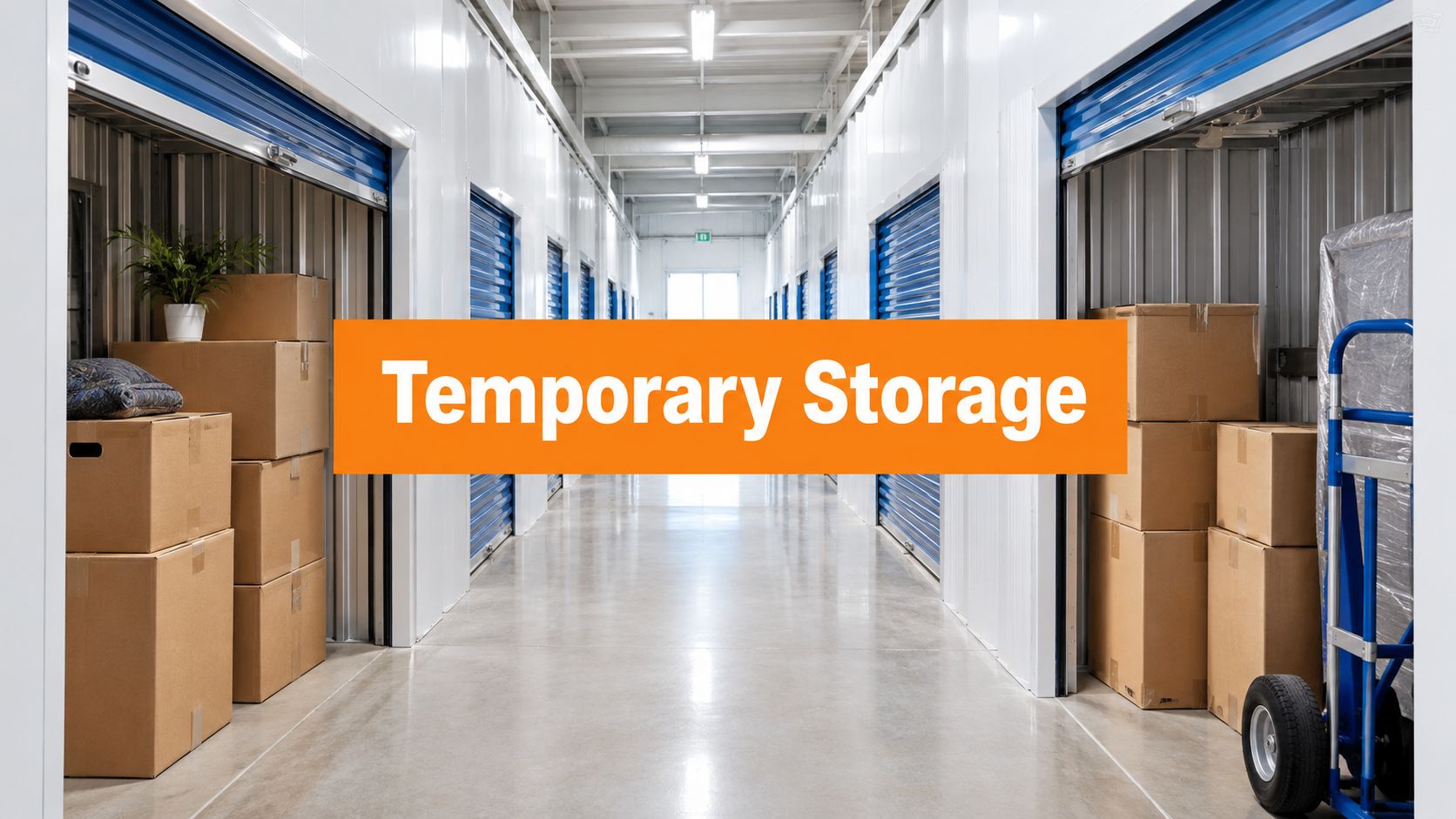
You've got boxes stacked in the hallway, a tool bag wedged behind the boot, or a spare room that's no longer spare because renovation materials have taken over. In Reigate, that kind of pressure shows up fast, whether you're between homes, clearing space for a kitchen refit, or trying to keep business stock out of the way without losing control of it. Secure container storage in Reigate gives you a practical off-site answer, but the value isn't just having somewhere to put things, it's knowing what kind of facility you're booking and how it protects your belongings in day-to-day use.
What Secure Container Storage Means for Reigate Residents
A family moving across town in Reigate can run out of room before the last kettle is packed. A tradesperson may want a safer place for power tools than the van. A small shop owner can end up with crates of stock that do not belong in the office. In each case, secure container storage is not just a lockable box, it is a managed site that keeps access, control, and day-to-day use in view.

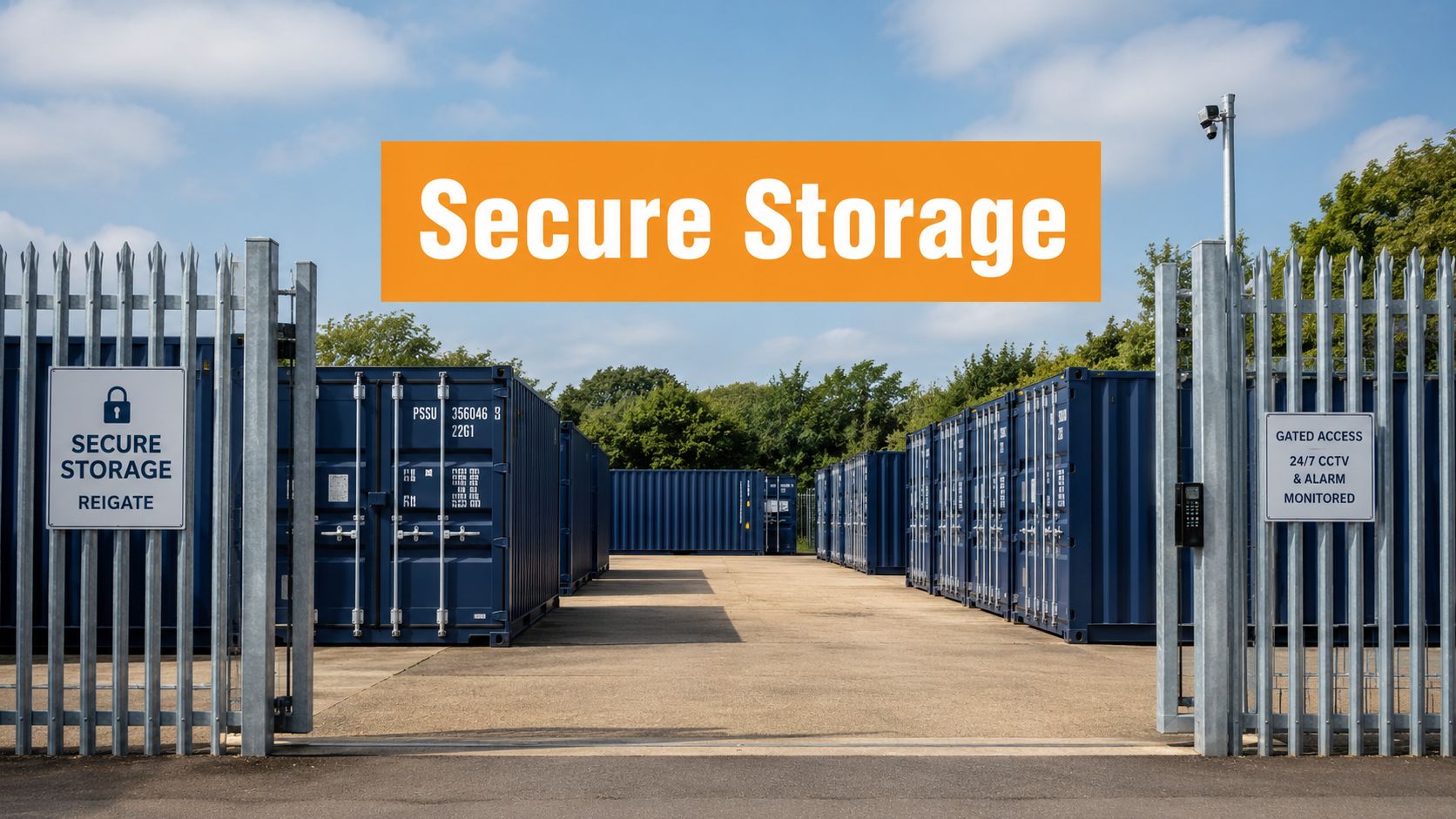
Reigate's local container-storage option at 50–52 Albert Road North, RH2 9EL is positioned as a 24/7-access facility, with prices published from £48.46 per week to £500.00 per week including VAT, and a 320 ft² (29.73 m²) unit among the available sizes. That spread shows how the site can suit both smaller household moves and larger commercial loads without forcing everyone into the same unit. The location details also note CCTV and a lock-gate compound, which matters because secure container storage depends on site control as much as the steel box itself. For local users who want to check the access arrangements directly, the Reigate page at Reigate location details gives the practical starting point. (Reigate location details)
That makes it different from borrowing a garage or using a spare shed. Those options can help briefly, but they usually do not offer the same managed entry, steady access, or structure for keeping household items and work equipment organised over time.
If you are comparing storage as part of a move, TLC Moving & Storage solutions gives a useful way to think about storage alongside the rest of the relocation plan.
For Reigate households and SMEs, that difference matters. People here are fitting storage around commuting, school runs, work schedules, and business deliveries. Secure container storage is built for that kind of routine, where access needs to be sensible and the contents need to stay under control.
How Secure Container Storage Works in Practice
A secure container facility is easiest to understand if you treat it like a locked shipping container inside a locked compound. The outer site controls who gets in. The container itself protects what's inside. That two-layer setup is why it feels sturdier than a timber shed or an indoor room split by light partitions.
The Reigate facility is built around one-trip shipping containers designed for the self-storage industry, which gives the units a standard, predictable structure. The local page says the site offers 5 different unit sizes from 40 ft² to 160 ft² with 8 ft ceiling heights, so customers are choosing from clearly defined spaces rather than guessing at odd-shaped rooms. The same page also says people can complete the process online, from choosing a unit size and getting a quote to reserving and renting it. (Reigate unit description)
What that means on move-in day
You usually arrive with a clear idea of the unit you've booked, not a vague promise that “something should fit.” That helps when you're storing tidy categories of items, for example tools, archive boxes, stock inventory, building equipment, or even a motorbike, all of which are listed as suitable uses for the Reigate site. Those examples matter because they show the facility is built for both domestic overflow and working storage, not just one or the other.
Practical rule: if the item would be annoying to access in a pile, it usually belongs in a standardised container with room to stack and organise, not in a corner you hope stays clear.
The 8-foot ceiling height also changes the way people pack. A tall stack of labelled boxes, shelving, or careful palletised storage becomes realistic, which is one reason container units can feel more usable than a low, cramped space even when the floor area looks similar on paper.
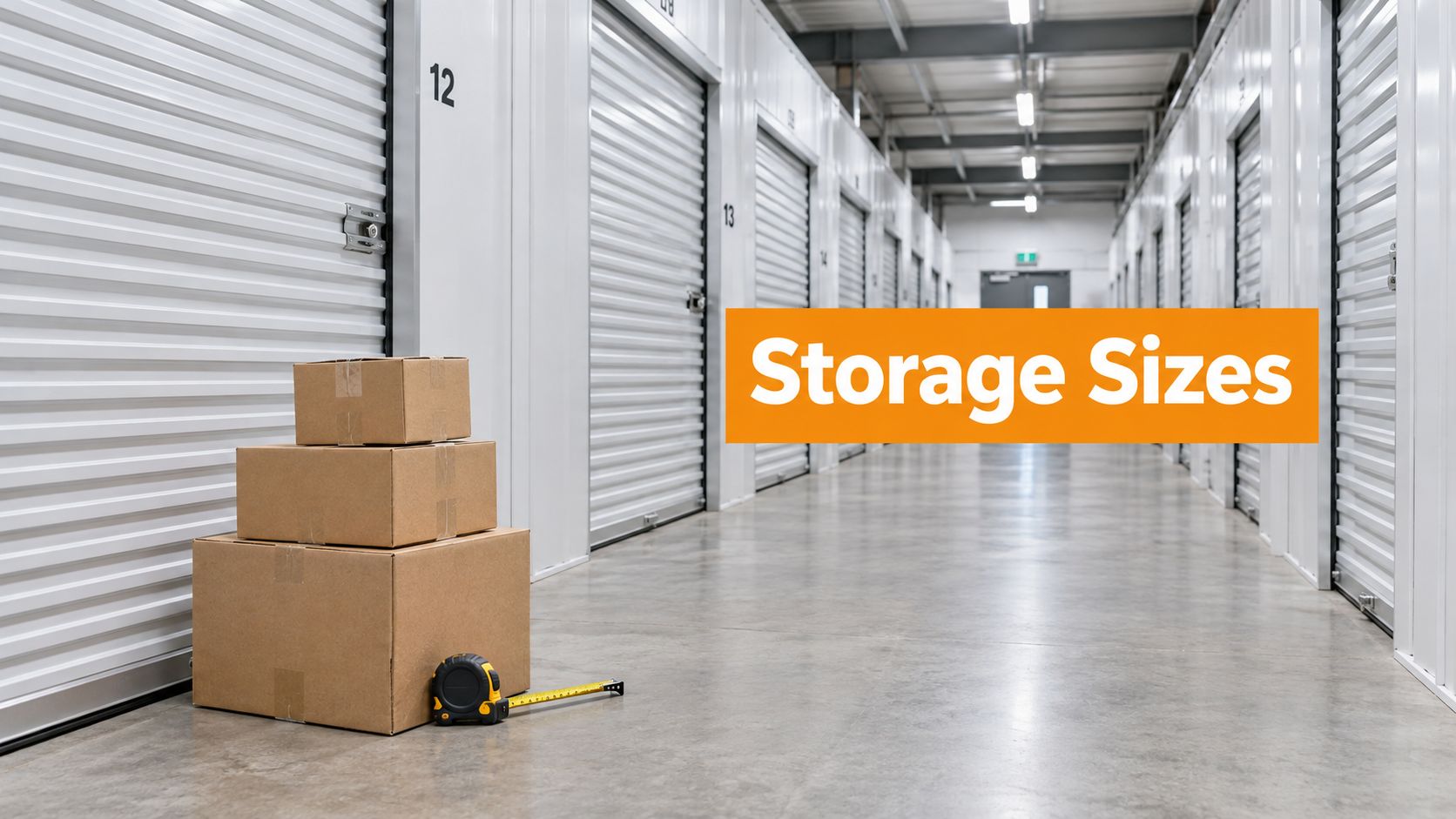
For a deeper look at layout and sizing, the storage unit size guide is the most useful place to start, because it helps you match the unit to the thing you need to store, not to the number that sounds cheapest.
Five Security Features That Actually Matter
Security is easy to oversimplify. A lot of people stop at “is there a lock?” or “does it have cameras?” and miss the layers that make a site harder to compromise. A serious container-storage facility should work like a chain, because one weak link can undo the rest.

Perimeter control comes first
The outside boundary matters because it decides whether unauthorised people can even reach the containers. Secure fencing and a lock-gate compound reduce casual access and force the site to behave like a controlled environment rather than an open yard. That's the right starting point for a container site, especially when you're storing tools, records, or stock that would be attractive to opportunistic thieves.
CCTV only helps when the site is built around it
The Reigate location lists CCTV and opens 00:00 to 23:59 every day of the week, so the site is set up for constant access and constant monitoring rather than office-hours-only use. That combination matters because cameras are much more useful when the layout, entry points, and vehicle movement are all part of the security plan. (Reigate access and security details)
Access should be controlled, not simply allowed
A gate that anyone can drive through is not the same as a gate that records and restricts entry. Good practice, in the British Standards and UK handling guidance sense, is about preventing access until the enclosure is opened and controlling who can enter the site at all. The CHEP guidance on secure containers and entry controls underlines that fencing and entrance checks should cover people, transport documentation, and product before entry, which gives you a useful benchmark when comparing providers. (Secure container handling guidance)
Cameras are useful. Recorded, restricted access is better, because it tells you who came in, when they came in, and what should have been happening on site.
The container itself still needs to resist tampering
Steel walls and reinforced doors are part of the story, but so is how the locking point is designed. If the unit can be forced quickly, the whole site suffers. That's why serious facilities pair the compound with container-level security instead of assuming one layer can do all the work.
Process security matters for real users
The last layer is the one many people forget. You want clear rules for lost keys, named access, and what happens if there's an attempted break-in or a disputed entry. If you're storing records or stock, you should also know how the provider handles logs and incident reporting.
For an extra consumer-facing explanation of the site controls, how secure is self storage is a useful reference point to compare your shortlist against.
Choosing the Right Unit Size for Your Situation
Picking a unit size is usually where people overthink it. Some rent too small because they want to save money, then end up cramming boxes into a space that's awkward to access. Others choose a unit that feels safe on day one, only to pay for empty floor space they never use. The better approach is to match the unit to the item type, how often you'll need access, and whether you can stack safely.
| Unit Size | Typical Contents | Best For |
|---|---|---|
| 40 ft² | A few boxes, small tools, seasonal items | A student, a hallway declutter, a tradesperson with light overflow |
| Around 80 ft² | Contents of a studio flat, labelled archive boxes, mixed household items | A short-term move or a small business archive |
| Around 160 ft² | Furniture from a two-bed home, larger tools, bulky equipment | A renovation, a family move, or trade storage |
| Larger units | Full household overflow or commercial stock | Bigger moves, e-commerce stock, or business expansion |
The Reigate site's unit range is described as 40 ft² to 160 ft² with 8 ft ceiling heights, so the most sensible decision is often about organisation as much as footprint. A student storing summer belongings needs easy access to bags and boxes, while a Reigate homeowner in a kitchen refit may need room for a dining set, wardrobes, and white goods. A small seller holding seasonal stock needs shelving and order, not just volume. (Unit size guide)
A few real-world fit checks
- A student over the summer: usually starts near the smallest end, because the load is light and predictable.
- A home renovation: often needs a mid-sized unit, especially if furniture has to be kept separate and reachable.
- An online seller: benefits from clear floor space for pallets or stock rotation, not just stacked boxes.
- A tradesperson: should think about tool boxes, scaffold parts, and the size of items that can't be broken down.
The simplest test is to ask, can I open the door, reach the items I need, and still move safely inside the unit? If the answer is no, the unit is too small. If the answer is yes but the back half stays empty, you may have gone too large.
What Secure Container Storage Actually Costs in Reigate
Price matters, but so does what the price buys you. In Reigate, the published unit pricing runs from £48.46 per week to £500.00 per week including VAT, and that spread reflects the jump from smaller units to much larger spaces. (Reigate pricing)
The honest way to read a storage quote is to separate the base cost from the extras. A small unit might be enough for a few boxes, but a bigger one gives you room to stack furniture, stock, or tools properly. You also need to think about whether the site includes or charges separately for things like insurance, locks, packing materials, or late-payment fees. Those are the items that often change the actual cost more than the headline weekly price.
How the booking flow usually works
Modern Reigate storage booking is built for speed. You choose a unit online, get a quote, reserve it, and complete the paperwork digitally. In many cases that means you can move from “I need storage” to “I've booked storage” without a site visit first, which is handy if you're already juggling removals, contractors, or stock deliveries.
Good pricing pages show more than the weekly rate. They make it clear what's included, what's optional, and what happens if your plans change.
The main thing to check in the small print is flexibility. Notice periods, deposit terms, and the rules around cancellation all matter if you're using storage for a renovation or a short business overflow. If you expect a brief stay but the project runs long, flexible terms save you from being trapped in a bad fit. If you expect longer storage, the same flexibility still helps because your timeline may shift.
Read pricing pages like a comparison tool, not a final answer. If two facilities show similar rates, ask whether access, security, and move-in rules are the same. Often they aren't, and that's where the difference in value shows up.
Weather, Damp, and How to Keep Items Dry
A lot of storage marketing focuses on theft and barely touches the weather. That's a mistake, because steel containers are good at keeping people out, but they can still develop condensation inside when temperatures swing. Surrey's damp, changeable months make that a practical issue, not a theoretical one.

The point isn't to avoid container storage. It's to treat it correctly. If you're storing documents, upholstered furniture, photographs, electronics, or musical instruments, you should think about moisture before you think about stacking height. UK guidance on container storage repeatedly points to the need for ventilation and weatherproof storage conditions so that condensation and water ingress don't damage what you've put away. (Weatherproof storage guidance)
Simple packing habits that help
- Raise items off the floor: pallets or shelving help keep boxes away from any surface damp.
- Use moisture control products: desiccants or similar products can help reduce trapped humidity.
- Avoid wrapping that seals in moisture: some plastic coverings can trap damp rather than protect against it.
- Check long-term storage periodically: a quick inspection is better than finding a hidden problem months later.
Items with sensitive finishes or paper content need the most care. A box of old records may look sturdy, but paper and photographs can suffer if they're left in a damp corner. Furniture with fabric or foam can hold odours. Electronics and instruments are even less forgiving.
If you're comparing storage with other outdoor options, durable sheds and carports can be a useful comparison point because they raise the same question in a different form, how much weather protection do you really need, and what kind of structure can provide it.
Practical rule: if the item would be expensive or awkward to dry out later, pack it as though the container might be cooler and damper than your home.
That's the right mindset for Reigate. Secure storage should protect against theft and avoidable environmental damage at the same time.
Security for Businesses, Records, and Stock
For a Reigate business owner, storage is rarely just about “having space.” It's about keeping the operation running without cluttering the office, losing track of stock, or putting sensitive records into an untidy pile. That's where process security starts to matter as much as a strong padlock.
The first question is access. If you're storing archive files, stock, or tools that staff may need in a hurry, you need to know who can open the unit, whether access is logged, and how quickly someone can retrieve the items in an urgent situation. A locked unit with no clear access structure is not enough for a business that needs accountability.
What good storage practice looks like
A business should keep a simple digital inventory of what's in each unit, even if the contents change often. That inventory doesn't need to be fancy. It just needs to be accurate enough that a staff member can tell whether a file archive, replacement stock, or critical equipment is present before making a trip.
Named access is just as important. If several people hold keys, it becomes harder to know who visited the site and when. That's why businesses often narrow access to a small number of trusted staff and combine that with off-site records or backups for anything sensitive.
The modern view of storage security is moving away from one-off lock decisions and towards a documented routine. Monitoring, audit trails, immutable records, and regular backups are the right language for records and stock because they make the storage arrangement usable over time, not just secure at the gate. That's especially relevant where GDPR-style expectations apply, since paper files and business records still need to be secure, access-controlled, and auditable.
Good storage for a business is visible on a spreadsheet as well as on a site plan.
That's the part many local operators overlook. A clean, secure unit helps, but a clean, secure process is what makes the storage useful when you need an invoice file, a season's stock, or trade equipment without delay.
Booking Secure Container Storage in Reigate
Start with a quick checklist. Write down what you're storing, measure the biggest items, estimate how much room you need, and decide whether 24/7 access matters for your schedule. If you're a commuter, a tradesperson, or a business owner, that last point can decide whether the facility fits your life or becomes a hassle.

From there, the online booking flow is straightforward. Pick a unit size, request a quote, reserve it, complete the digital paperwork, and arrange your move-in. If your day is built around trains, school runs, or site visits, a facility that lets you work through the process online makes life much easier.
Reigate users also benefit from practical access patterns. A site near the local road network is easier when you're loading a van, and round-the-clock opening helps when you need to drop off or collect outside normal work hours. That matters in a commuter town where schedules are rarely tidy.
Standby Self Storage offers the Reigate container-storage option described throughout this guide, including digital booking, 24/7 access, and unit sizes built for both household and business use. If you want to compare sizes, check the security setup, and book a space that fits your timeline, visit Standby Self Storage and start from the unit that matches what you need to store.