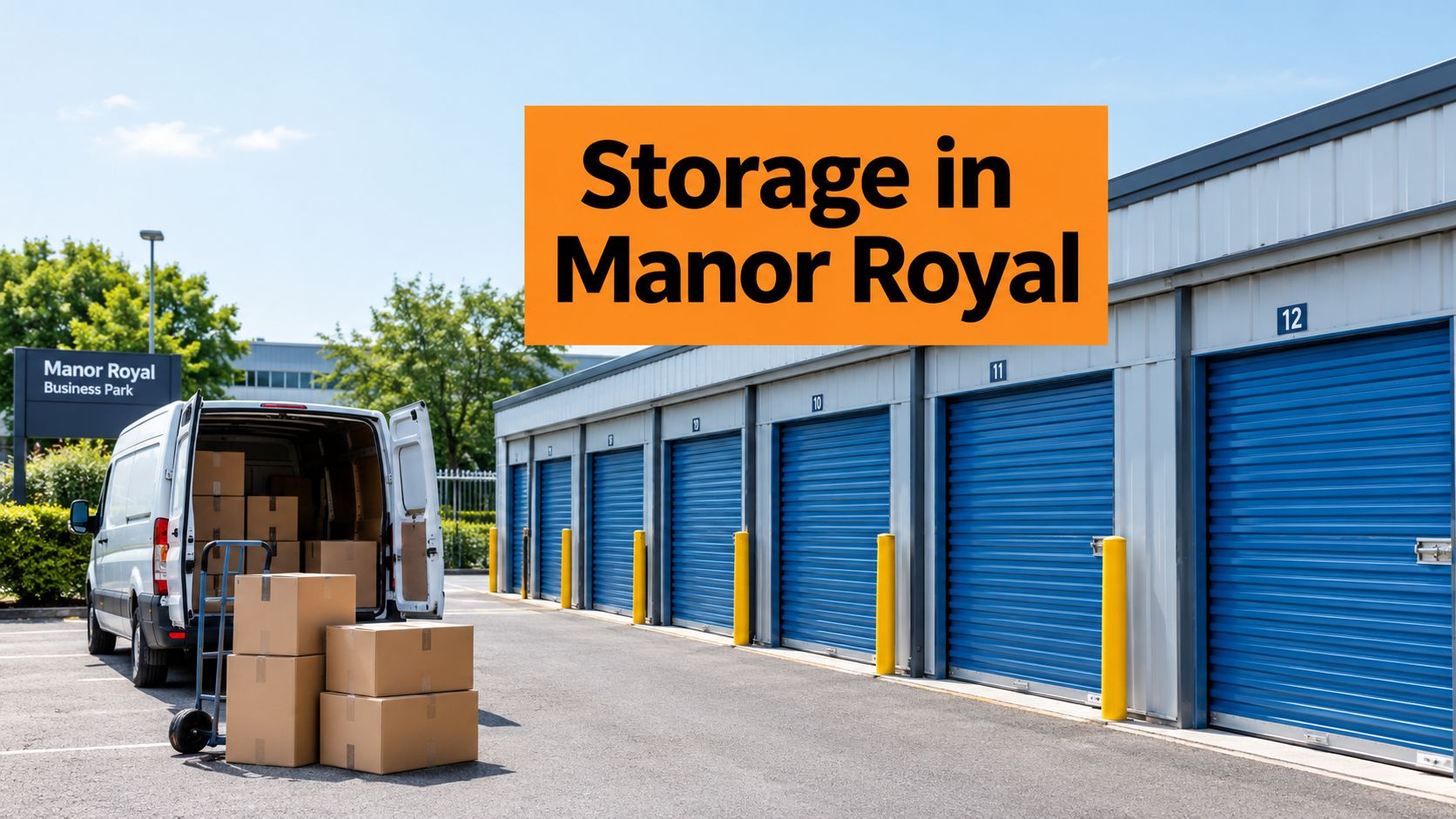
Your van is loaded with tools for tomorrow's job, but the workshop floor is already crowded with stock, samples and paperwork. Or perhaps you're halfway through renovating a Crawley home and need somewhere secure for furniture until the dust settles. Self storage in Manor Royal is a practical location decision as much as a space decision: the right unit depends on what you're storing, how often you need it and how easily you can reach it.
Manor Royal is a major employment district, not just a convenient place to park household belongings between moves. Its more than 600 businesses and 32,800 jobs make local demand for storage closely connected to stock, equipment, records and operational overflow, as well as domestic needs (Manor Royal's history and economic impact). That changes what matters when you choose: loading access and visit times may count for more than a polished reception area.

Why Manor Royal Storage Feels Different from Anywhere Else
A tradesperson finishing a job near Manor Royal might need to unload a van without leaving valuable tools overnight. A small online seller could be sorting new stock in a spare room, while a family nearby may need furniture out of the way during building work. These are different problems, and a unit that suits one may be awkward for the others.
The key question isn't, "How much space do I need?" It's how will I use the space once I've rented it? A business customer who collects cartons or equipment often needs straightforward vehicle access and room to organise items. Someone storing furniture during a renovation may care more about a suitable unit size, a clear contract and the ability to move items in without rushing.
Make the location work for your routine
A storage unit only helps if it fits the journey you make. If you'll visit often, check the route from your business or home, whether you can load and unload conveniently, and whether the access arrangements fit your working day. For belongings you'll leave untouched, frequent access matters less than secure storage and a sensible overall cost.
That distinction is especially useful in a district where businesses, tradespeople and households may all be looking for space for different reasons. Choose around your likely visits, not just the postcode. A unit that looks suitable online can become a poor choice if you can't load bulky items easily or reach it at times that work for you.
Self storage can give a small firm room to separate working stock from office space, or give a homeowner breathing space during a move. It isn't automatically the answer for every surplus item. Start with what you're storing, how long you expect to need it and how often you'll need to retrieve something.
How Manor Royal's Business District Shapes Storage Needs
An aviation supplier holding spare equipment and a contractor storing tools need different kinds of space. Around Manor Royal, that distinction matters: Gatwick-linked logistics and a mix of employers make storage a business-capacity decision as much as a solution for household overflow.
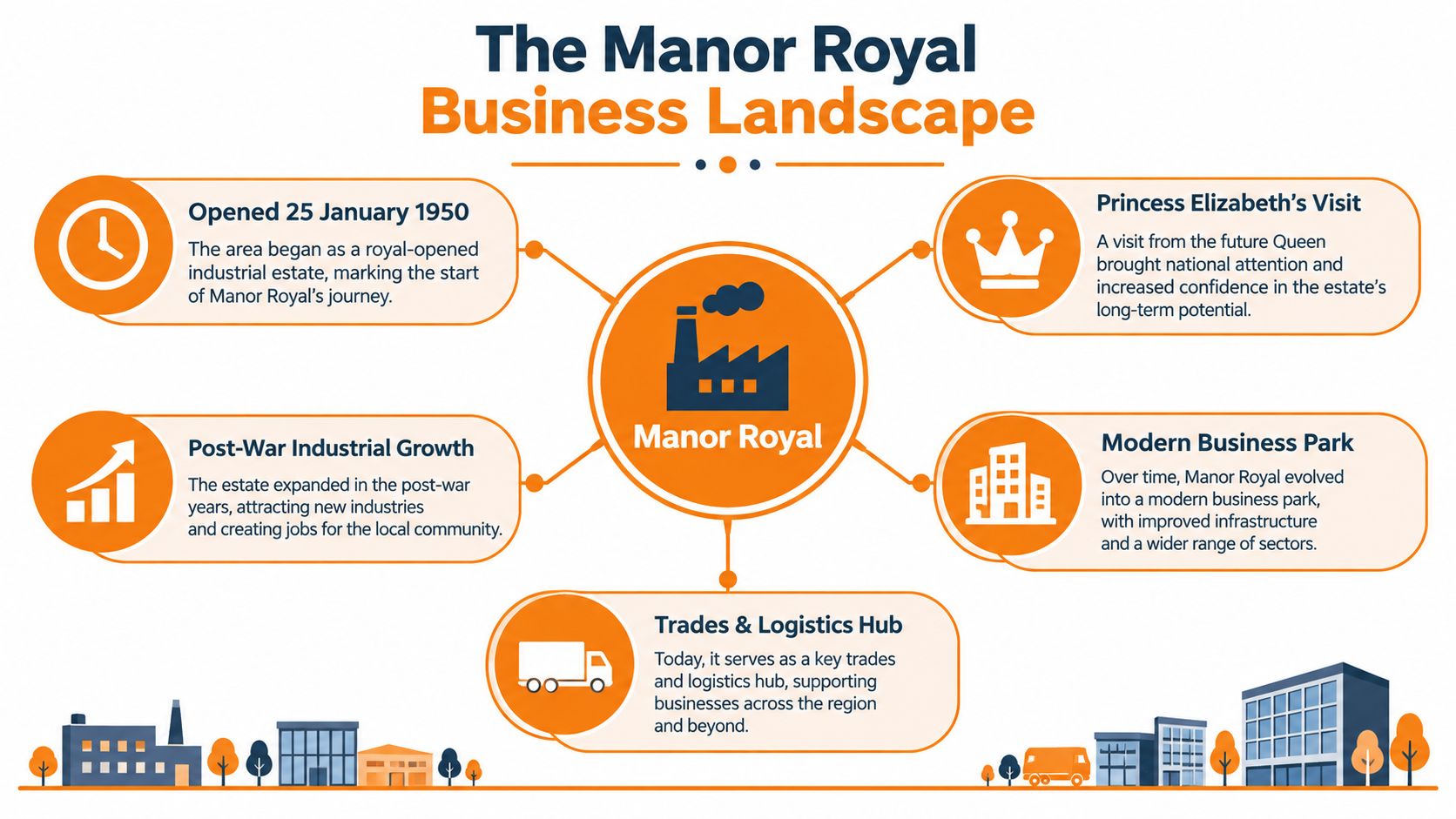
According to Manor Royal's historical account, the district opened on 25 January 1950 to provide skilled employment for approximately 8,500 local people, grew to 79 factories covering 3 million square feet with around 15,000 people employed by 1965, and today spans approximately 540 acres, nearly 10 million square feet of commercial floorspace and more than 600 businesses, with a separate economic-impact study estimating 32,800 jobs, about a quarter of Crawley's employment.
Princess Elizabeth formally opened and named the estate as part of Crawley's post-war New Town development. Its shift from manufacturing towards a broader commercial mix helps explain the variety of storage requirements today.
Match storage to the business operation
Use self storage for overflow you can manage separately from your working premises: samples, archived records, tools, boxed stock or returns. For a small firm, separating those items can free working space without taking on a conventional warehouse.
Keep the operational boundary clear.
A logistics operator or aviation supplier should distinguish reserve stock from goods that require active handling. An e-commerce seller storing cartons has a different requirement from a business running dispatch operations.
Nationally, transport and storage premises increased between 2011 and 2021, online retail gained sales share, and warehouse construction orders reached £5.6 billion in 2021, according to ONS analysis in the UK self-storage report. These trends give context for demand for flexible business space; they do not make every storage unit suitable for commercial operations.
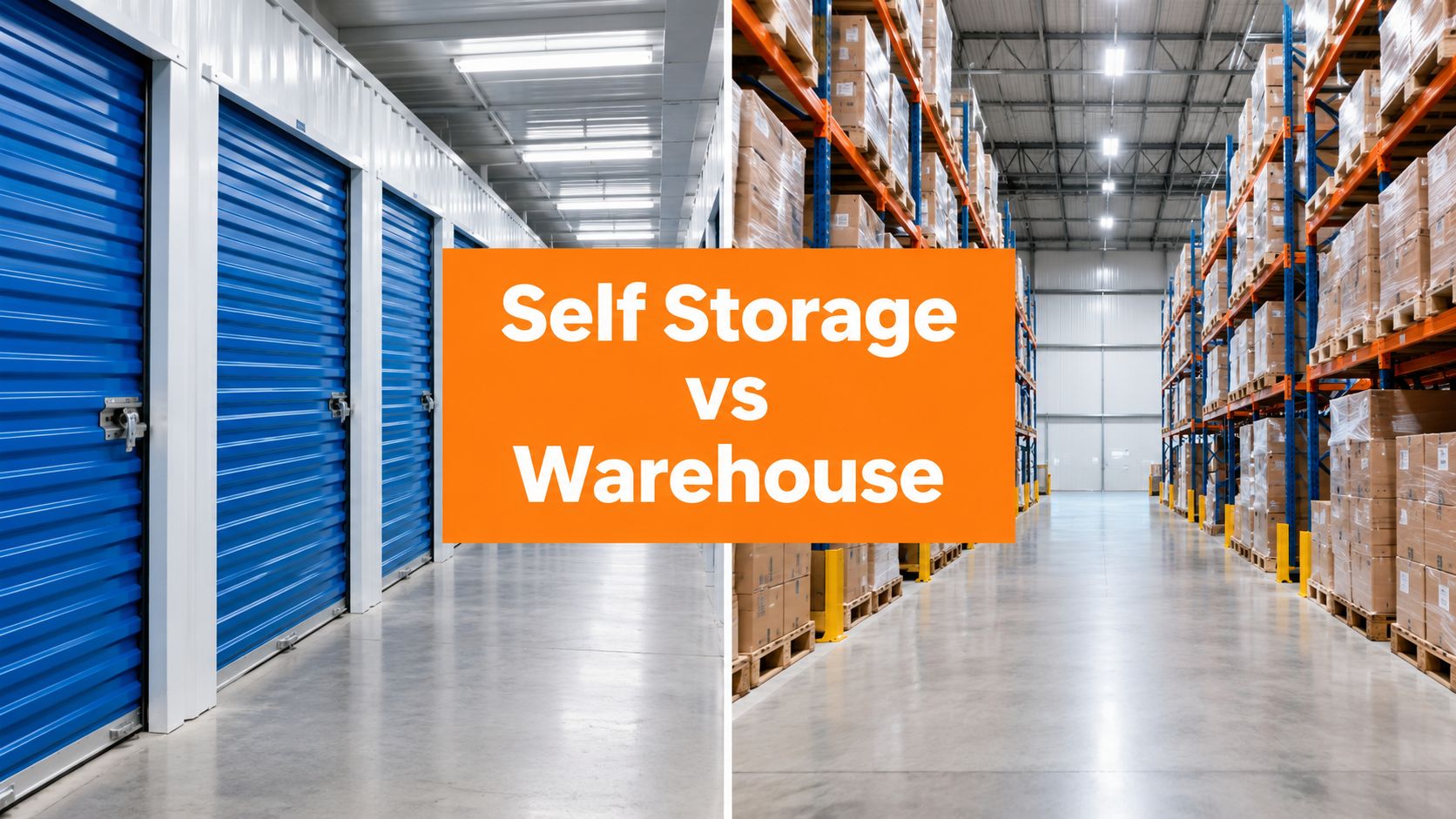
If you need pallet-scale capacity, loading infrastructure, staff working space or industrial-use permission, read the comparison of self storage versus warehouse rental before committing. Choose premises that support the work you do.
Choosing the Right Unit Size for Real Items
A unit that's too small makes access a chore; one that's too large can leave you paying for space you don't use. Start by listing the actual items, not by guessing from the number of rooms or the size of your van. A trade bench, boxes of stock and equipment cases take up space differently from sofas and wardrobes.
Use the contents as your guide
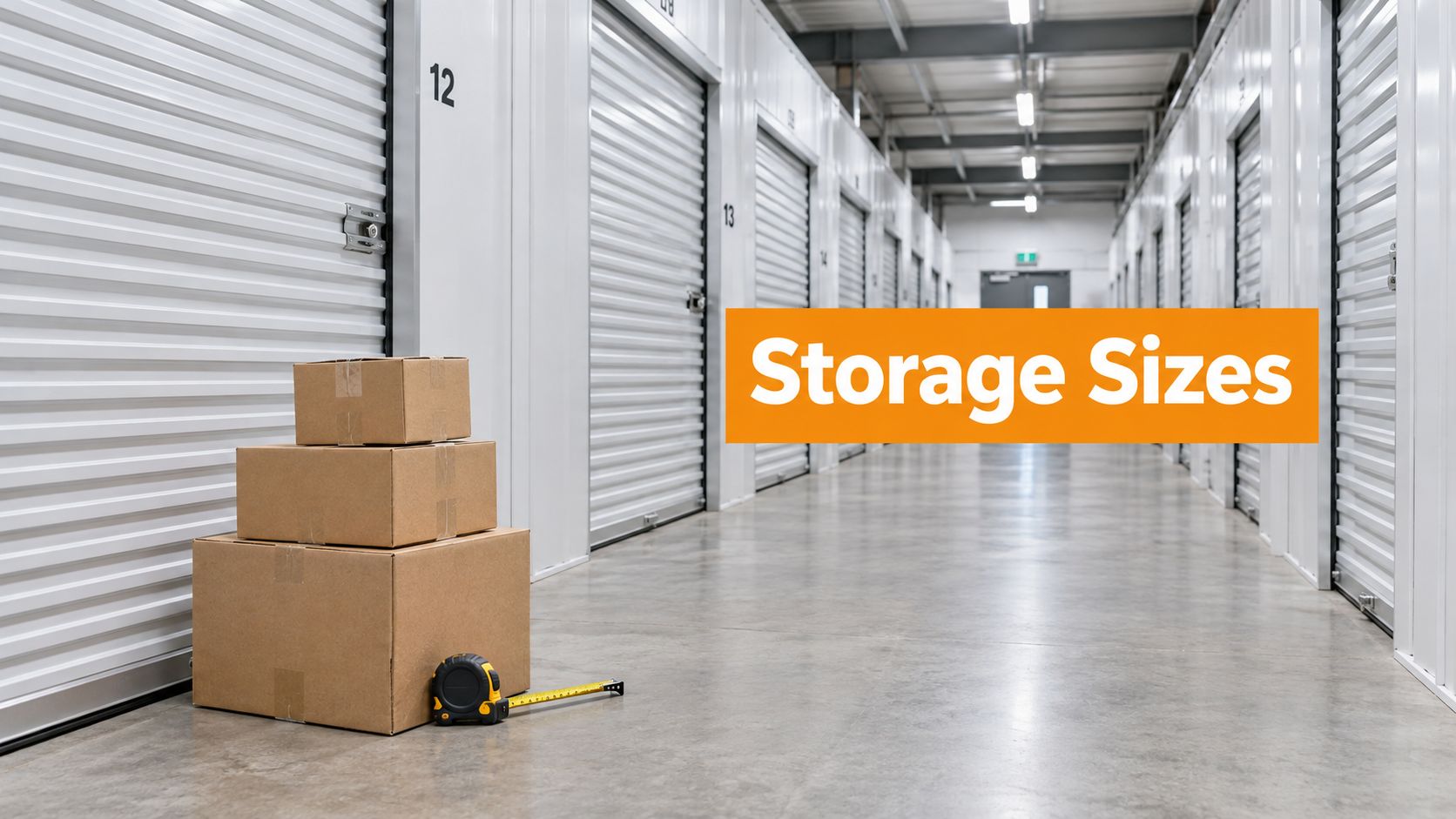
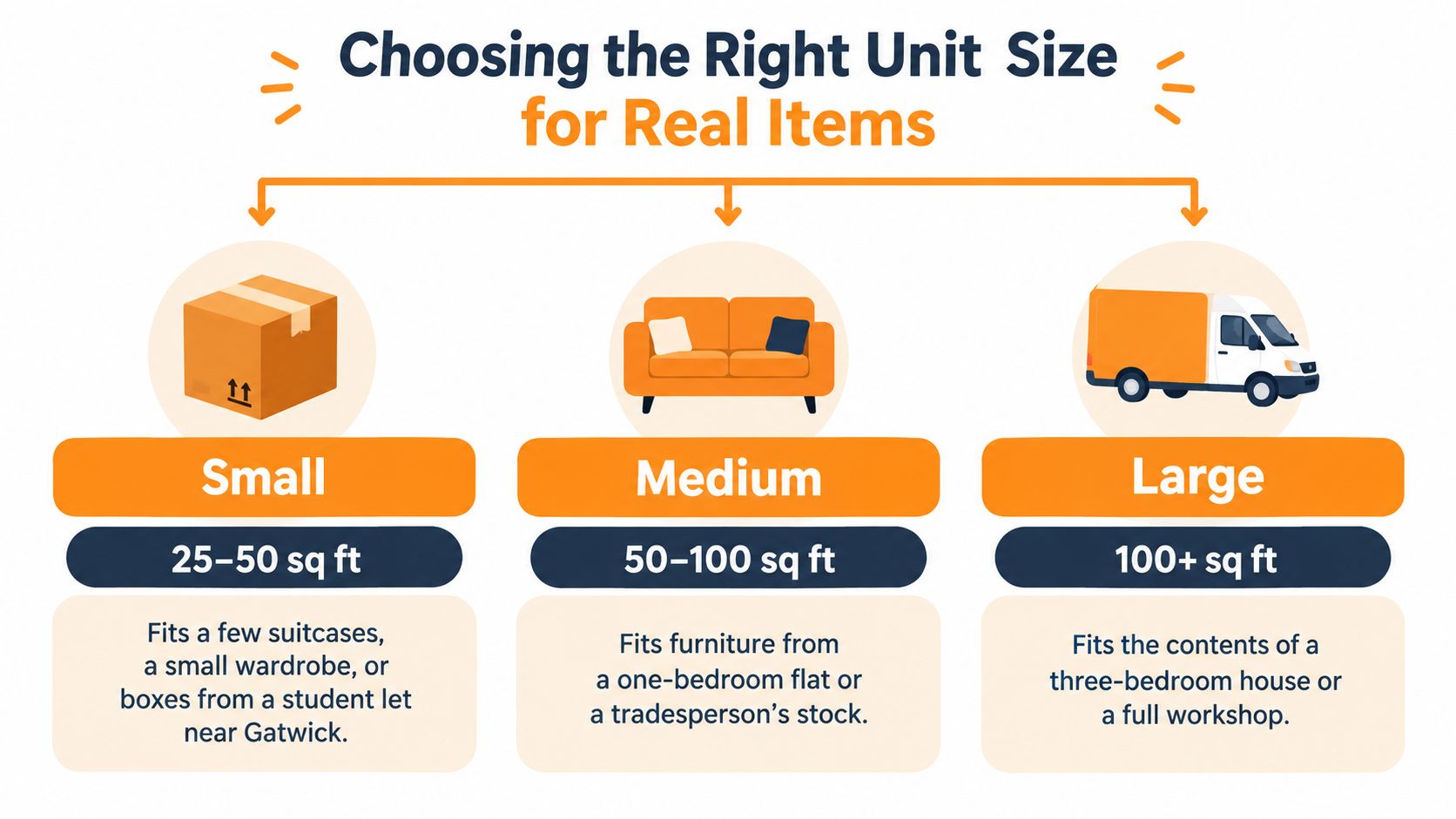
- Small, around 25–50 sq ft: Suitable for a modest number of boxes, a few suitcases, a trader's equipment or belongings from a student let. It can work well when you don't need to store large furniture.
- Medium, around 75–100 sq ft: Consider this for furniture from a one-bedroom flat, archive cartons or a mix of business stock and equipment. Check the unit's shape as well as its floor area.
- Larger, around 150 sq ft: This may suit substantial stock overflow or a load comparable to what you'd carry in a Transit van. Don't assume every van load fits the same way; bulky items and awkward shapes change the calculation.
- Around 200 sq ft or more: Look at this range if you're combining equipment, stock and shelving, or storing overflow for more than one part of a small business. Confirm that the facility's access and loading arrangements can handle your largest items.
Then make the decision in three passes. First, list everything you plan to store. Second, group items by how often you'll need them, so frequently used tools aren't buried behind boxes. Third, leave room for a practical walkway and any additions you already expect. Packing tightly can reduce usable space if you can't reach what's at the back.
Practical rule: If a regular visit means unloading half the unit to reach one item, the layout is wrong, even if the quoted size looks efficient.
For another way to think through volume and belongings, this storage unit size advice for Sydney offers a useful comparison of common household storage needs. For local options, check storage unit sizes in Crawley and compare the suggested dimensions against your own item list before booking.
Security and Access Features That Actually Matter
Security claims are easy to list. What matters is whether the specific controls suit what you're storing and how you'll use the unit. A box of old photographs, costly trade tools and business records don't present the same risks, so don't let a long amenities list distract you from practical questions.
| Feature | What to verify | When it matters |
|---|---|---|
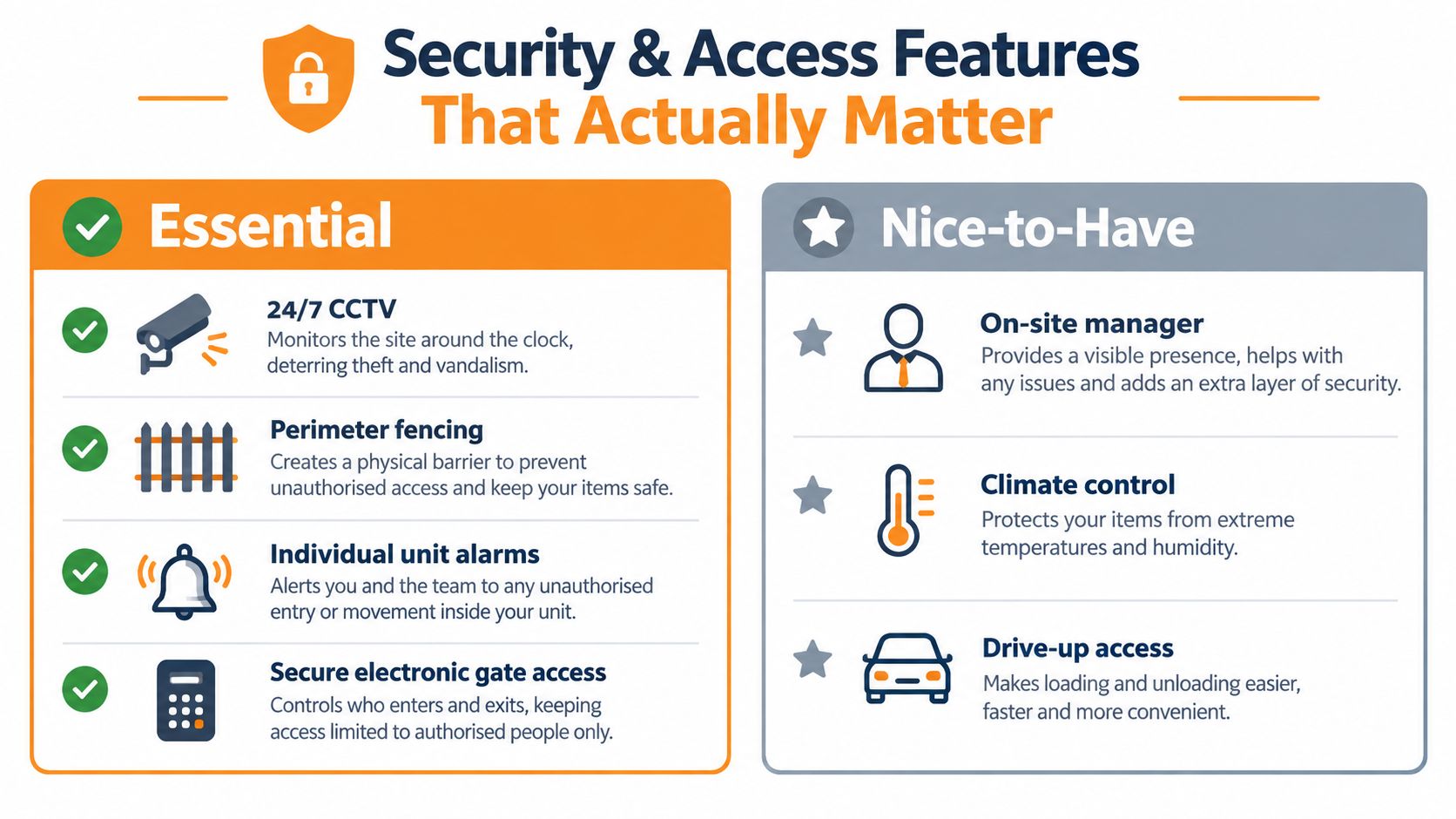
| CCTV and perimeter security | Ask what areas cameras cover and how the site is enclosed. | Useful for any customer, especially where valuable goods are stored. |
| Controlled entry | Check how access is granted and whether entry activity is recorded. | Important when you're storing business equipment or confidential files. |
| Individual unit alarms | Confirm whether alarms are available for your unit and how alerts are handled. | Consider for higher-value tools, stock or equipment. |
| On-site staff | Ask when staff are present and what they can assist with. | Helpful for move-in questions, but not a substitute for clear security procedures. |
| Climate control | Ask what environmental conditions are managed. | Consider for sensitive items such as photographs, electronics or particular records. |
| Loading and vertical access | Check bay access, lift arrangements, door width and vehicle manoeuvring. | Essential when you'll move bulky stock or equipment regularly. |
Ask about the response, not just the equipment
Ask the facility who can access the site, how entry is logged and what happens if an alarm is triggered. A camera is only one part of a security setup, and a keypad is only useful if the access rules are clear. If you're storing customer files or valuable kit, get the answers before you sign.
For business users, loading arrangements deserve the same scrutiny as security. Confirm whether a van can approach the unit, whether an upper-floor unit has lift access, and whether forklift unloading is allowed. A facility might be secure and still be impractical if your equipment can't be moved in safely.
For a more detailed look at common safeguards, use this guide to self-storage unit safety. Treat security and access as a combined decision: the right unit protects your belongings and lets you handle them without needless difficulty.
Pricing, Contracts and What to Expect in 2026
A precise local price depends on the facility, unit size, availability, insurance and contract terms. Don't accept a budget presented as a universal Manor Royal rate. Instead, get current quotes for the sizes you're considering and compare the total monthly cost, not just the headline rental.
National context shows a substantial UK market. The 2025 industry report recorded more than 64.3 million square feet of self-storage space and annual sector turnover of about £1.2 billion. A separate 2025 report counted 2,915 stores, with overall occupancy at 74.5% (UK self-storage annual report). These figures show an established sector, but they don't set the price of an individual unit in Crawley.
Compare quotes on the same basis
Use this table as a planning template, not as a published price list. Ask each facility to fill in the current quote for your intended move-in date.
| Unit size | Typical use | Indicative monthly budget | Best for |
|---|---|---|---|
| 50 sq ft | Boxes, tools or a limited amount of stock | Request a current local quote | A small household load or modest trade storage |
| 100 sq ft | Furniture, archive cartons or mixed stock | Request a current local quote | A one-bedroom move or a business needing more room |
| 200 sq ft | Larger overflow, equipment or combined storage needs | Request a current local quote | A small firm with substantial goods to organise |
A monthly rolling agreement can suit uncertain projects or seasonal stock, provided you understand the cancellation terms. Before booking, check for administration charges, insurance costs, late-payment fees, deposit requirements and how unused rental time is handled. Ask whether the quoted rate changes after an introductory offer, and get the answer in writing.
Don't choose a long commitment just to make the first quote look lower. Match the term to how long you expect to store items, then compare the total cost across realistic options. If you're also considering a shipping container for larger or different storage needs, this overview of what to expect for container rental fees can help you understand the kind of costs to ask about. It's a comparison point, not a substitute for a current local quote.
Getting There and Back, Access, Traffic and the Crawley Growth Programme
The closest facility isn't automatically the most convenient. If you're collecting stock during the working day or moving a vanload of tools, congestion, temporary works, parking and unloading rules can matter more than a short map distance.
Crawley's Growth Programme includes a £60 million package of town improvements, with more than £3.5 million of direct Manor Royal investment for junctions, walking and cycling facilities, traffic signals, bus infrastructure and investigations into parking improvements. Phase 3 works began on 10 February 2025 and were scheduled to last 18 weeks (Crawley Growth Programme in Manor Royal). These plans and works make it sensible to check current conditions rather than assume your usual route will be clear.
Check the journey before move-in day
If you visit frequently, test the journey at the times you expect to travel. A tradesperson heading out before a job may need fast loading and dependable vehicle access. Someone storing archive boxes for occasional retrieval can be more flexible about visit timing and transport options.
Before committing, ask:
- Vehicle fit: Can your van enter, turn and park without blocking other users?
- Unloading rules: How long can you use the loading area, and what equipment can you bring?
- Visit timing: Does access suit your workday, evening or weekend routine?
- Route changes: Are there temporary roadworks or closures to plan around?
- Alternatives: If you don't need regular access, can you reach the facility without driving every time?
Gatwick-linked logistics can shape movement around the area, but proximity alone won't remove traffic or parking constraints. The unit you can reach and load easily is more useful than the one that looks closest on a map. Confirm the practical arrangements before you book, especially if your first visit involves bulky furniture, a loaded van or time-sensitive business stock.
Matching Storage to the Four Main Manor Royal Audiences
Four customers can rent similar units for completely different reasons. The student needs affordable space between terms; the homeowner wants furniture out of the way; the business owner needs orderly access to stock and records; the tradesperson needs tools secure and ready for work. Choose the setup around that routine, rather than copying someone else's unit choice.
A student storing belongings over a break can start with a small unit for boxes, bags and a few compact items. Visits may be infrequent, so prioritise a flexible rental and clear pricing. Pack belongings together by room or category, and keep anything needed on arrival easy to reach.
For a homeowner between moves or mid-renovation, a medium unit may suit furniture and household boxes. If you'll collect items in stages, leave a walkway and avoid stacking essentials at the back. Check loading access before moving large pieces, and match the rental period to the likely gap between homes or the project timeline.
Give business and trade users a working layout
A small business using storage for surplus stock and paperwork should separate items that need regular retrieval from records that can stay put. Ask about access rules, insurance and how easily you can load cartons. A unit that's easy to organise can prevent a routine stock visit from turning into a full unload.
A tradesperson storing tools and equipment should look closely at ground-floor or drive-up access, doorway width and vehicle manoeuvring. Protect sharp or heavy equipment appropriately, group tools by job type, and keep frequently used kit near the entrance. If you need to visit often, inconvenient access will wear thin quickly.
For each option, write down four things before requesting a quote: what you'll store, how often you'll visit, what vehicle or transport you'll use, and how long you expect to rent. Then add the security and access features that matter for those items. That short profile makes it easier to compare facilities on suitability rather than sales language.
Booking, Moving In and Packing the Right Way
Make the booking in a clear order. First, list your items and use a size guide to narrow down the unit options. Get a current quote for the unit you're considering, then confirm access arrangements and security features directly with the facility.
Prepare the unit for easy use
Before signing, read the contract for extra charges, insurance requirements, access hours and cancellation terms. Don't assume an advertised monthly rate includes every cost. Ask how to contact the facility if you have a problem, and confirm what happens if your plans change.
Pack so you can find things again. Clean and dry items before storing them, disassemble flat-pack furniture where practical, and use breathable covers for fabrics rather than wrapping them tightly in plastic. Put heavier boxes at the bottom, label boxes on at least two sides and leave a walkway so you can reach goods without moving everything.
For a broader approach to keeping rooms organised before and after a move, browse this curated reading for home systems. A simple inventory of what you've packed and where you've placed it will also save time when you return for something specific.
Before move-in day, check the final details:
- Insurance: Confirm what cover you need and whether your existing policy applies.
- Access: Make sure the hours and entry process fit your routine.
- Emergency contact: Know who to contact if you can't access the unit or notice a problem.
- Cancellation: Read the actual terms so you understand how to end the rental.
This week, gather your item list, decide how often you'll need access and request quotes for a realistic unit size. Compare the complete terms before you book, then reserve a space that fits your routine rather than paying for capacity you won't use.
If you need flexible, secure storage for business stock, tools, records or household belongings, explore the options at Standby Self Storage. Check unit sizes and pricing online, then choose a space that suits your access needs and move-in plans.