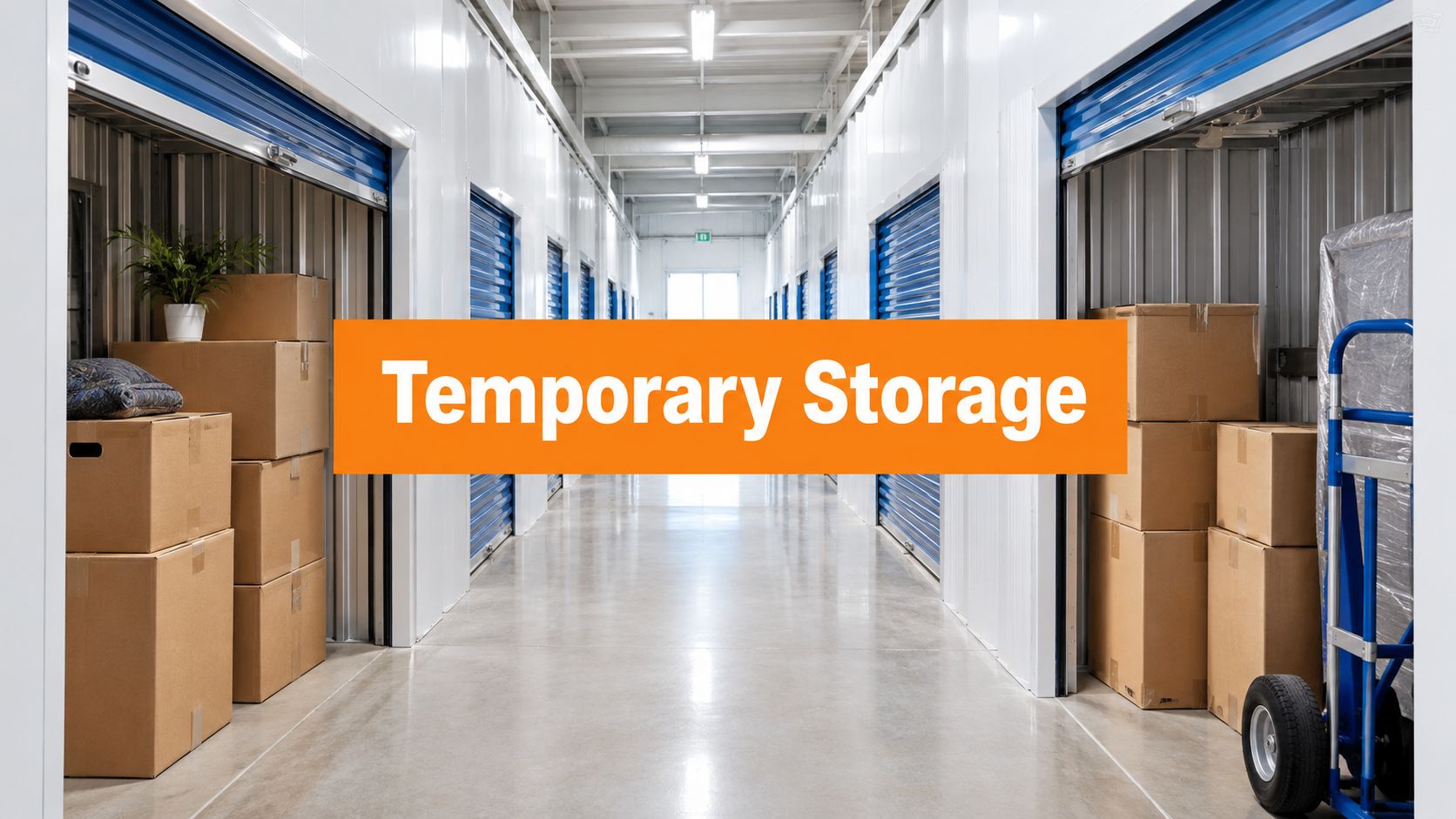

If you're running a business in Molesey, lack of space usually shows up before you officially call it a storage problem. Stock starts creeping into the spare office. Tools stay in the van overnight because there's nowhere better to put them. Archive boxes end up under desks. Packing benches compete with meeting tables. What looked manageable a few months ago starts slowing everyone down.
That's why Business Storage in Molesey matters. Used properly, it isn't overflow for clutter. It's a practical way to keep trading space for trading, admin space for admin, and expensive square footage focused on the work that earns money.
Why Molesey Businesses Need More Than Office Space
A lot of local businesses reach the same point. Revenue is moving in the right direction, but the premises no longer fit the operation.
An online seller in West Molesey might start from a spare room, then take on more stock lines and returns than the house can sensibly handle. A contractor working around Hampton Court, Esher and Walton may need regular access to tools, fixings and backup materials, but not a full warehouse lease. A small professional firm can keep growing while drowning in old files, unused furniture and marketing stock that no one wants in the front office.

When extra office space is the wrong fix
The first instinct is often to look for larger premises. Sometimes that's right. Often it isn't.
If stock, archived records, spare equipment, event kit or materials represent the core issue, taking on more office or workshop space can be an expensive way to solve the wrong problem. You end up paying for space that has to be heated, organised and managed, even though it isn't core trading space.
Some firms try to build capacity internally instead. If you're weighing that route, this plain-English guide on what is a mezzanine floor is useful because it helps clarify when changing the current premises makes sense and when external storage is the cleaner option.
Practical rule: If your team touches stored items often enough to disrupt daily work, but not often enough to justify renting larger commercial premises, storage is usually the more efficient middle ground.
The wider market supports that view. The UK self-storage sector showed overall revenue growth of 6% year-on-year, reflecting its role as operational infrastructure for businesses storing records, surplus stock and e-commerce inventory, according to this UK self-storage sector overview.
Storage works best when it solves an operating problem
Good business storage should remove friction, not create another thing to manage.
That usually means:
- Separating stock from staff space so offices stay usable
- Protecting tools and equipment instead of leaving them in vehicles or shared yards
- Creating room to grow without locking into a bigger lease too early
- Handling seasonal swings without carrying dead space all year
For firms that need a straightforward overview of dedicated business use, business self storage options are often used for stockholding, equipment, records and temporary overflow during moves or refits.
In Molesey, the smart move isn't always “get bigger premises”. Quite often it's “use space better”.
Matching Your Business to the Right Storage Unit
Choosing a unit gets much easier once you stop thinking in square feet first and start with business behaviour. What are you storing, how often do you need it, and do you need to walk in regularly or mostly stack and leave it?
That matters more than the label on the door.

Four common Molesey use cases
E-commerce and online retail usually need a unit that supports regular picking, packing overflow and seasonal stock swings. If your bestsellers turn quickly, layout matters as much as size. Leave an aisle, label shelves and keep packaging near the entrance.
Tradespeople and contractors tend to value access and security over polish. The unit becomes a working base for tools, consumables, smaller materials and replacement parts. If loading is frequent, ground-level convenience usually matters more than squeezing into the smallest possible footprint.
Small offices and startups often use storage as a pressure valve. Archive boxes, spare desks, product samples, signage and old IT furniture can move out of the office without being thrown away before a proper review.
Event and seasonal operators need flexibility. Display stands, branded panels, lighting, stock and décor can sit off-site during quiet periods, then move back into circulation when work picks up.
The right unit size is the one that matches your access pattern. A packed unit that looks efficient on day one can become expensive if staff waste time unpacking it every week.
Business Storage Size Guide for Molesey
| Unit Size (sq ft) | Equivalent To | Ideal For | Example Items |
|---|---|---|---|
| 40 | Small stock room | Sole traders, small online sellers, archive overflow | Boxes of stock, documents, tools, promo materials |
| 80 | Large shed or compact workshop store | Growing e-commerce brands, mobile trades | Shelving, stock lines, tool cases, spare parts |
| 120 | Half-garage style working storage | Firms with mixed storage needs | Furniture, boxed inventory, event kit, archived files |
| 160 | Larger operational store | Businesses with frequent loading and broader stock range | Pallet-adjacent goods, equipment, seasonal stock, multiple categories of items |
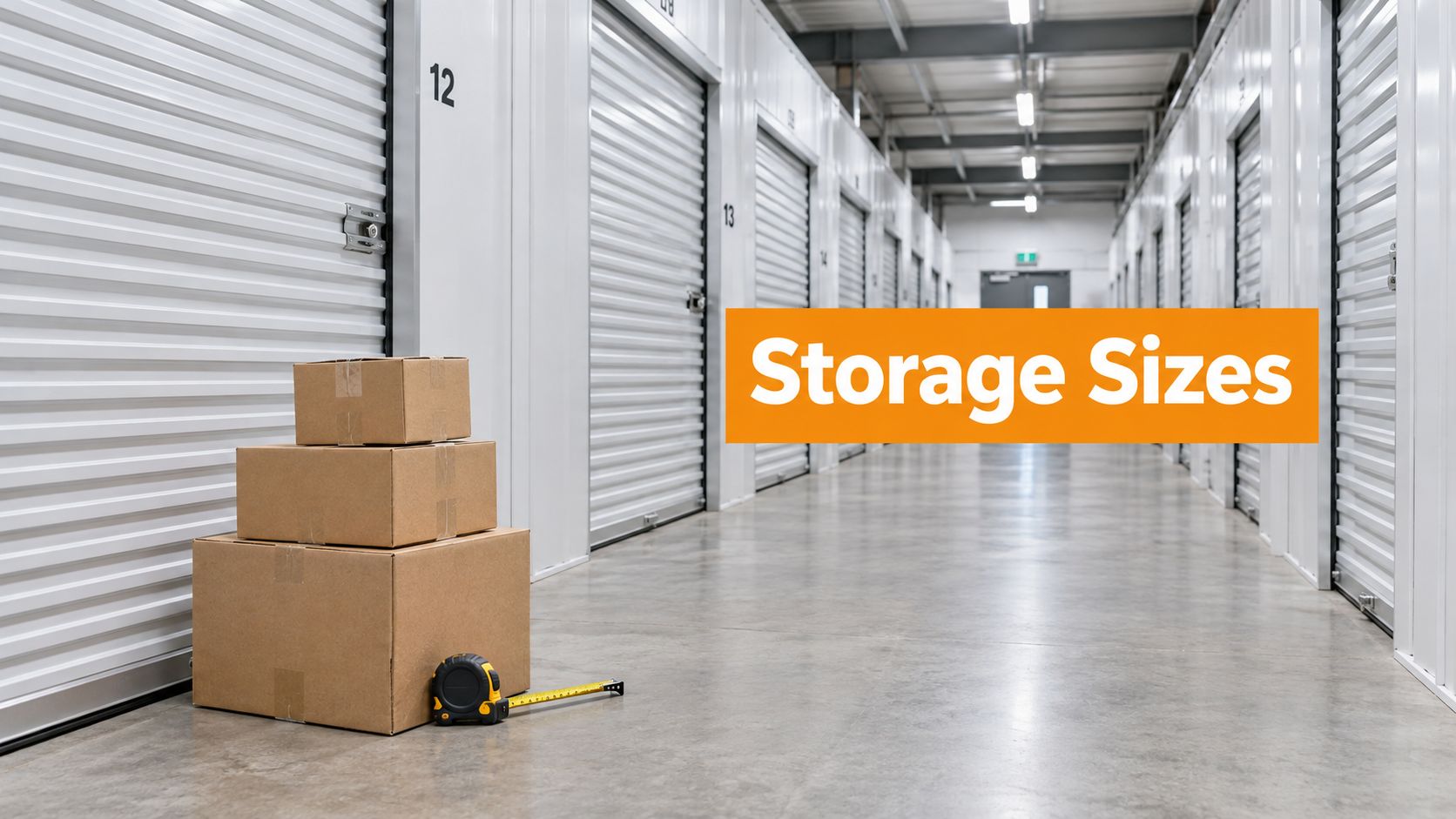
These sizes align with the range commonly used for business storage in Molesey. If you want a visual comparison before committing, a storage unit size guide is useful for matching item volume to unit footprint.
How to choose without overpaying
A simple filter works well:
- List your categories, not just item counts. Stock, paperwork, furniture and tools stack differently.
- Decide whether access is daily, weekly or occasional. High-frequency access needs layout space.
- Separate live inventory from dead storage. Don't pay prime-access space for items you almost never touch.
- Think six months ahead. If growth is likely, choose a setup that can scale without a full reshuffle.
What doesn't work is guessing low to save money, then filling every inch on the first move-in. Businesses usually regret that fastest when staff need one carton from the back and have to unload half the unit to reach it.
Key Features to Demand for Your Business Storage
Not all storage is equal. Two units can look similar on paper and perform very differently once you start using them for actual business operations.
If you're comparing Business Storage in Molesey, judge the site by how it affects time, risk and admin. Those are the three costs that steadily mount up.

Access that helps rather than hinders
For many businesses, the loading process is the service.
Drive-up access is especially valuable when staff are moving tools, stock or bulky materials in and out regularly. According to Standby's Molesey storage information, facilities with drive-up access can reduce loading times by 40 to 60% compared with multi-storey alternatives. The same source states this correlates with 25% higher customer retention for SMEs and can save businesses 15 to 20% annually versus traditional warehousing.
That matters because wasted loading time doesn't stay in the yard. It carries through to missed delivery windows, delayed installs and staff standing around waiting for access.
Security that suits business use
A business unit shouldn't just be lockable. It should sit inside a facility that treats security as part of the operation.
Look for:
- 24/7 CCTV coverage so there's constant monitoring
- Controlled entry rather than open, casual access
- Secure perimeter protection that reduces opportunistic entry
- Practical parking and loading space so collections don't become awkward or risky
If you're storing anything you need to replace quickly to keep trading, from tools to revenue-generating stock, it's worth understanding how secure self storage is before choosing purely on headline price.
Security isn't just about theft. It's about keeping the business trading if something goes wrong.
Flexibility matters more than glossy extras
The businesses that get the most from storage usually have changing space needs. A renovation runs over. A stock line expands. A contract ends. A seasonal peak arrives earlier than expected.
That's why flexible terms often beat “premium” extras you won't use. What works in practice is:
- Units you can scale up or out of without friction
- Access arrangements that fit the working week
- Simple billing
- No unnecessary tie-in when the requirement is temporary
One provider in the area, Standby Self Storage, offers container-based drive-up units in sizes from 40 sq ft to 160 sq ft with 8 ft ceiling heights, which suits businesses that want direct loading and straightforward access for inventory and equipment.
What doesn't work is choosing a site because the office looked nice, then discovering every collection takes too long and every contract change requires paperwork and delay.
The Financial Case for Storage in Molesey
Most business owners don't ask whether storage is useful. They ask whether the spend is justified.
That's the right question. Storage should earn its place in the budget by protecting better uses of your main premises, reducing friction in day-to-day operations and keeping fixed property commitments lower than they need to be.
Compare the real alternative, not the ideal one
The wrong comparison is “storage versus free space”. Free space usually isn't free. It's your office, workshop, meeting room, van, hallway or home.
The better comparison is storage versus taking more commercial space than the business needs for people and core work. In Molesey and the wider commuter belt, location affects this calculation because easy access to routes such as the A3 and M25 turns storage into a logistics tool, not just a holding area, as explained on Kiwi Storage's West Molesey business storage page.
If your stock and equipment move efficiently from a well-located unit, the cost is often easier to justify because it supports a leaner operating model.
Where businesses usually see value
Storage tends to make financial sense when it helps you avoid one of these:
- Taking a larger lease too early for stock or archived items that don't need prime workspace
- Using staff time badly because rooms need constant reshuffling to stay functional
- Replacing tools or materials after poor overnight storage decisions
- Holding too much dead space inside your main premises for occasional-use items
A useful rule is to budget based on access value, not just floor area. A smaller, better-organised unit that supports quick collections can be a smarter spend than a bigger unit filled inefficiently.
The cheapest unit on paper can become the most expensive one if your team loses time every time they open it.
Practical ROI thinking for local firms
For importers and product businesses, storage decisions can also tie into wider cash-flow planning. If you're handling goods before release into normal circulation, Upfreights' guide to duty deferral is a helpful background read because it shows how warehousing choices can affect when costs hit the business.
For typical Molesey SMEs, the day-to-day ROI is usually more straightforward:
- Keep revenue-generating space clear
- Store slow-moving or bulky items elsewhere
- Make collections predictable
- Review usage regularly so you don't pay for the wrong size
What doesn't work is treating storage as a dumping ground. Once that happens, the unit stops saving money and starts hiding inefficiency. The businesses that get value from it know what's inside, how often it moves and why it's there.
Booking and Moving In The Smart Way
The booking process tells you a lot about how a storage provider runs the rest of its operation. If getting a unit takes too many calls, forms and vague promises, moving in usually won't be smoother.
Business owners need speed and clarity. You want to know the likely size, understand the terms, book the unit and get on with the move.

A practical move-in checklist
Before you reserve anything, get these basics sorted:
- Measure your largest items so you're not estimating from memory
- Group items by use frequency because fast-access stock should be loaded differently from archive boxes
- Label by category rather than by room or person if the unit is for business use
- Plan the first unload so the heaviest or least-used items go in first
This saves time on move-in day and avoids paying for a second van trip because the loading order made no sense.
What a smooth booking process looks like
A modern process is usually simple:
- Check likely unit size.
- Confirm availability and pricing.
- Complete the booking online.
- Receive access details and move in.
That approach suits busy firms because it cuts out the back-and-forth that older, paper-heavy operators still rely on.
Moving in without creating a future mess
The first setup matters more than expected. A badly packed unit feels fine on day one and becomes frustrating a week later.
Use these practical rules:
- Keep a centre aisle or one-side access strip if items will be retrieved often
- Put high-turnover stock near the front
- Store documents and archive boxes together, not mixed with tools or irregular items
- Leave room for growth within categories, so one busy product line doesn't force a full re-stack
For teams sharing access, create a simple map on your phone or in a shared note. Shelf left, tools rear right, packaging front wall, archive boxes stacked by year. That one step prevents a lot of wasted time.
The smartest move-in is the one that still works after the first busy month.
Molesey Business Storage FAQs
Do businesses use self-storage instead of warehousing?
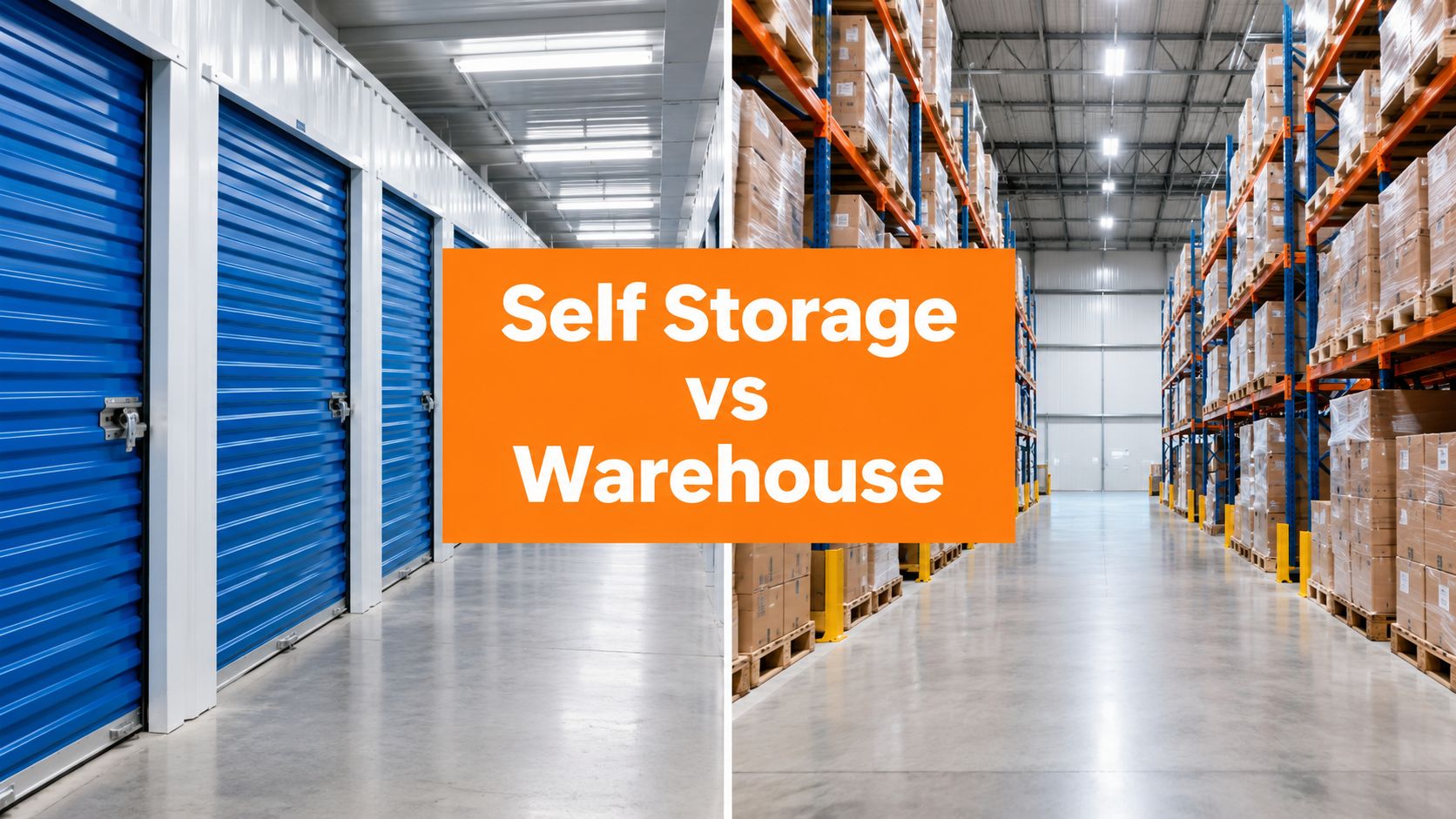
Yes, often for specific operational reasons. Self-storage suits businesses that need flexible space for stock, tools, archives, furniture or seasonal equipment without stepping into a larger warehouse commitment. It's especially useful when the business needs room to move, but not a full industrial lease.
Is business storage only for online sellers?
No. E-commerce firms are an obvious fit, but they're not the only users. Tradespeople, office-based firms, local service businesses, event operators and startups all use storage when they need secure overflow space and straightforward access.
How do I know what size unit to take?
Start with item type and access pattern. If you're storing archive boxes and spare furniture, dense stacking may work. If you're storing active stock or daily-use tools, leave access space and don't choose so tightly that every visit turns into a reshuffle.
Will I need insurance?
Many facilities require stored goods to be insured or offer cover options as part of the setup. Check the policy terms before booking so you know what protection applies to your items, especially if they're business-critical.
Are business rates and utilities an issue?
One reason many firms choose self-storage is that it can simplify overhead compared with taking extra commercial premises. Even so, don't assume anything. Ask for a clear breakdown of what's included in the monthly charge and whether there are any additional costs tied to access, protection or admin.
What shouldn't go into a business storage unit?
Rules vary by operator, but prohibited items usually include anything unsafe, unlawful, perishable or hazardous. Ask for the restricted items list before move-in, especially if you handle chemicals, fuel-related products, batteries or food goods.
Is vehicle access important?
Very. If you're moving tools, equipment, stock or bulky materials, poor access adds labour time every single visit. For businesses, convenience isn't a luxury. It's part of the operating cost.
Can storage work during a refurbishment or office move?
Yes. Temporary business storage is often most useful during short periods of disruption. It lets you clear rooms, protect equipment and keep trading while the main premises are being reworked.
If you need Standby Self Storage for Business Storage in Molesey, use it as an operational tool, not just spare space. Choose the right size, set it up properly from day one, and make sure access, security and flexibility match how your business operates.