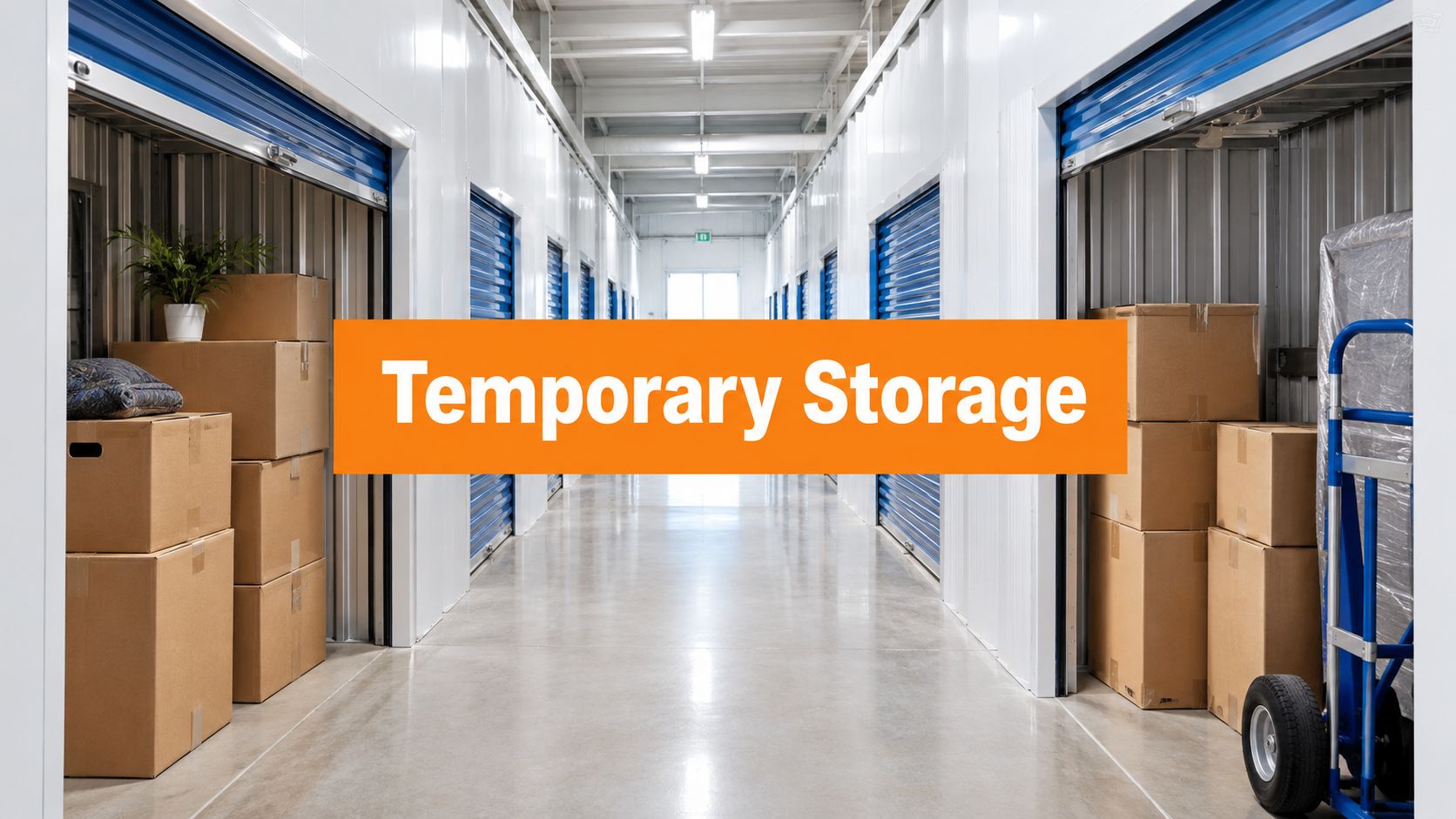

You lock the van, head inside, and still think about the gear left in it. Combi drill, SDS, laser level, pipe press, test kit, maybe a few boxes of fittings for tomorrow's job. If you've ever looked out the window before bed just to check the van's still there, you already know why storage matters.
The other problem is clutter. A lot of tradespeople start by using the garage, a side passage, a shed, or a lock-up that wasn't built for modern kit. Then the stock builds up. Cables get mixed with consumables. Expensive tools sit next to damp plasterboard offcuts. You waste time looking for things you know you own. That's not just annoying. It eats into the working day.
Why Every Epsom Tradesperson Needs a Secure Base
A proper storage unit changes the job in a very practical way. It gives you a base outside the house and outside the van. That means less risk overnight, less mess at home, and less scrambling at 6am because the right kit is buried under yesterday's materials.
This isn't some niche setup for big firms. The UK self-storage sector supports over 680,000 UK businesses, and companies report cost savings between 40% and 60% compared with traditional warehousing or commercial premises according to business storage figures from Standby Self Storage. For a sole trader or a small crew, that matters. You get usable space without taking on the cost and rigidity of a bigger premises.
What works in real life is simple. Keep the van lean, keep the expensive kit off the drive, and keep spare stock in one organised place. That setup makes early starts easier and reduces the chances of losing half a morning because a tool walked or a box got soaked.
The daily problems it solves
A secure base helps when your working week is all over the place.
- Overnight risk drops: You're not leaving everything in the van and hoping for the best.
- Home life improves: Garages and hallways stop turning into overflow stores.
- Jobs run smoother: Materials, fixings, and backup tools stay in one place.
- You look more organised: Customers notice when you turn up prepared instead of rummaging through piles.
Practical rule: If replacing the contents of your van would hurt cash flow, you need a better storage setup than a driveway and a padlock.
Why it's a business decision, not just extra rent
Tradespeople often treat storage as a last resort. That's the wrong way round. Good storage protects revenue. If your core tools are secure, dry, and easy to access, you're less likely to lose work through theft, damage, or disorganisation.
There's also the stress factor. Not glamorous, but real. When your business depends on what you can carry, charge, cut, test, or fit with your own hands, secure storage for tradespeople in Epsom becomes part of staying operational.
If you're weighing up what good local provision looks like, this guide to why businesses choose self storage in Epsom gives a useful overview of the practical side.
Decoding Security for High Value Tools
“Secure” gets thrown around too loosely. A gate and a couple of cameras don't automatically mean your tools are well protected. If you're storing testers, breakers, power tools, copper, specialist kit, or expensive hand tools, you need to check security in layers.

Start with monitored access
The first thing to look for is controlled entry. You want a site where people can't just wander in. PIN access matters because it creates a record of who entered and when. That's a lot stronger than an open gate during business hours.
CCTV also needs to be more than decorative. For tradespeople storing high-value tools, the stated standard is 24/7 CCTV monitoring with a minimum resolution of 1080p covering entry points and internal corridors, along with continuous recording and motion activation. Facilities with 24-hour monitored CCTV and restricted access via PIN codes reduce tool theft incidents by up to 78% compared with those with intermittent monitoring, according to UK tradesman storage security data referenced here.
That's the difference between “we've got cameras somewhere” and a system that helps prevent loss and supports an investigation if something goes wrong.
Then check the unit itself
Perimeter security is only half the story. The unit needs to stand up on its own. For trade kit, ask about:
- Door strength: Steel doors and reinforced locking points matter more than a cheap hasp.
- Lighting: Dark corridors and blind corners make sites easier to abuse.
- Individual alarms: Not every site offers them, but they add another barrier.
- Access layout: If people can loiter unseen near units, that's a weakness.
If you already look at alarms and surveillance for your office, workshop, or yard, the same thinking applies here. This guide on selecting business security systems is useful because it breaks down how layered protection works in practice, rather than treating security as one box to tick.
A secure site should make access easy for the right person and awkward for everyone else.
Don't ignore weather as a security issue
A lot of tradespeople focus on theft and forget moisture. That's a mistake. Rust, damp, and temperature swings can do nearly as much damage as a break-in, especially with battery systems, laser tools, test equipment, sealants, and boxed stock.
The standard worth paying attention to is a fully weatherproof and insulated unit. If the unit can't protect tools from the local climate, it isn't secure in any meaningful trade sense. A dry, stable environment protects the stuff you rely on every day, not just the resale value.
That's the gap many storage ads miss. They'll mention CCTV and access control, but they won't say much about what happens to metal tools, electronics, fixings, or materials sitting in damp conditions for weeks.
Choosing the Right Unit Size for Your Trade
Picking the wrong size costs you one of two ways. Too small, and you pile everything on top of itself, damage things, and can't find what you need. Too big, and you're paying for empty floor space.
The better way is to choose by working pattern, not just by square footage. Think about what you need to store regularly, what needs fast access, and whether you're carrying bulky kit, boxed stock, or both. An electrician with packout cases and cable drums uses space differently from a professional in grounds maintenance with mowers and long-handled gear.
Match the unit to the job
The biggest mistake is sizing the unit to fit everything like a sealed container. That sounds efficient, but it usually makes access worse. You need room for shelves, a walkway, and the ability to grab the right kit without unpacking half the unit.
For tool care, the environment matters as much as the footprint. Standards for secure tradesperson storage in Epsom say units should be fully weatherproof and insulated to maintain internal temperatures between -10°C and +40°C, helping prevent corrosion of metal tools and damage to electronic equipment, according to secure facility standards in the UK. So if you're comparing units, don't just ask “Will it fit?” Ask “Will it stay dry and workable?”
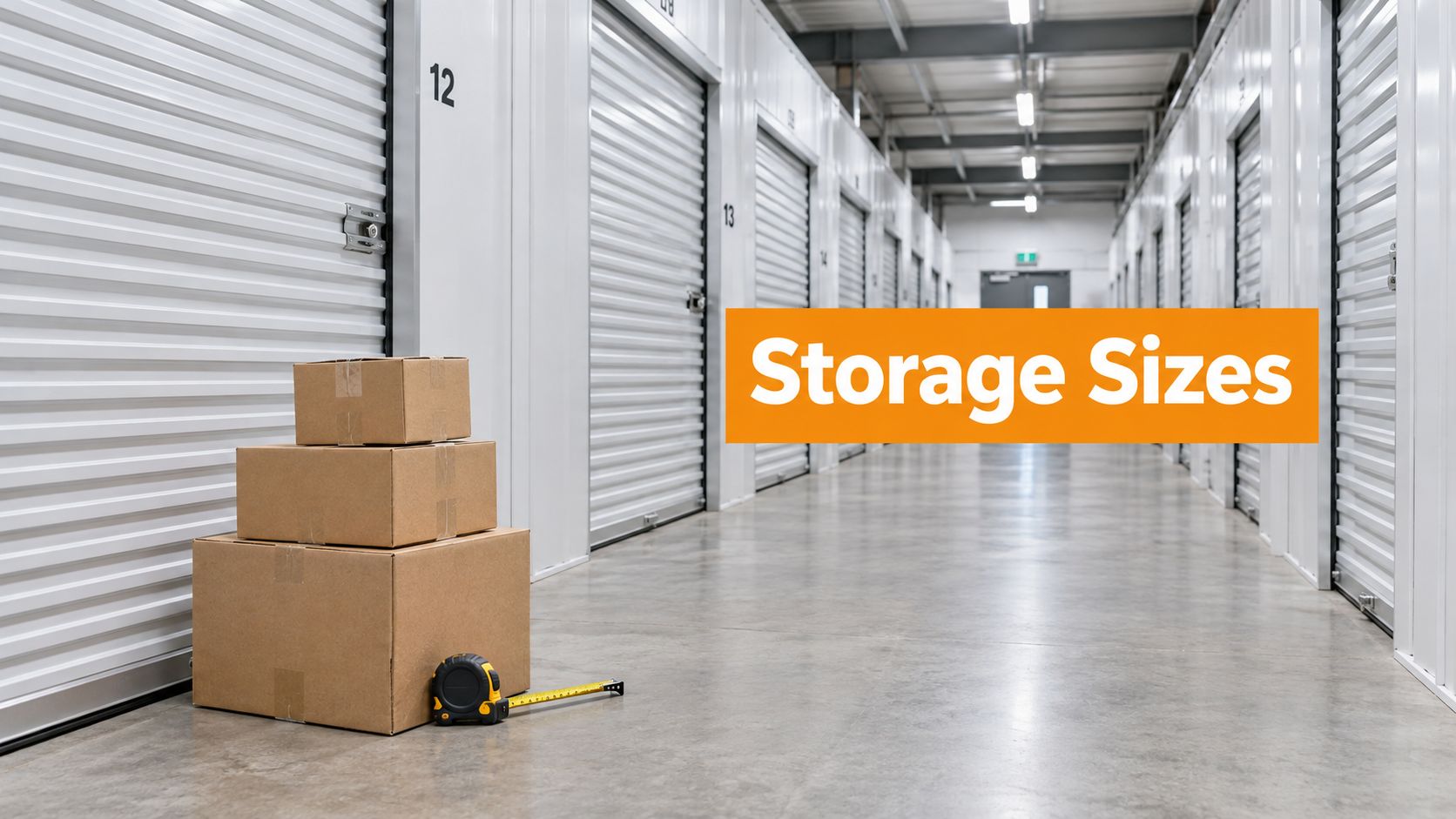
Tradesperson Storage Unit Size Guide
| Unit Size (sq ft) | Typical Trade | What It Holds | Example from Standby |
|---|---|---|---|
| 25 | Painter and decorator | Ladders, dust sheets, rollers, boxed paints, masking supplies, small sprayers | A small unit suitable for overflow tools and consumables |
| 35 | Electrician | Tool cases, testers, cable rolls, step ladders, fittings, small stock bins | A compact business unit for tools plus boxed materials |
| 50 | Plumber | Press tools, pipe benders, toolboxes, fittings, sealants, a small shelving run | A mid-size unit with space for regular access |
| 75 | Carpenter or kitchen fitter | Saws, benches, power tools, fixings, boxed ironmongery, longer items stored carefully | A larger unit for mixed tools and project stock |
| 100 | General builder | Multiple tool stacks, site equipment, fixings, PPE, boxed materials, shelves with clear access | A garage-sized unit for active trade use |
| 150 | Landscaper or multi-van contractor | Mowers, heavy kit, bulky equipment, larger stock volumes, seasonal tools | A bigger drive-up style option for awkward loads |
| 200+ | Growing contractor | Bulk materials, long tools, multiple crews' equipment, operational stock hub | A commercial-scale unit for business storage |
These examples are practical guides, not hard rules. A neat electrician with stacked cases may use less room than a plumber carrying bulky press gear and mixed stock. A kitchen fitter may need more length than floor area. The right answer comes from layout as much as volume.
If you need a visual reference before booking, this storage unit size guide is useful for comparing common sizes against familiar spaces.
If you can't leave a walkway, the unit is too small for trade use. You'll pay for that every morning in wasted time.
Navigating Insurance and Legal Responsibilities
A lot of people assume the storage provider's insurance covers whatever they put inside the unit. That's rarely a safe assumption. The site insures the facility and its operation. Your tools, stock, and equipment are usually your responsibility unless your agreement says otherwise.
That's why paperwork matters. The UK self-storage market now includes around 5,100 facilities and generates more than £990 million in annual revenue, reflecting a professionalised sector where insurance and liability arrangements are standard practice, according to this UK self-storage market overview. Professional doesn't mean automatic cover for your kit. It means the terms should be clear enough for you to check properly.

What to check before you move in
Start with your existing business policy. Some tool insurance covers items in transit and on-site but is stricter about items left in storage. Others will cover stored contents if the facility meets the required security conditions.
Go through these points:
- Stored tools cover: Check whether your policy specifically includes contents kept in a self-storage unit.
- Single item limits: Expensive items like laser levels, press tools, or specialist testers may need to be listed.
- Proof of ownership: Keep invoices, serial numbers, and dated photos.
- Conditions of storage: Your insurer may require approved locks or certain site security standards.
- Business interruption angle: If stolen tools would stop you working, check whether that knock-on loss is covered.
If you're self-employed and sorting out wider cover at the same time, this explainer on general liability for self-employed contractors is a sensible starting point for understanding where liability insurance fits alongside tool and contents cover.
The documents worth keeping
Don't rely on memory after a loss. Build a simple record before storing anything valuable.
- Photograph the tools laid out clearly.
- Record serial numbers for anything with a plate or label.
- Keep purchase records in a digital folder.
- Update your inventory when you add or remove major items.
- Read the storage agreement so you know where the provider's responsibility ends.
For a practical overview of what contents cover usually involves, this page on storage unit contents insurance is worth reading before you sign anything.
The best time to sort insurance is before the first box goes in. After a loss, gaps in cover get expensive very quickly.
Mastering Access and Unit Organisation
A storage unit only saves time if you can use it without friction. Plenty of sites claim easy access, but that can mean very different things. If your day starts before most offices open, or you need to grab gear after a late finish, limited access hours turn a helpful unit into a nuisance.
That's why access and layout belong together. The best setup feels like an extension of your van and workshop. You drive in, get what you need, and leave without turning it into a loading exercise.

Access that works with the trade
The site itself should be easy to work in. Wide lanes help if you're reversing a van. Drive-up access is useful for heavy loads, awkward kit, and fast drop-offs. Indoor units can be better for sensitive equipment, but only if loading in and out isn't a chore.
When you view a place, check these practical points:
- Can you park close enough to unload without carrying everything halfway across site?
- Is access tied to office hours, or can you get in when your jobs demand it?
- Are corridors and loading areas well lit?
- Will a trolley fit easily, or are you dealing with tight turns and awkward doors?
If access is clumsy, people stop using the unit properly. Then the van fills up again, the unit becomes a dumping ground, and the whole point is lost.
Organise for speed, not just storage
Inside the unit, the aim isn't to make everything fit. The aim is to make common jobs faster.
A simple working layout usually beats an overpacked one:
- Shelves down one side: Good for fittings, fixings, sealants, boxed consumables, and labelled bins.
- Heavy kit at the back or along the wall: Mitre saws, breakers, larger power tools, and bulkier gear stay stable and out of the walkway.
- Fast-use items near the door: PPE, common hand tools, battery chargers, tapes, and the stuff you grab every week.
- Long items grouped together: Conduit, ladders, lengths, and poles need their own zone so they don't sprawl across everything else.
Use clear bins where you can. Label all sides, not just the lid. If you work with another person, agree the layout once and stick to it. Most storage chaos comes from mixing systems. One person stacks by trade. Another stacks by job. After a month nobody knows where anything is.
A simple layout that keeps working
Leave a clear path from the door to the back. Don't block it “just for now”. That temporary pile becomes permanent far too often.
A good trade unit should let you do three things quickly: drop off, pick up, and check stock. If it can't do that, reorganise it before the next busy week.
Booking and Pricing Explained The Simple Way
Tradespeople don't need a drawn-out booking process. If a job moves, a contract ends early, or a new site starts next week, you need space quickly and without a pile of admin. That's where modern storage is miles better than the old lock-up model.
The old setup usually means phone calls, paper forms, fixed notice periods, and awkward timing. That doesn't fit how most trade work operates. A 2025 Federation of Master Builders survey found that 74% of UK tradespeople change job sites weekly and need to move tools in under 48 hours, while very few Epsom providers offer instant online booking with no notice periods. That creates a real service gap for local contractors.

What a good booking process looks like
You should be able to handle most of it from your phone. Check sizes, compare prices, choose a unit, and get moving details without losing half a day chasing someone at a desk.
The useful signs are straightforward:
- Transparent pricing: You can see what you're paying before you commit.
- Fast booking: No long delay between deciding and getting access.
- Flexible terms: If the job changes, you aren't trapped in a clumsy contract.
- Simple account management: You can manage the unit without constant calls and paperwork.
Trade storage needs can change quickly. One month you need room for kitchen units and boxed ironmongery. The next month you just need a secure base for tools while working across a different patch.
What doesn't work for tradespeople
Rigid minimum terms can be a problem if the need is temporary. In-person sign-up only is another hassle. It sounds minor until you're already stretched, trying to sort labour, deliveries, and access for a new site.
The best way to judge pricing isn't just the monthly figure. Ask what the unit does for you operationally. If it helps cut wasted trips, keeps the van lighter, protects expensive kit, and lets you scale up or down without drama, that flexibility has real value.
A cheap unit with awkward access and rigid terms can cost more in lost time than a better-run site with clear pricing.
For secure storage for tradespeople in Epsom, the practical win is speed. You should be able to decide you need space and get organised without waiting around for business-hours admin.
Frequently Asked Questions for Epsom Tradespeople
Can I have materials delivered straight to the storage site
That depends on the facility's rules and access setup. Some sites can accommodate deliveries if they're planned properly. Always check first. If you regularly receive fittings, boxed stock, or equipment, ask how deliveries are handled and whether someone needs to be present.
What can't I store in a unit
You generally can't store flammable liquids, hazardous chemicals, explosives, perishable food, live plants, or anything illegal. For tradespeople, that usually means being careful with fuels, gas canisters, certain solvents, and site waste. If you're unsure about adhesives, paints, or cleaning products, ask before moving them in.
Is a storage unit better than a lock-up garage
Often, yes, if your priority is security, dry conditions, and managed access. A basic garage may be familiar, but many aren't set up for monitored entry, proper surveillance, or protection from damp. A well-run storage facility is usually more practical for valuable tools and business kit.
Can I change unit size later
In many cases, yes, subject to availability. That matters for trade businesses because storage needs shift with workload. A smaller unit may suit your normal tool setup, then a bigger one makes sense during a refit, landscaping season, or a run of larger contracts.
Should I store everything from the van
Not necessarily. Most tradespeople work best with a split. Keep the daily essentials in the van and store backup tools, specialist kit, slower-moving stock, and bulk consumables in the unit. That keeps the van lighter and easier to manage while reducing what's exposed overnight.
What's the smartest way to set up a new unit
Start with categories, not random stacking. Put hand tools and fast-use boxes near the front. Use shelves for fittings and labelled bins. Keep a running inventory on your phone. If two people use the unit, agree one layout from the start so it doesn't unravel after the first busy fortnight.
If you want a storage setup that fits the way trade work runs, Standby Self Storage is worth a look. You can check prices online, book quickly, and use flexible terms without being tied into old-style notice periods. For Epsom tradespeople who need secure, practical space for tools, stock, and equipment, that makes life a lot easier.