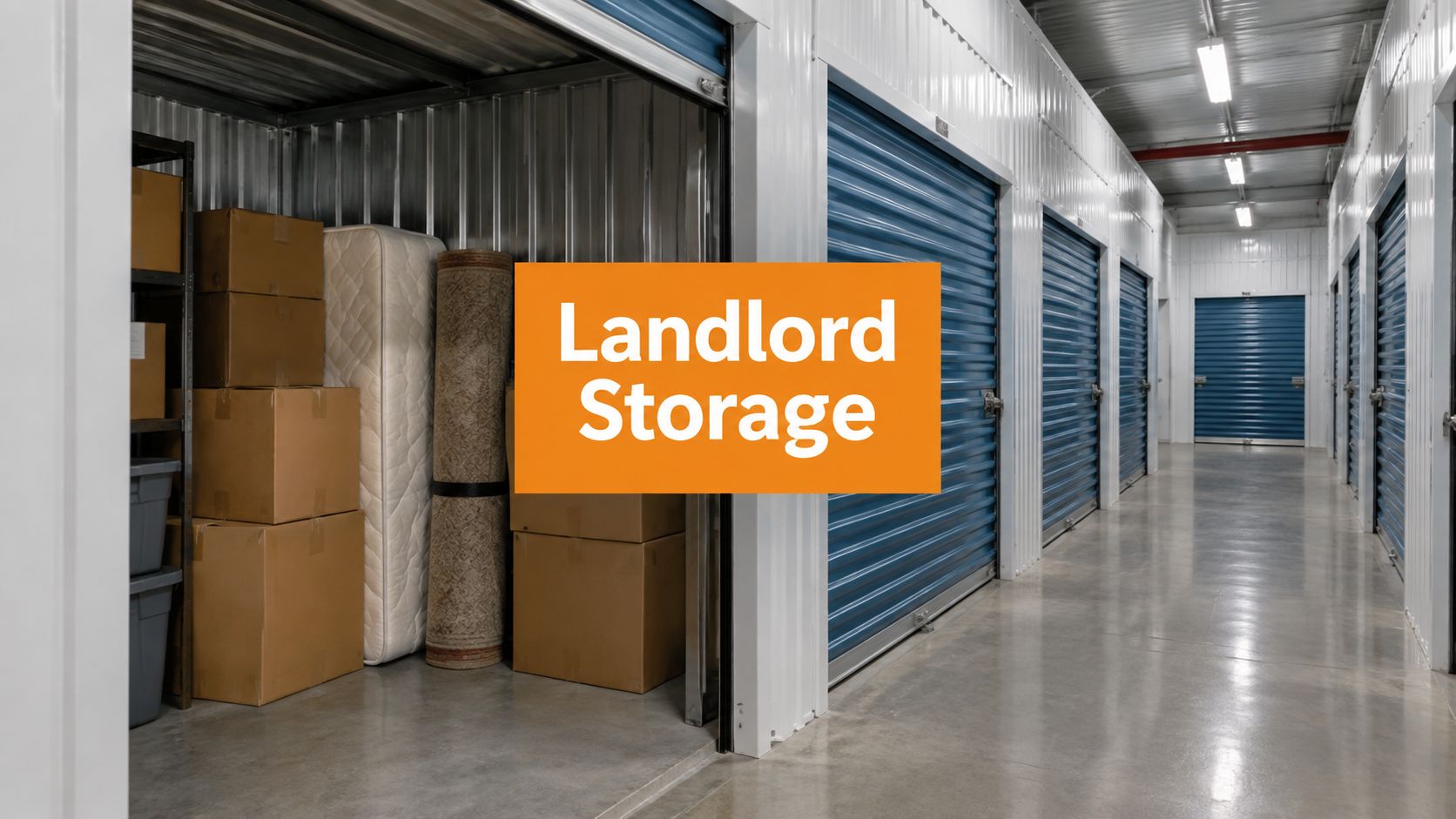
The phone rings at the worst possible time. You've got a two-bed in Three Bridges back, the worktop's chipped, the carpet smells wrong, the last tenant left a dismantled IKEA wardrobe, and you've only got a fortnight before the next move-in. The electrician wants access for the EICR, the decorator needs somewhere dry for the replacement stuff, and you're staring at a hallway full of junk that can't stay, can't be left outside, and definitely can't be shoved into the spare room.
That's Landlord Storage in Crawley in plain English. It's not about hoarding. It's the buffer that keeps a void period moving when tenants leave late, contractors overrun, or you're trying to turn a tired flat around before the next viewing slot disappears. If you're still treating storage like a household declutter problem, you're already using it wrong.
Why Landlords in Crawley Need Storage Between Tenancies
A tenancy ends on Friday, but the next one starts before the flat is ready. The outgoing tenant leaves a damaged bed frame, bags of unwanted belongings, and fixtures you may still be able to reuse. Meanwhile, the deposit dispute is open, contractors need access, and replacement items are arriving before there is room to store them.
That is the practical case for Landlord Storage in Crawley. A unit gives you somewhere controlled to hold furniture, paperwork, appliances, and recoverable items while you clear the property and prepare it for re-letting. Storage can also simplify a cluttered life between lets, but the landlord benefit is operational: fewer delays, fewer improvised piles, and a cleaner handover.
Storage is an operational tool, not a luxury
Use it for temporary furniture holding, archived tenancy records, contractor tools, replacement appliances, and possessions that cannot be disposed of until a dispute is resolved. It is particularly useful in shared houses and room-by-room lets, where one room may need repairs while the rest of the property remains occupied.
Keep salvageable items out of the flat until you have decided what stays, what goes to the tip, and what needs replacing. A proper unit also protects furniture and supplies from weather, tradespeople, and repeated movement through a property under repair.
Crawley's space pressures make private storage worth comparing with council lock-ups and any garage or outbuilding you already control. The council's planning evidence records a 2023 projection of 194,728 sq m of industrial and warehousing floorspace needed across 2023 to 2040, as stated in the Crawley Local Plan market signals assessment. The same assessment says Crawley could account for around 50% of future demand across the Northern West Sussex Functional Economic Market Area, according to that document. That supports a simple conclusion: available space is a practical concern, not an occasional inconvenience.
If you manage voids properly, storage saves time. If you use storage badly, it becomes another job to sort.
Landlords around Gatwick and Manor Royal often work to tight handover schedules. Tenants expect prompt repairs, contractors need early access, and many properties have no spare garage. Judge Landlord Storage in Crawley by how quickly you can reach it and remove items, not merely by its advertised size.
Sizing the Right Unit and Choosing a Sensible Rental Term
Size the unit from the inventory, not from the sales pitch. If you're storing archived tenancy files and a few trade tools, a small unit does the job. If you're holding a bedroom set and boxes during a re-let, you need more space. If the whole flat is being stripped for decorating, guesswork gets expensive fast.
Match the unit to the letting job
A 25 sq ft unit is the sort of space I'd use for paperwork, a couple of archive boxes, and a chest of tools. A 50 sq ft unit suits a single bedroom set with boxes. A 75 sq ft unit will usually handle a full flat's furniture during a refurb. If you're juggling HMO room rotations or holding your own overflow stock, 150 sq ft+ is where you stop fighting the space.
Before you book, photograph the biggest item and measure it. That sounds obvious, but landlords routinely overbuy space because they're picturing the whole problem instead of the actual pile. A dismantled wardrobe, a sofa, and six archive boxes are not the same as a full house contents load, and the unit you choose should reflect that.
For document and archive packing, storage boxes for warehouses are worth a look because the same sturdy, stackable format that works in a warehouse also works for tenancy files and inspection records. Use proper archive boxes, not supermarket carry-outs that collapse the first time you stack them.

The rental term matters just as much. Don't default to monthly if a fixed 3-month or 6-month block is cheaper and still gives you breathing room. At the same time, don't tie yourself into a term that outlasts the void. In Crawley, the sweet spot for emergency storage is often 4 to 8 weeks, because a clean re-let can move faster than the original estimate. Use the unit size guide from Standby Self Storage if you need a rough visual check before you commit.
Storing Tenancy Documents Without Breaking GDPR Rules
A void property often leaves more than furniture behind. Tenancy agreements, references, Right to Rent copies, deposit records, gas safety paperwork, and EICR documents contain personal data, so careless box storage can become a GDPR problem. Keep records for a defined purpose, secure them properly, and destroy them when the retention period ends.
Sort documents by purpose, not habit
Start with a written retention schedule. Operational records support tax, audits, and dispute defence. Tenancy-specific files help answer complaints or establish what happened. Delete marketing scraps, old photographs of an occupied flat, duplicate applicant notes, and other material once its purpose has ended.
The usual retention periods are clear: core documents such as tenancy agreements and correspondence are typically kept for 6 years after the tenancy ends, gas safety records for at least 2 years, Right to Rent evidence for the tenancy period plus 1 year, and tax records for 6 years. The schedule prevents you from holding personal data longer than necessary, which creates avoidable storage-limitation risk. Follow UK landlord GDPR data protection guidance when setting the rules.
Use a simple storage hierarchy
Keep active digital files in encrypted cloud storage, rather than an open laptop folder. Store paper archives in a locked cabinet or secure unit, never in an unlabelled box under the stairs. For a practical example of organising business records, see how company document storage works in practice.
Destroy expired files through a shredding rota before they leave the property.
Never put an unredacted tenancy file in a general rubbish bin. Shred it or use a secure disposal service.
With 8,262 landlord homes recorded in Crawley Borough Council's landlord report, ad hoc box storage quickly becomes unmanageable. The report also records 6 determinations, reinforcing the need to find documents promptly when a complaint or dispute arises. A written retention schedule gives each file a purpose, review date, and disposal date. Crawley Borough Council landlord report
Use property management contract templates as a reference for the agreements and records a landlord may accumulate. Label every paper box with the tenancy, property address, and disposal date. When the dispute ends or the retention period expires, you can identify what stays and what must be shredded without rummaging through every box.
Crawley Storage Options Worth Comparing Before You Book
A void inspection finds a sofa left behind, decorators need room for materials, and the next tenant is due sooner than planned. The right storage choice keeps that handover moving. The wrong one leaves furniture, tools, and compliance paperwork blocking the property while you pay for inconvenient access.
Crawley landlords have four practical routes. Council garages suit low-cost overflow. Private self-storage works better for quick access and cleaner handling. Container yards give refurbishment projects room for bulky stock. An on-site container can help during short works, provided the property has suitable access and permits are manageable.
The four options that matter most
Crawley Borough Council says it owns about 7,000 garages and storage cupboards. Prices start at £13.97 per week for Crawley Homes tenants, £18.58 for other residents, and £21.41 for non-residents, with only a four-week commitment required. Crawley Borough Council garages and storage Council storage is a sensible option for furniture, tools, and short-term overflow when you do not need frequent same-day access.
Private operators around Manor Royal and the Gatwick corridor are better for fast re-lets and active refurbishments. Cleaner loading areas, controlled opening hours, and evening or seven-day access can save time when contractors are collecting materials or returning equipment. For a landlord, that convenience matters more than a polished reception.
Container yards outside Crawley can hold bulky furniture, trade stock, and renovation materials at a lower rate than premium indoor units. They become awkward when you need regular access, weather protection, or climate control. A portable container at the property can suit a short works window, but terraced streets, parking restrictions, and permits can turn delivery into another job.
Get quotes from at least three categories before booking. Compare the operating cost, not just the advertised weekly rate.
| Storage Type | Typical Cost (£/week) | Best For | Booking Reality |
|---|---|---|---|
| Council lock-up garage | £13.97 to £21.41 | Long-term furniture holding, archive overflow | Lower entry cost, but availability can be limited |
| Private self-storage | Varies, typically £20 to £40 for small units | Fast void turnarounds, cleaner access, mixed goods | Usually easier to book quickly |
| Container yard storage | Varies, typically lower than premium indoor units | Bulky items, trade stock, refurbishment materials | Good for volume, weaker on convenience |
| On-site container drop | Job-specific, quoted by provider | Properties with drive access and short works windows | Works only when access and permits line up |
For Landlord Storage in Crawley, ask what happens when the void date changes, the decorator runs over, or a removal crew needs entry before 8am. Those answers reveal whether the storage supports your letting operation or creates another delay.
What Matters Most for a Landlord: Access, Location and Flexibility
Price should not be your first question. Access protects your margin. A cheap unit becomes expensive when you need entry before a checkout, after a contractor visit, or on the day a new tenant collects keys.
Judge storage by handover pressure
Crawley landlords work to awkward timings. Saturday check-outs, evening handovers, and early contractor starts are routine. A site near Three Bridges, the town centre, or the M23 can save half a morning when you only need curtains, a broom, or inspection notes. A nearby unit often beats a cheaper one farther away.
Drive-up access matters when you are moving furniture or refurbishment materials. So does short-notice booking, rather than access tied to the start of a month. During a refurbishment, storage must support the job. A traditional lock-up that forces you around office hours creates another delay.
Score every quote against these questions:
- Can I get in early enough for contractor handovers?
- Can I unload without dragging items across a car park?
- Can I cancel or downsize quickly if the re-let lands early?
- Can I park close enough to move furniture without extra labour?
- Will the site location save me time on a normal Crawley run?
Check the practical details before signing. Confirm the access hours, vehicle restrictions, lift or trolley availability, security arrangements, and notice required to change unit size. Ask whether a removal crew can enter without you being present. Those details decide whether storage keeps a void moving or holds it up.
For landlords managing several properties, storage should fit the same operating routine as your handover records, viewing schedule, and contractor notes. If your team uses CRM solutions for estate agents for that administration, choose storage that reduces coordination work rather than adding more messages and appointments.
A cheaper unit that causes one missed handover is not cheap. Choose the facility that gets people, vehicles, and property items moving when the tenancy timetable demands it.
Pricing Crawley Storage and Ways to Cut the Bill
A refurbishment runs over, the new tenant is ready, and your furniture is still sitting in storage. That extra week can turn a tidy void budget into wasted spend. Price the unit against the job's timetable, not against the size of the property.
Crawley storage costs reflect the trade-off between price, speed, and protection. Council lock-ups generally sit in a lower weekly band, with published prices starting at £13.97, £18.58, and £21.41 depending on eligibility, as noted earlier. Private self-storage around Manor Royal and the Gatwick corridor usually costs more because access is quicker and facilities are easier to use. Container yards can cost less than premium indoor units, but they may offer less protection from weather. Choose according to the load: compliance papers need different treatment from sofas, appliances, or refurbishment materials.
The most reliable saving is a smaller unit. Measure the furniture, archive boxes, and materials before booking. Stack safely on pallets where suitable, dismantle bulky items, and leave enough room to remove individual pieces without unloading the whole unit. Paying for unused floor space is a landlord's avoidable mistake.
The saving tactics that work
- Book the shortest sensible term: Use weekly or short rolling terms for a void, rather than paying through empty weeks on a longer agreement.
- Measure before you commit: A three-bedroom inventory rarely needs the largest unit available.
- Share spare capacity: During a refurbishment, a trusted trade contact may be able to share space for a short period, provided ownership and access remain clear.
- Ask for quiet discounts: Ask directly about NHS, student, or multi-site pricing before accepting the first quote.
- Keep the load tight: Break down furniture, use suitable packing, and avoid paying to store empty gaps between items.
A weekly quote of £45 can often fall to £35 when you choose the correct unit and avoid paying for a longer block than the work requires. That saving comes from controlling the booking, not from clever accounting. Crawley voids can change quickly, so keep storage flexible and release it as soon as the property is ready.
| Option | Weekly Price Range (£) | Saving Tactic |
|---|---|---|
| Council lock-up garage | 13.97 to 21.41 | Apply early and use it for longer, low-touch storage |
| Private self-storage | typically £35-£60 depending on size and access | Right-size the unit and book only the weeks required |
| Container yard storage | typically £25-£50 depending on size and site | Store durable bulk items that do not need indoor protection |
Check the full cost before comparing headline rates. Add any deposit, insurance requirement, lock purchase, administration charge, or fee for changing unit size. A cheaper weekly rate is poor value if it forces you to hire another van or keep the space after the re-let is agreed.
Move-In and Move-Out Checklist for Crawley Landlords
The worst storage mistake is turning up unprepared and paying for extra trips. A landlord needs to move in cleanly, pack sensibly, and move out with paperwork and condition evidence intact. Do it badly and the unit eats your time, your money, and your patience.

Before you move in
Start with the basics. Photograph the unit, test the lock, and confirm the access code works before you hire a van. If the site uses loading bays or key fobs, make sure you know when and how to collect them, especially on Manor Royal sites where timing can be tight.
Pack like a landlord, not like a householder. Use pallet wrap on furniture, seal paperwork in labelled archive boxes, and keep contractor tools separate from tenant records. That separation matters because a box that mixes files, keys, and paint brushes is exactly the sort of thing that causes confusion later.
Insurance needs a proper check too. Declare the cover value and confirm the policy exclusions before you place anything in the unit. Vermin and flood exclusions are the sort of small-print detail people ignore until they need the cover.
When you move out
Work in reverse and keep it tidy. Remove personal data within 30 days of the tenancy ending so you're not leaving GDPR baggage in the unit longer than needed. Photograph the empty unit once you've finished, so you've got evidence of condition and a clean checkout trail. Then confirm the deposit refund timeline and make sure your internal records match what came out.
Leave nothing loose, unlabeled, or unaccounted for.
The snag list is simple. Unauthorised floor staining, undeclared hazardous items such as paint tins, and damaged packaging are the usual problems that cause landlord claims to fall apart at checkout. If you're managing Landlord Storage in Crawley properly, the unit should make the next tenancy easier, not create another dispute.
If you want a storage setup that works the way Crawley landlords work, book a unit with Standby Self Storage and keep your void period under control. Their flexible unit sizes and straightforward booking process suit the stop-start reality of tenant turnover, refurbishments, and archive storage. Visit the site, choose the space you need, and stop losing time to bad storage decisions.