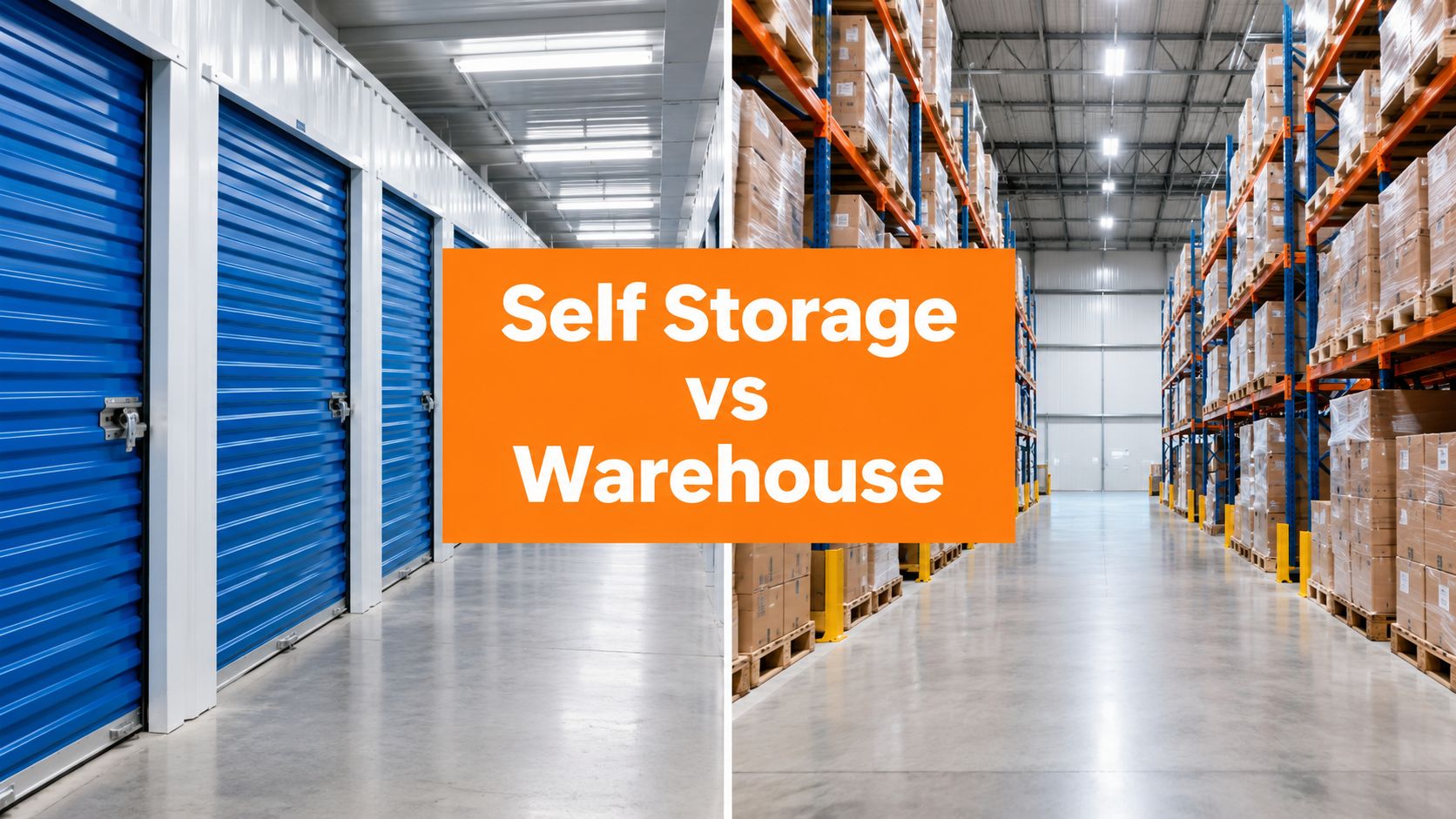
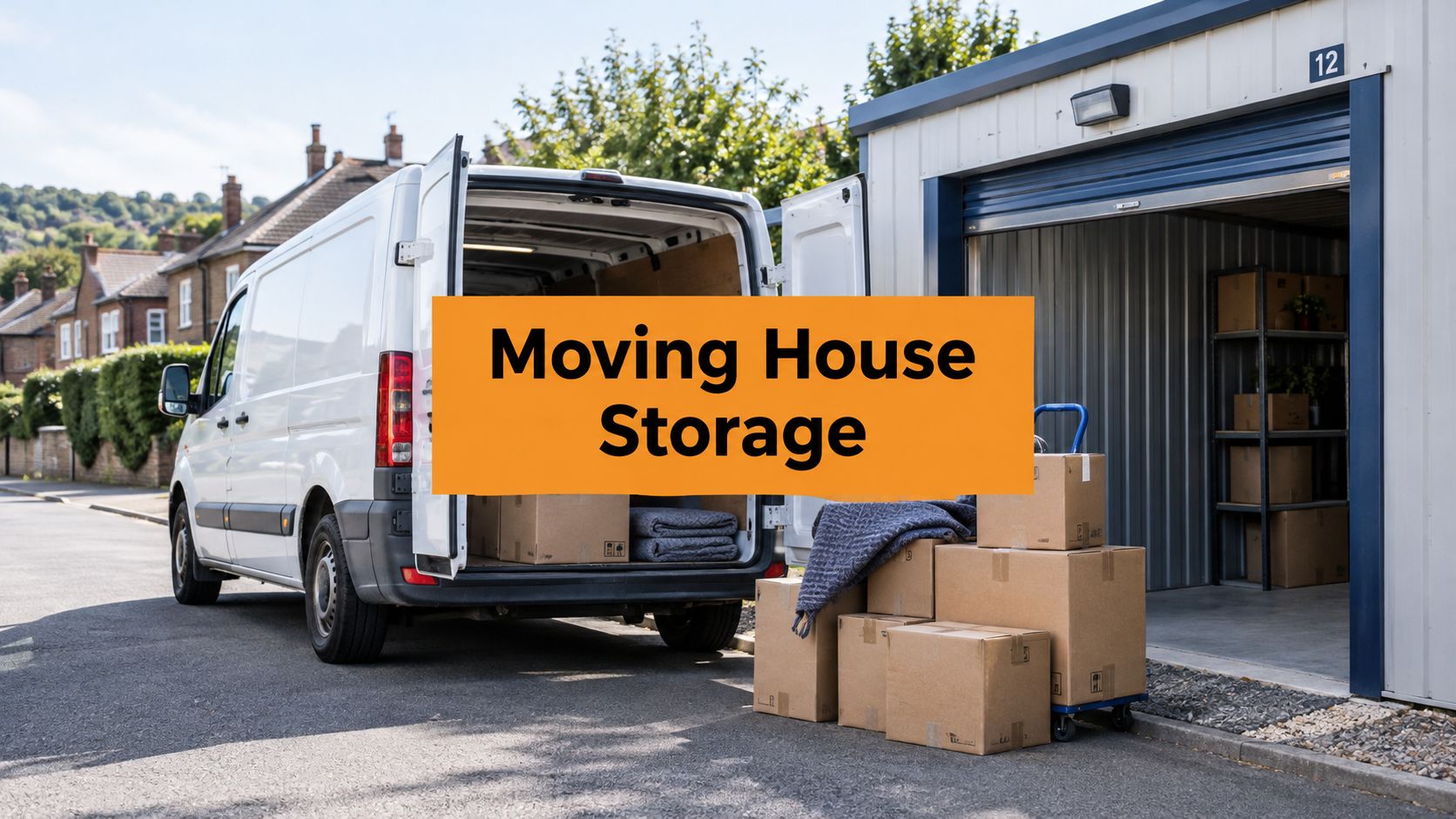
You've loaded the van, labelled half the boxes and promised yourself the rest will sort itself out after completion. Then the solicitor calls: the chain has slipped, the new house isn't ready, or the old property must be empty by the end of the day. In Reigate, that awkward gap can leave furniture, tools, appliances and family possessions sitting in a van, blocking the hallway or squeezed into a relative's garage.
Moving house storage in Reigate works best as a triage exercise first and a storage booking second. Decide what deserves space, what can be donated or recycled, and what must remain accessible. Only then should you choose a unit, vehicle and loading plan.
Why Reigate Moves End Up Needing Storage
At 10am, a couple leaves their Victorian terrace near Reigate town centre with a clear plan. The buyers are completing, the removal van is booked and the new keys should arrive by lunchtime. By midday, completion hasn't happened. The van is occupying a narrow street, the sofa is wrapped on the pavement and the couple still hasn't decided whether the spare-room furniture is coming with them.
That situation creates three separate storage problems. The first is a timing gap, caused by a delayed completion, a broken chain or a new-build handover that moves later than expected. The second is a property gap, when a household leaves a rental, moves into temporary accommodation or waits for renovation work to finish. The third is a decision gap, when nobody has decided what to keep, sell, donate, recycle or discard.
Reigate has a substantial pool of households likely to encounter those gaps. The 2021 Census recorded 15.7% of households renting privately, up from 12.9% in 2011, while owner occupation fell from 73.0% to 71.1% over the same period. The borough also had 62,509 dwellings in 2021, an increase of 5,456 homes, or 10%, since 2011. These local figures are available through the Reigate and Banstead housing profile.
Private renters tend to move more often than owner occupiers. The English Housing Survey recorded average residence of 4.6 years for private renters, compared with 17.2 years for owner occupiers, in 2023–24. Across England, approximately 1.8 million households moved home in the year before the survey, including 680,000 moves from one privately rented home to another. The English Housing Survey housing history findings provide the wider context.
My advice: if your move includes a completion gap, rental overlap, renovation period or serious decluttering backlog, plan storage before the removal date rather than hoping the timetable behaves.
A final practical point concerns the move itself. If you're choosing a wagon or trolley for boxes, furniture and garden items, these wagon selection tips from Lounge Wagon can help you match capacity and manoeuvrability to the job. That matters on tight town-centre access, where the wrong equipment creates extra carrying rather than saving effort.
Decide What to Store, Donate, Recycle or Bin First
Don't rent a unit and then use it as a warehouse for indecision. Walk through the home before packing and assign every item to one of four destinations: keep with you, store temporarily, donate or sell, recycle or dispose.
Use a separate sheet for each room. Write the room name at the top, then work from large furniture to small contents. Make the decision beside the item, not later when it's already inside a sealed box.
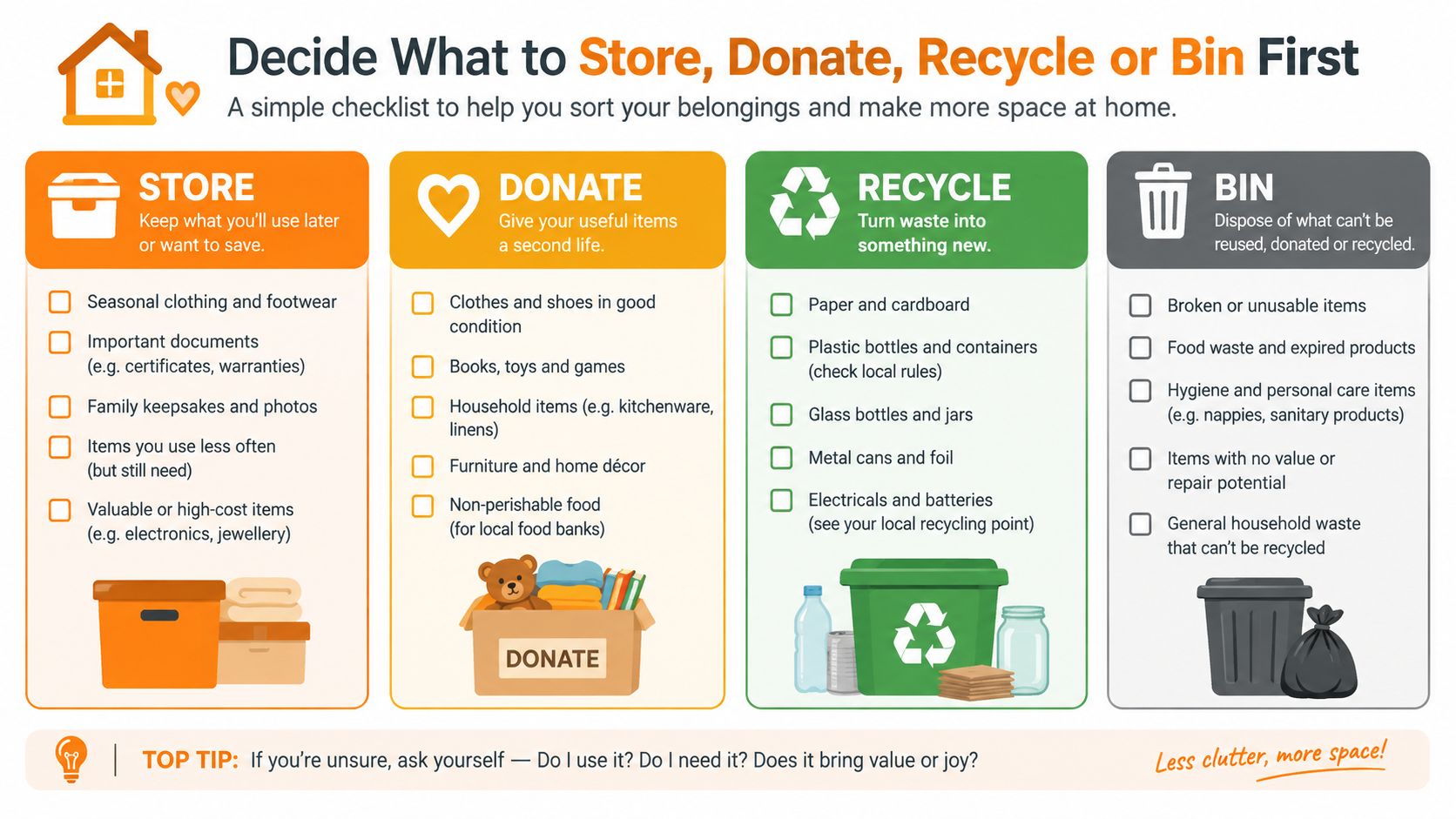
Use four decisions in every room
Keep means you'll need the item during the move or immediately after arrival. Pack documents, medication, chargers, toiletries, basic cookware and work equipment separately.
Store is for possessions with a clear destination and purpose. A dining table waiting for a renovated kitchen qualifies. A broken chair you've ignored for two years doesn't.
Donate or sell covers usable items that no longer fit the next home. Arrange collections early for bulky furniture, especially if your old property must be empty.
Recycle or dispose applies to damaged, incomplete or unsafe items. Reigate & Banstead collected more than 53,000 tonnes of household and street waste in 2024/25, achieved a 54.1% recycling rate, and estimates that over 80% of its waste could be recycled, according to the council's recycling and waste information. A local disposal route is better than paying to store something you already know you won't use.
Room-by-room decisions
In the kitchen, store only appliances and equipment that suit the next home. Donate duplicate pans and mugs, recycle broken electrical items through the appropriate route, and never put food or perishables into storage.
In the bedrooms, separate everyday clothing from seasonal items. Store suitcases, winter bedding and furniture that has a confirmed place. Donate clothes that no longer fit or haven't been worn for a long time.
In the loft and garage, be ruthless. Keep tools, decorations and archived papers that have a named owner and destination. Dispose of leaking paint, fuel, gas-related items, chemicals and other flammables through an approved route. Don't place dangerous chemicals or illegal goods in a storage unit.
For sentimental or fragile possessions, use a dedicated decision. Important documents, photographs, antiques and delicate artwork may need specialist packing, climate-conscious conditions or personal transport. They shouldn't disappear into an unlabelled general stack.
The test is simple: if you can't explain where an item will go and why you'll use it after the move, don't pay to store it.
Choosing the Right Unit and Facility in Reigate
Choose storage by volume, access and retrieval pattern, not by a vague description such as “a medium unit”. A small locker may suit boxes and documents from a room. A larger space may be needed for a one-bed flat, while a three-bed semi or a full household awaiting renovation needs considerably more planning.
Measure your largest furniture first. Then estimate the packed volume of everything else, leaving an access route inside the unit. A wall-to-wall stack looks efficient until you need the box at the back.

| Property type | Household volume | Recommended unit | Access preference | Typical Reigate reason |
|---|---|---|---|---|
| One-bed flat | Boxes, soft furnishings and limited furniture | Small to medium unit | Indoor corridor or lift access | Temporary rental change or downsizing |
| Two-bed terrace | Furniture, appliances and packed rooms | Medium unit | Ground-floor access preferred | Completion gap or refurbishment |
| Three-bed semi | Full household contents and garden items | Large unit | Drive-up or wide loading access | Chain delay or staged renovation |
| Detached family home | Extensive furniture, loft contents and equipment | Garage-sized or container option | Drive-up access and long opening hours | Relocation, downsizing or delayed handover |
Access is as important as floor area. Ground-floor units reduce carrying and suit heavy furniture. Drive-up access is useful when a van can't get close to an indoor corridor or when you're moving bulky appliances. Indoor facilities can offer shelter during poor weather, but check lifts, trolley availability and corridor width.
Ask the facility these questions before booking:
- Access hours: Can you reach the unit when your completion timetable changes?
- Security: Does the site use controlled entry, perimeter fencing, alarms, CCTV and on-site support?
- Contract: Can you leave without a long commitment or difficult notice process?
- Loading: Can a removal van approach the unit, and is there enough space to turn or unload safely?
- Protection: What are the conditions for furniture, documents, electronics and fragile goods?
If you're comparing options, secure container storage in Reigate is one example of the type of access and security information you should examine. For temperature-sensitive belongings, use this practical guide to find climate controlled storage units and compare the facility's actual conditions rather than assuming every unit offers the same protection.
The Staged Inventory and Labelling Method
A room-by-room packing plan is useful at home, but it isn't enough inside the unit. Load according to when you'll need each item, not only where it came from.
Use three priority levels:
- Within 24 hours: bedding, toiletries, medication, chargers, documents, basic cookware, kettle, cleaning supplies and children's essentials.
- During the transition: work equipment, seasonal clothing, tools, spare bedding and items needed while rooms are decorated or repaired.
- Later or non-essential: archived papers, ornaments, excess furniture, stored toys and seasonal decorations.
Photograph valuable furniture before wrapping it. Give every box an ID, then record the ID, room, contents, priority and condition in a spreadsheet. A simple row might read: R-023 | Dining room | Glassware and serving pieces | Transition | Bubble-wrapped, no visible damage.
Label at least two sides and the top of every carton. Include the destination room, a short contents description and priority code. “Kitchen, P1, kettle and breakfast items” is useful. “Kitchen stuff” isn't.
For a typical three-bed move, load archived items first, then non-essential furniture, then transition boxes. Keep the first-night kit and key documents nearest the door. If the new property is delayed, you can retrieve essentials without dismantling the entire unit.
Best practices for inventory management can help you formalise the log if you're storing a large household or valuable items.
Heavy books, files and tools belong in small, strong cartons. Large boxes are for light bedding and soft furnishings. Don't leave heavy contents in furniture drawers, and dismantle furniture that could flex, tip or obstruct the loading route. Wrap fragile items separately and avoid stacking anything that could crush them.
Keep an aisle or front-access zone clear. That space is not wasted capacity. It prevents double-handling, makes partial delivery possible and gives you a safe route to inspect boxes.
Transport, Access and Reigate-Specific Logistics
The storage unit is only half the move. Reigate access can determine whether a cheap booking becomes an expensive, stressful day.
Town-centre terraces and older properties may have narrow approaches, restricted loading areas and limited stopping space. Properties on hill roads need a vehicle that can reach the entrance safely, while newer estates may require parking coordination with the managing agent or council. Check the route from the road to the door, not just the distance between postcode areas.
Plan the vehicle around the property
A self-managed move with a hired van gives you control, but you'll handle loading, protection, driving and unloading. A removals company costs more upfront but may reduce lifting, damage risk and repeated journeys. A hybrid approach often works well: pack and triage yourself, then pay for transport and heavy furniture.
HomeOwners Alliance reports an average UK three-bedroom removal cost of £792, with professional packing adding £400–£500, as shown in its removals cost guidance. Those are UK averages, not a quote for your Reigate move, and the final price depends on volume, access, distance, packing and storage handling.
Ask for a written quotation that separates:
- Transport: vehicle, crew, mileage and waiting time.
- Packing: materials, fragile goods and whether self-packed cartons are accepted.
- Dismantling: beds, wardrobes, tables and reassembly.
- Storage: collection, delivery, handling and ongoing unit charges.
- Protection: insurance limits, exclusions and excess.
Time the journey around likely congestion on the A217 and A25, but don't treat a route estimate as a parking plan. Reserve space where necessary, check building rules and make sure the van can stop without blocking neighbours or emergency access.
The guidance in successful moving practices from Glen Trans reinforces the practical basics: complete packing before the removal team arrives, empty freezers, dismantle suitable furniture and keep heavy items in manageable cartons. Those details prevent avoidable delays at both addresses.
Costs, Insurance and the Long-Term Storage Trap
Storage is not just the monthly unit charge. Your real cost includes transport, packing materials, collection, delivery, insurance, possible waiting time and the value of possessions you should have donated or recycled before booking.
The dangerous assumption is that storage will definitely be short term. Industry evidence reported in 2026 indicates that over 40% of domestic storage customers stay for more than a year, although that source is sector-related and should be treated cautiously. The wider lesson is sound: an unresolved temporary arrangement can turn into a second household.
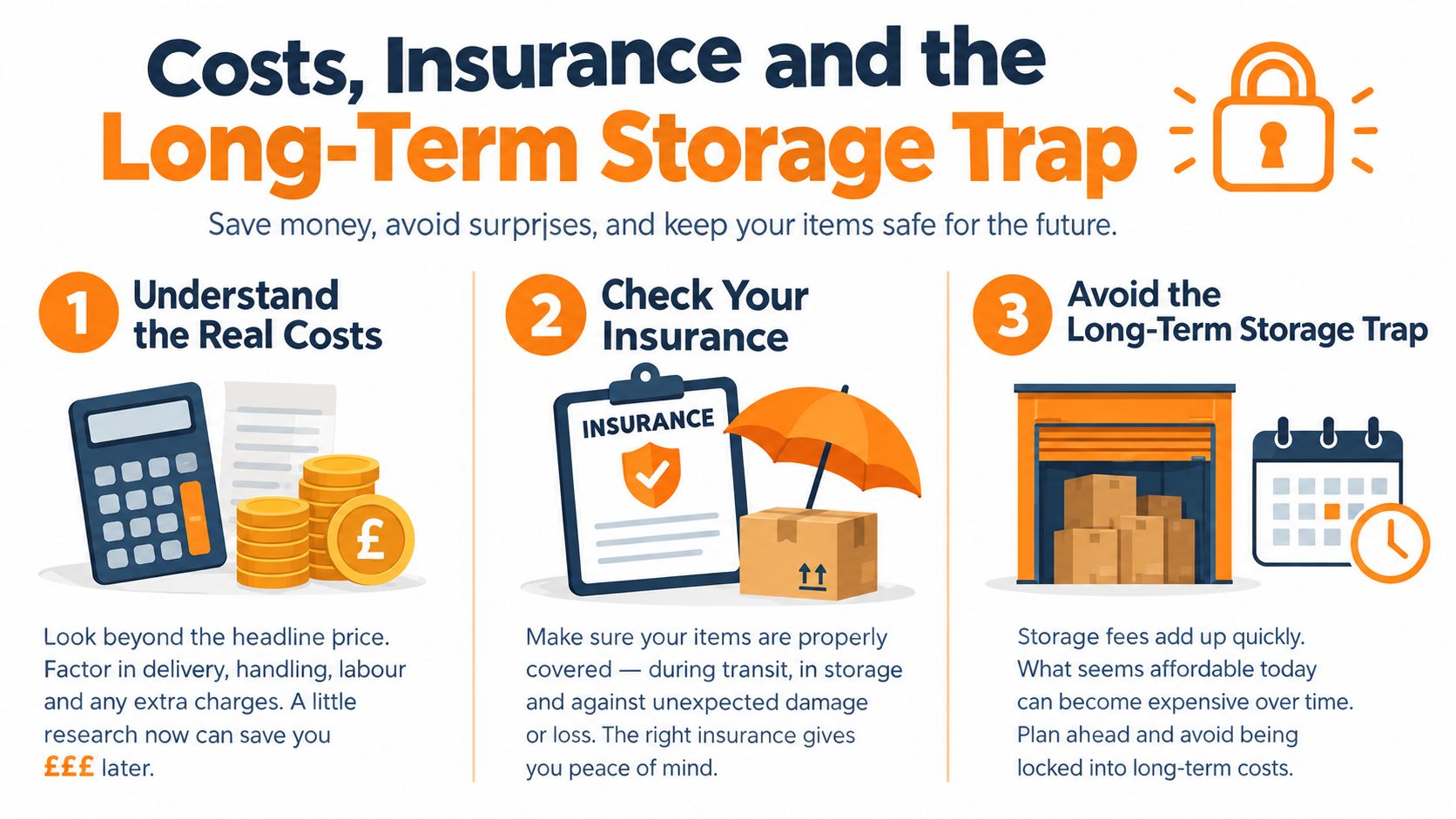
Set three review points
At 30 days, ask whether the new property is ready, whether the furniture still fits and whether any stored item should be delivered immediately.
At 90 days, sell or donate items that have lost their planned purpose. Compare the ongoing unit cost with a removals company holding service, delayed completion, staged delivery or replacement of low-value goods.
At 180 days, make a firm decision on every remaining item. If you can't name a date or project that requires it, storing it is probably postponing disposal.
Insurance needs the same attention. Confirm whether the facility's cover applies, whether your home insurance extends to storage and whether self-packed goods have different transit conditions from professionally packed goods. Keep photographs, box IDs, receipts and condition notes for valuable items. The practical questions are set out in this guide to insurance for self storage.
Never store perishables, flammable liquids, dangerous chemicals or illegal goods. Freezers should be emptied and dried before transport, while fragile possessions need suitable wrapping and ventilation around furniture. Don't seal damp items into plastic and assume the unit will solve the problem.
Your exit rule: every stored item must have a destination, a review date and an owner. Without those three details, it isn't organised storage. It's postponed clutter.
Final Move-Out Checklist for Reigate
Emptying the unit is a move in its own right. Book the vehicle and access slot before the day, confirm the route to the new property and check whether parking permission or building access arrangements are still valid. If the destination is a flat, confirm lift protection, loading times and any management-company rules.
Leave essentials accessible from the first day: keys, completion documents, cleaning materials, chargers, medication, basic tools and a change of clothes. Photograph the unit before loading out, then photograph it again when empty. Keep the final condition images until the facility confirms closure.
A useful companion is this checklist for first-time buyers, particularly if the move involves a new property, handover documents and early maintenance tasks.
On the final collection day
- Confirm access: Check the unit number, access code, opening hours and any vehicle restrictions.
- Protect the route: Use floor coverings, corner protection and straps where needed, especially in communal buildings.
- Check every box: Compare the contents against your inventory before the van leaves.
- Separate donations: Put reusable furniture and appliances aside for the agreed collection or drop-off.
- Use the right disposal route: Take recyclable and unwanted items through Reigate & Banstead's approved services rather than leaving them at the facility.
- Inspect hidden spaces: Check behind furniture, under shelving and along the back wall for small boxes.
- Photograph the empty unit: Capture the floor, walls, door, lock and any provided equipment.
- Report damage promptly: Tell the facility and removal company before signing off the job.
- Cancel payment carefully: Stop the direct debit only after the final inspection, closure confirmation and any outstanding balance check.
- Keep records: Save the inventory, photographs, quotation, insurance details and closure email with your moving documents.
Your best storage plan is the one that gets smaller every time you review it. Store only what has a clear future, keep the first-night essentials reachable and arrange the final collection before the temporary solution becomes permanent.
Standby Self Storage offers flexible personal storage at its Reigate facility, with online booking, customer access and unit options for household moves. Visit Standby Self Storage to compare your requirements and arrange space before your Reigate move turns into an access and timing problem.